We have been visiting the Mariposa House Hospice over these last few months as construction progresses, and wanted to share a few of the pictures as it near completion.
While COVID did create some delays and difficulties for the team, everyone has pulled together to realize this very important project.
A hospice is almost like a mini-hospital, but we wanted to make this hospice evoke the feeling and proportions of a home or cottage, as opposed to an institutional building or hospital, so that patients and family-visitors would feel welcome.
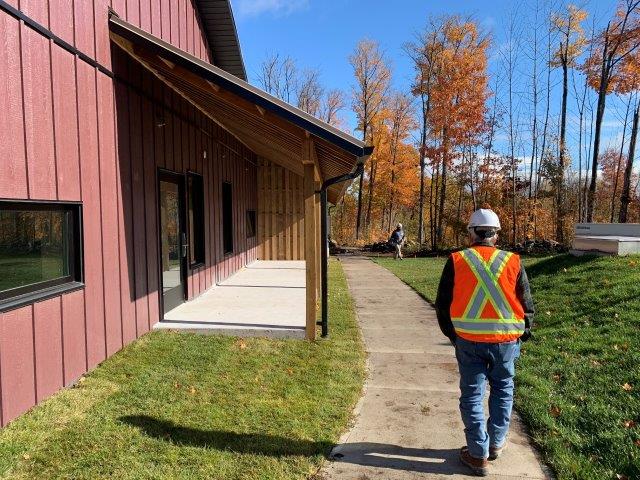
View down the South side of the Mariposa House Hospice showing the staff outdoor patio, grass berm, and concrete path to the rain garden and hiking trails through the property.
A view looking at the South-corner of the building, showing the staff office area with their patio and the grass berm. You can also see the steel butterfly just under the gable-end eaves, which is the logo for the Mariposa House Hospice.
Further south, you can see in-progress views of the patients rooms on the left. Each room has it’s own private porch with a door of suitable width that patients beds can be rolled onto the patio. They will have a view of the forests, and meadow . The glass railing need to be installed, and the dirt seeded with wildflowers as part of the wildflower meadow. The raingarden is just visible at the very end of the building. Eventually the Hospice plans for four-bed additional patient rooms at the rear of the building.
The clients wanted a large parking lot to host all of the cars for large events and gatherings. The rainwater run-off from the parking lot is directed to a naturalized swale and then to a raingarden, so the water is absorbed on-site. In front of the building there will be a garden hedge of forsythia, daylily, wildrose, juniper bushes, and other plants to help soften the transition.
Another view of the front, showing the grass berm, as well as covered entry porch for vehicles and ambulances to access the entry under shelter. In front of the entry porch there is a garden with birch trees, Japanese maple, and other hedges and benches to create a moment of transition and place of reflection for those coming to, or leaving, the hospice. From this view you can see how we designed the building to look like a home or cottage, with traditional pitched roofs, and board-and-batten siding. It is a large institutional building, but with the overall massing and design we tried to make it feel residential.
The focus of this blog post is on how occupant behaviour effects designing buildings for net-zero. The topic of user-behaviour and net-zero design came up when we were analyzing the Passive House Planning Package (PHPP) energy modelling software for a net-zero energy envelope retrofit project this week. We noticed that the clothes dryer used close to 20% of…
Our friends over at Blue Green Group made a post recently that highlighted how air leakage in high performance homes should be more closely integrated into the Ontario Building Code’s SB-12 Section, as well as how more training amongst professionals and builders is needed to implement already existing technology and techniques for air tightness. See…
Passive Survivability is a term coined by Building Science expert Alex Wilson, which he defines as “maintaining livable conditions in the event of extended loss of power or interruptions in heating fuel.” Alex, came up with the idea after Hurricane Katrina in New Orleans, observing how modern un-powered, un-serviced buildings overheated while traditional architecture remained…
Meadow House Achieves Exceptional Preliminary Airtightness Result In early May, our Meadow House project underwent a preliminary airtightness test, and the results were extremely positive and gratifying for the entire team, who had been meticulous in maintaining the continuity of the air barrier. The house achieved an average result of 0.32 air changes per hour…
You and a guest are cordially invited to the Opening Reception for Shawn Micallef’s “Toronto System” photo- series as part this years Contact Photography Festival. The opening is May 2nd from 6-9pm and is hosted at Coolearth’s office and storefront gallery at 386 Pacific Avenue, and is a part of the Junction-wide opening for…
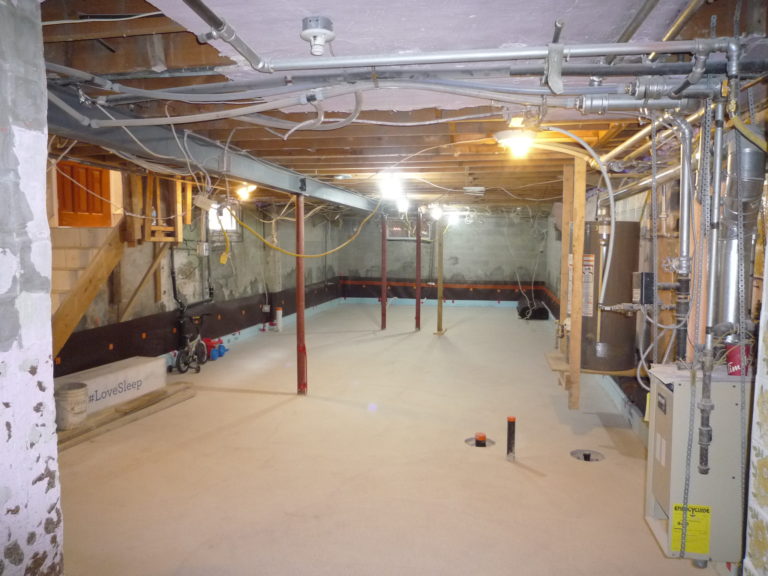
This project is around the corner from our Junction office. The design has been completed a couple fo months ago and construction commenced right away. We visited the site and took some pictures of the completed underpinning. The crew made such a good work that the concrete floor will not be covered but polished and…