Hybrid Mass Timber Structures
Hybrid Mass Timber has become an increasingly common term over the last few years as the Architecture, Engineering, and Construction (AEC) industry has been moving towards more sustainable options for structural systems. Hybrid Mass Timber refers to the combination of engineered wood products with other structural materials, such as concrete and steel, often for aesthetic, sustainability or structural reasons.
Wood has a low embodied carbon level due to its low-intensity manufacturing process and the fact that trees absorb carbon dioxide for photosynthesis. The carbon dioxide is then stored in the wood, and any damage sustained by the timber will release the stored carbon. As such, wood products should be re-used where possible to maintain their low embodied carbon value. Overall, wood is still considered a renewable material when sourced responsibly, making it a sustainable and rather economical choice for structural systems.
What is Mass Timber?
The term “Mass Timber” refers to large engineered wood products, created by combining smaller wood components in a variety of ways. Having been engineered, poor-quality sections of wood can be removed to further improve the quality of the products. Commonly found Mass Timber products include:
- Parallel Strand Lumber (PSL)
- Cross Laminated Timber (CLT)
- Glue Laminated Timber (Glulam)
- Nail Laminated Timber (NLT)
- Dowel Laminated Timber (DLT)
- Mass Plywood Panel
- Laminated Veneer Lumber (LVL)
- Laminated Strand Lumber (LSL)
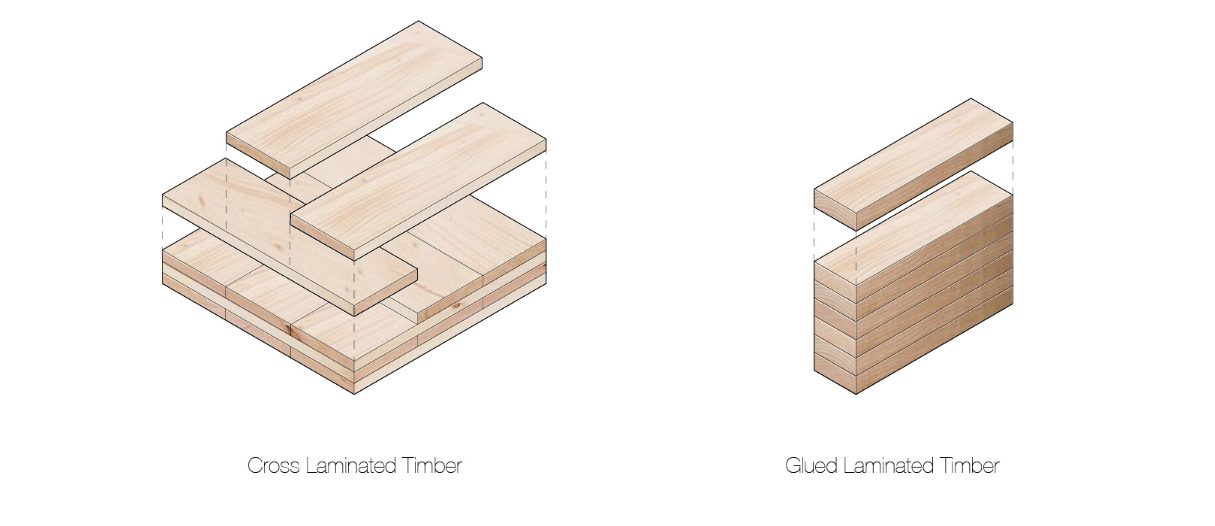
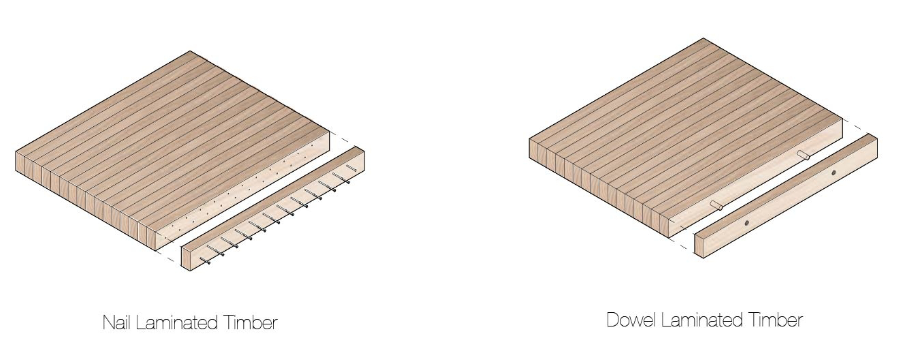
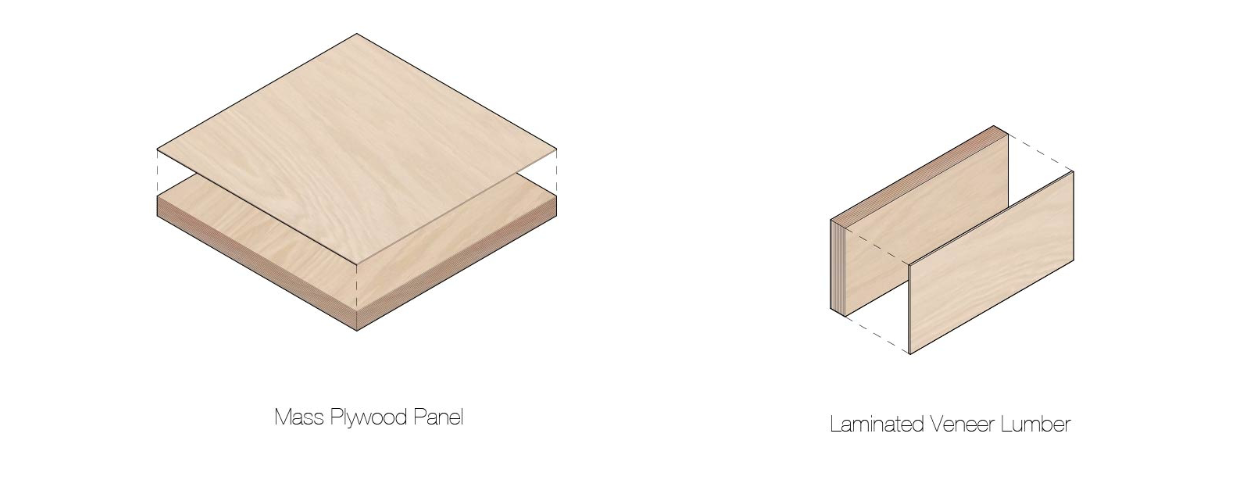
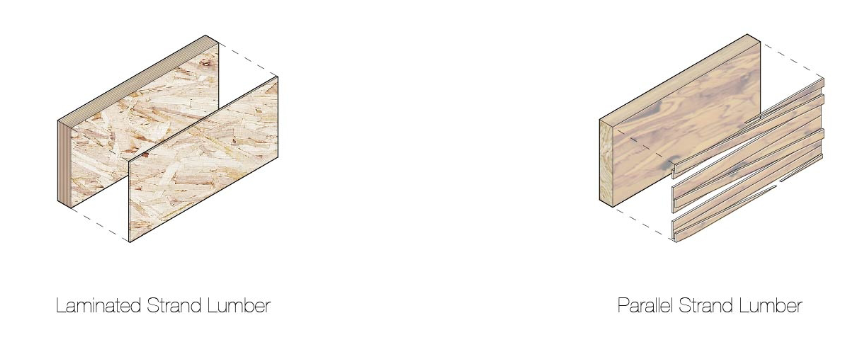
Images above are from the Mass Timber Institute.
Due to their size and composition, Mass Timber elements are often used as an architectural focal point in building design. Not only is the material aesthetically pleasing, but wood also has psychological benefits. Mass Timber introduces a biophilic element, which can improve the health and well-being of the users within the building. Biophilia refers to “the hypothetical human tendency to interact or be closely associated with other forms of life in nature” as defined by Merriam-Webster. Thus, biophilic design involves the use of natural elements in buildings to create a connection between the built world and nature.
Types of Hybrid Mass Timber structures
Mass Timber can also be utilized alongside other materials in building systems to create a strong and efficient structural system that utilizes the strengths of each material. These hybrid systems can improve a building’s gravity and lateral load systems, optimizing the building’s performance. The combination of materials results in beautiful yet efficient structures, that are left exposed in buildings.
Structural systems composed of Mass Timber often utilize another material, particularly at its connections, to improve the structure’s performance. This is where the name “Hybrid Mass Timber Construction” comes from. Detail connections such as steel plates, bolts and other connectors are commonly used in structural systems due to steel’s ductility, versatility and overall strength.
Some common material combinations and their configurations are listed below:
- Mass Timber & Light Frame Construction
- All-wood building system, using different types of wood products as various structural elements
- Low carbon footprint
- Completely biophilic design
- Mass Timber & Concrete Composite
- Improved structural performance because concrete resists compression and wood is strong under tension
- Typically used for reinforced flooring, but can also be used for wall panels
- Typically consists of pre-fabricated concrete slabs connected to mass timber panels and/or beams
- The substitution of wood decreases the need for concrete, which produces high carbon emissions
- Mass Timber & Steel
- Both wood and steel are able to resist compression and tension, to varying degrees of proficiency
- Steel used when necessary for structural reinforcement
- Able to create long spans with mixed Mass Timber panels and steel framing, since steel has high strength properties
- The substitution of wood decreases the need for steel, which has a carbon intensive manufacturing process
- Mass Timber, Concrete & Steel
- Optimizes the strengths and properties of each material
Moving forward, our future likely entails a larger variety of material combinations and methods for integrating these components into building systems. One experimental study conducted at UBC by Samuel Shulman and Cristiano Loss investigated the combination of steel elements and CLT panels. They have proposed a new connection design method, which encases steel roads in CLT panels using an epoxy-based grout to fabricate shear connectors, for a high performance in both strength and stiffness.
Coolearth’s Applications of Hybrid Mass Timber – Mount Dennis Child Care Centre
In 2017, Coolearth, in joint venture with CS&P Architects, began the design of a childcare centre for the City of Toronto as its first Net-Zero Energy childcare facility. The Mount Dennis Child Care Centre is the first building of the City of Toronto’s TransformTO GHG Reduction project and will be used as a groundbreaking case study on how to create a net zero energy institutional facility. To reach its goal, the design optimizes the envelope’s thermal performance and utilizes geothermal and PV/T on-site energy.
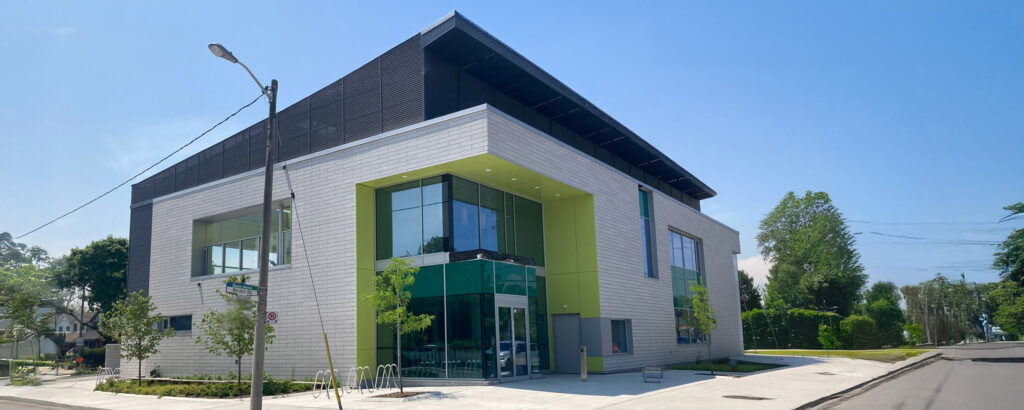
As of Fall 2024, the building is nearing the end of construction and is planning to open early 2025. The child care’s goals include being Net-Zero Energy, all-electric and will follow the criteria outlined by the Canadian Green Building Council (CaGBC) as well as Toronto’s Zero Emissions Buildings Framework. The result of these objectives is a building that employs various passive design strategies, airtight construction, and an extensive renewable energy system.
Since the project’s main goals involve sustainability and energy efficiency, it was clear that we would aim to minimize the building’s embodied carbon to support these goals. We came to the conclusion that Mass Timber was the best choice as it has a low embodied carbon value and has a warm inviting aesthetic, due to its biophilic nature.
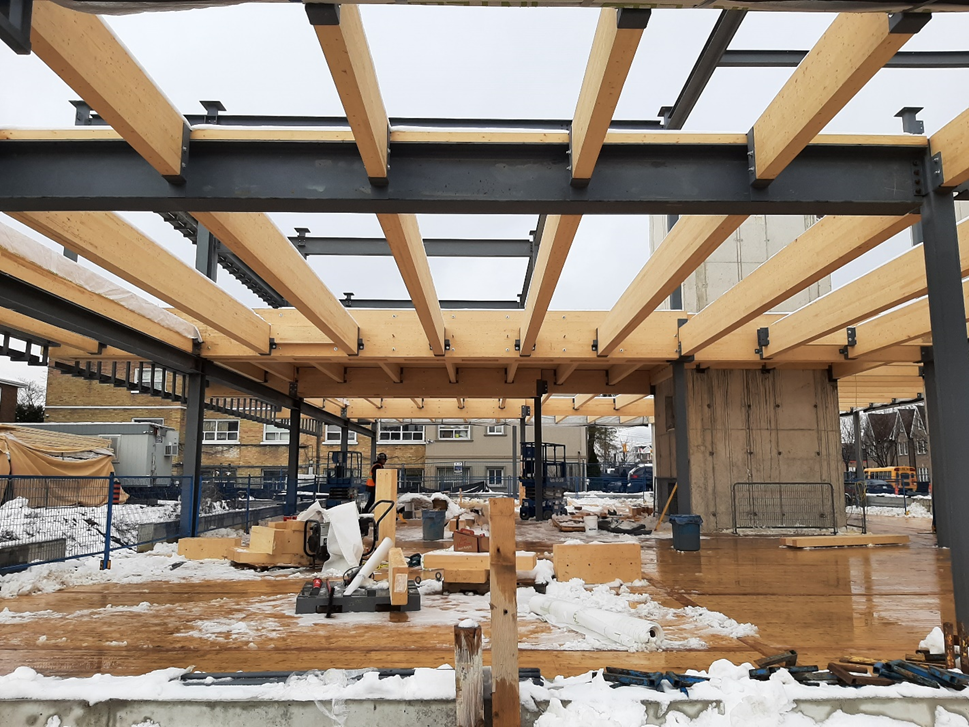
A hybrid of wood, steel and concrete is used throughout the structural system of the building. Majority of the beams and joists are Glulam-E Spruce Pine 20f-E, and steel W-section beams are used where necessary in the building to carry larger loads. Hollow Structural Steel (HSS) and steel W-section columns carry the load from the floor grid down the structural. The grid created by the Mass Timber and Steel components are shown, exposed during construction, in the image below.
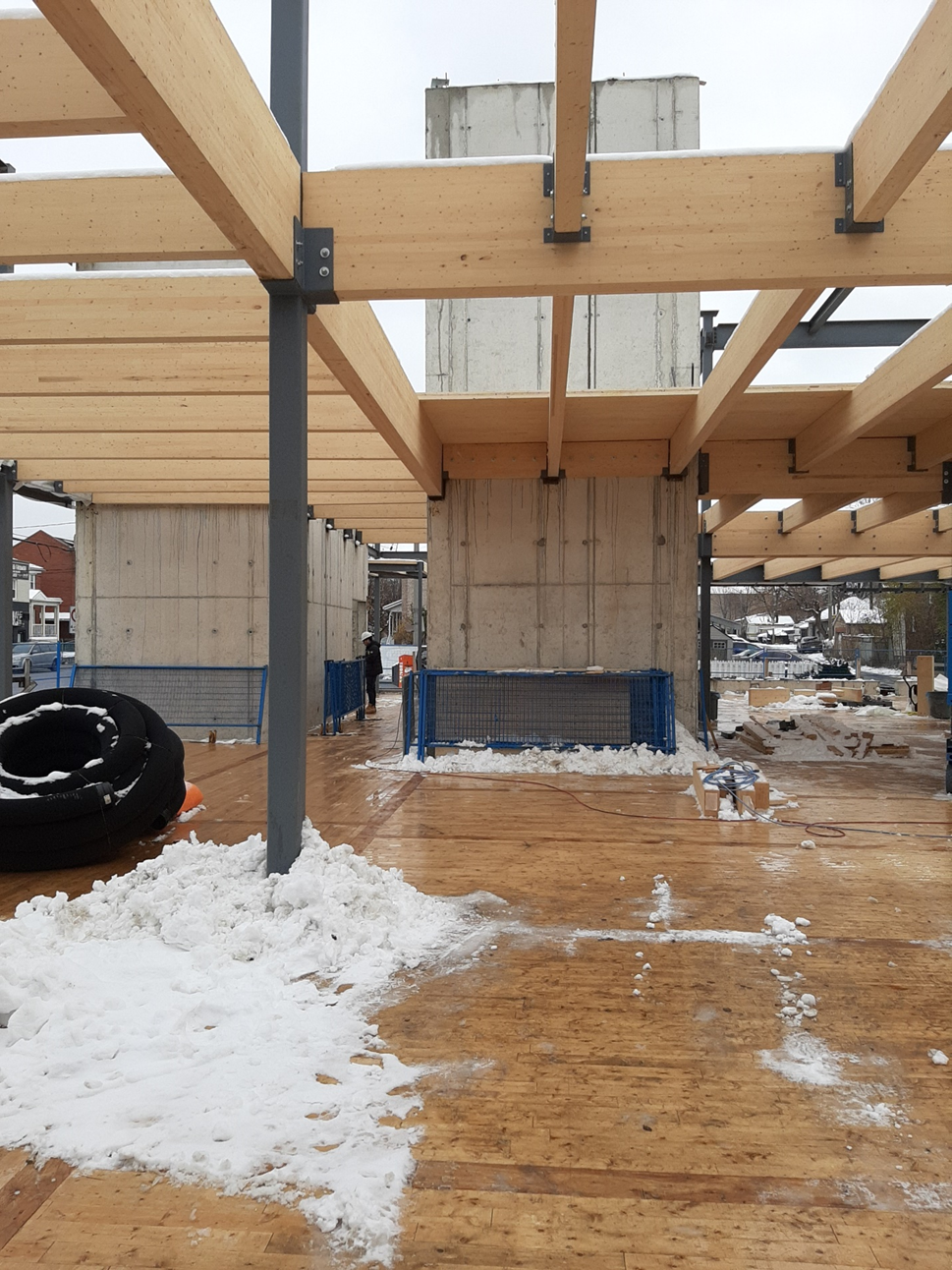
The overall project aimed to minimize the use of concrete to lower the building’s overall embodied carbon and reach the project’s Net Zero goal. As such, pre-cast concrete was only used where necessary for the foundation, retaining walls for the basement, lightwell and the elevator and stair cores, as seen in the picture above.
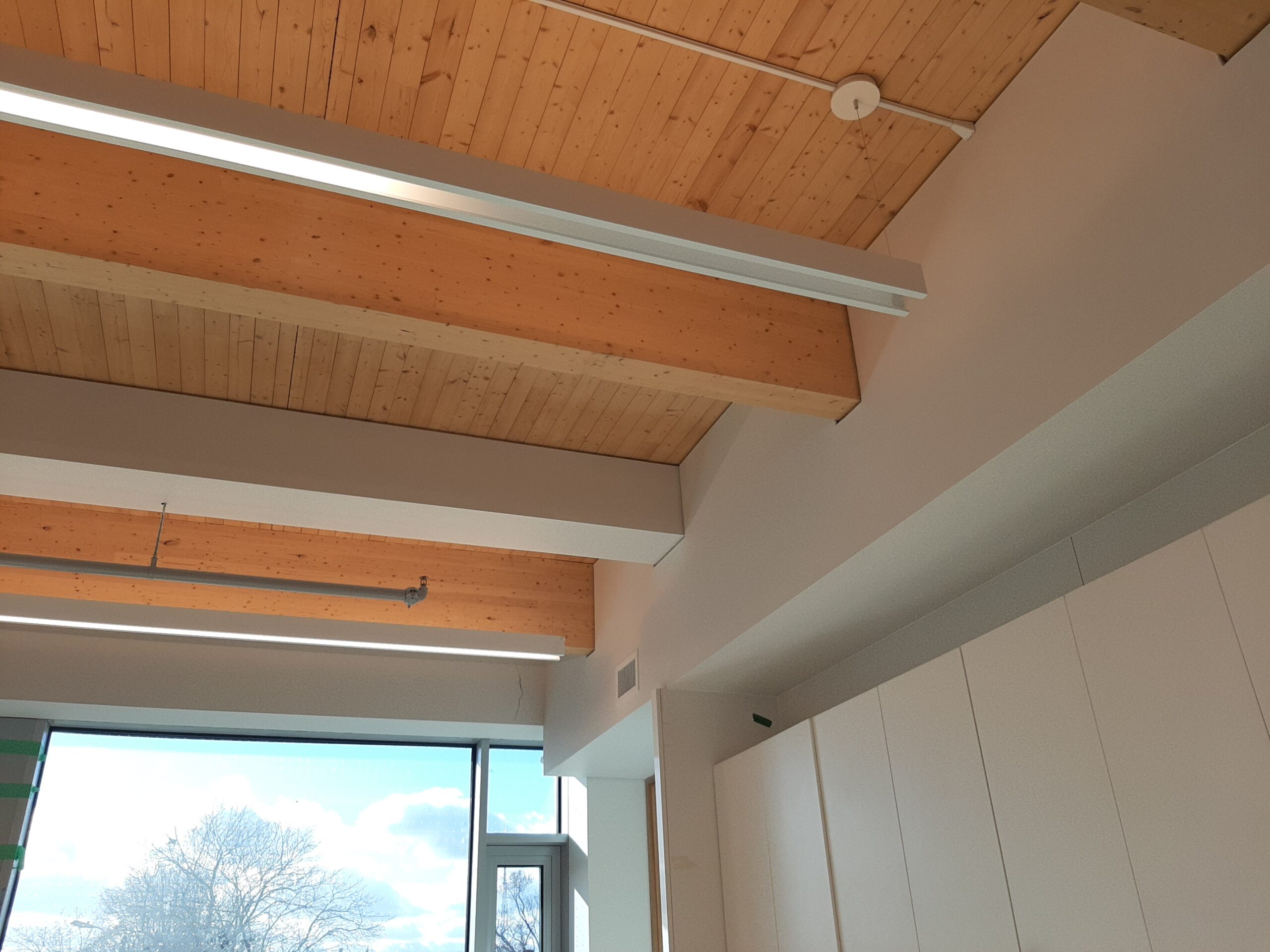
The child care centre has multiple play rooms that require large uninterrupted spans for the children’s activities. Glulam-E Spruce Pine 20f-E beams and joists were used to achieve this, in conjunction with 89mm Spruce Pine Commercial Grade Decking, creating an all-wood ceiling as seen in the image below.
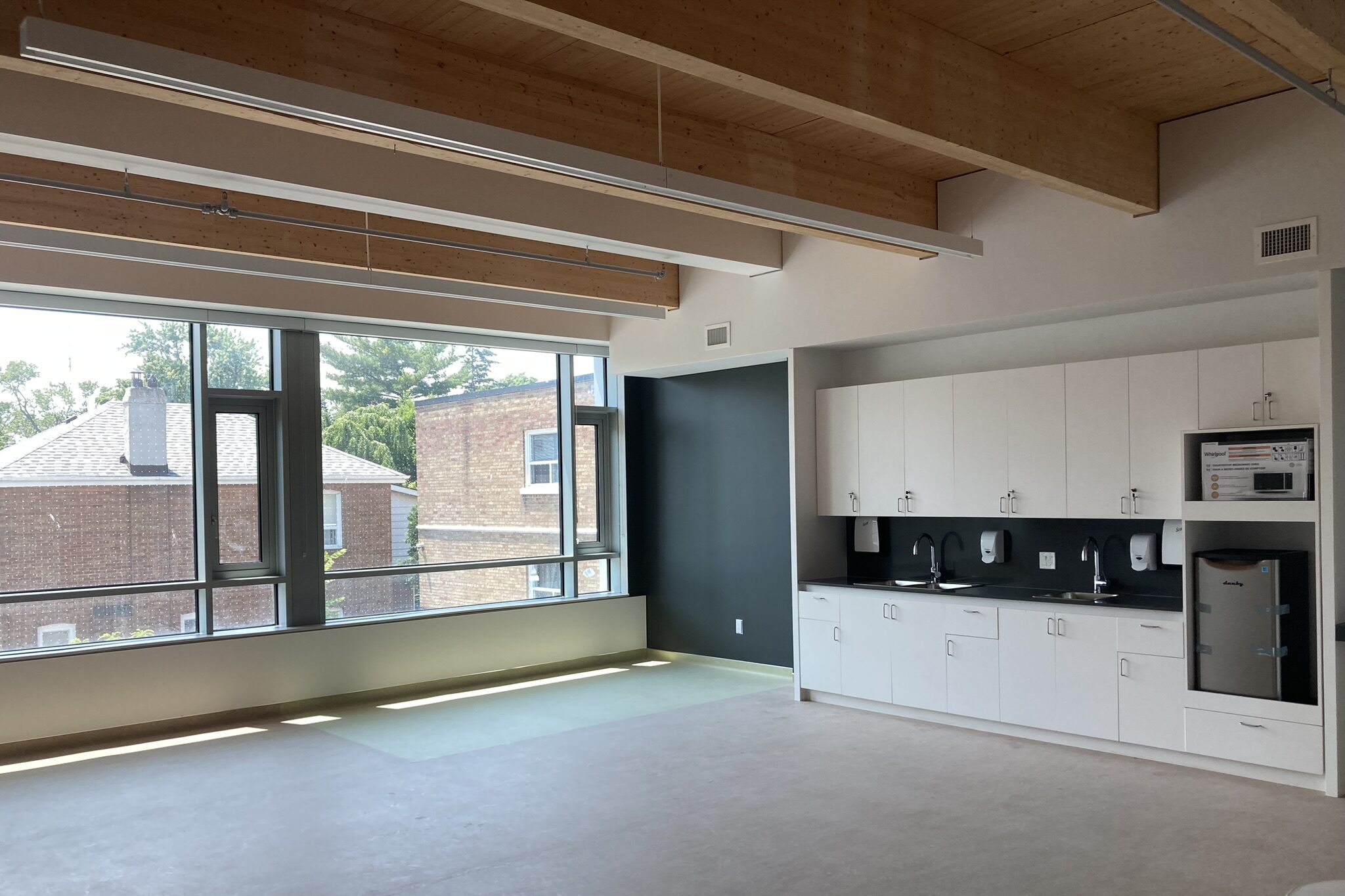
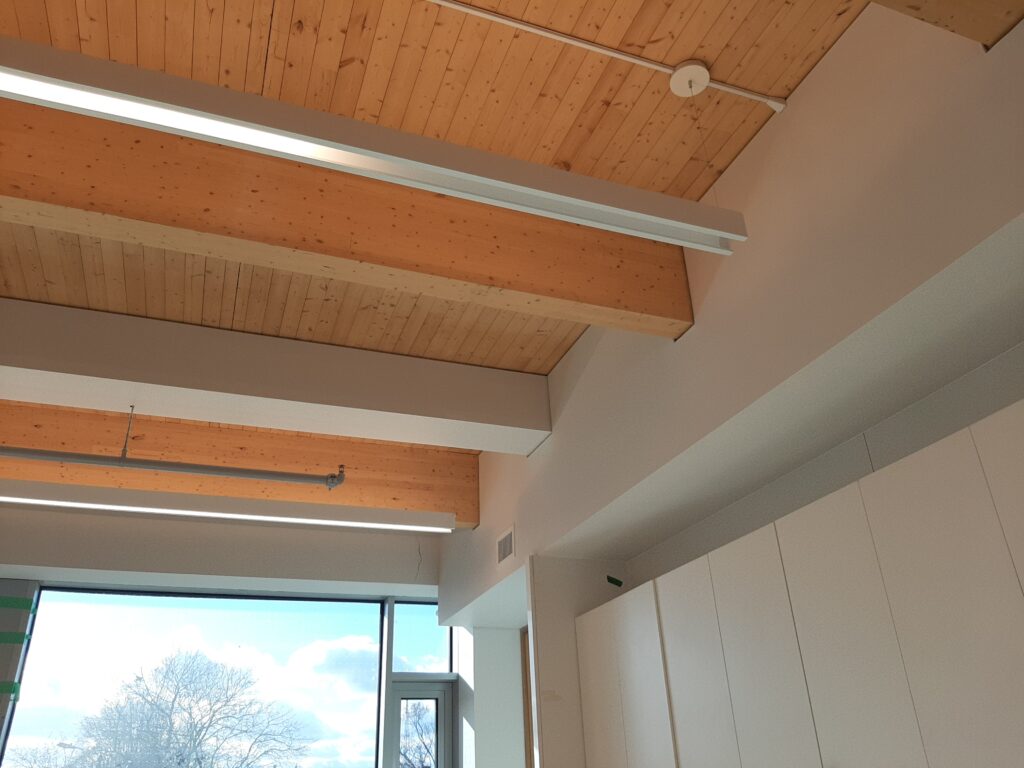
The combination of Mass Timber products is featured throughout the ceiling of the child care centre, as the CLT beams and Glulam floor panels are exposed in the building. The largest beams used in this structure are 175×494, a span which can only be achieved by engineered wood products.
The combination of wood, steel and concrete forms a biophilic design that creates a structurally efficient gravity and lateral load system, suitable for a child care centre. The Mount Dennis Child Care Centre is an example of a Hybrid Mass Timber project that utilizes the strengths of each material to the fullest and fulfills the goals of a project, which in this case are to be Net-Zero and be a comfortable space for children’s activities.
Learn more about this project in our portfolio and take a look at our most recent construction update for more photos of this ongoing project.
For our work, we have recently been recognized and added as a Contact and Connection at the Mass Timber Institute, which focuses on advocating for the use of Mass Timber in the industry through research/education as well as the development and export of Mass Timber products and technologies.
Why use Hybrid Mass Timber?
Hybrid Mass Timber structures are an excellent option for many building projects as it optimizes the strengths and properties of different structural materials including wood, steel and concrete. The combination of materials and aesthetics results in unique buildings with a low embodied carbon, making it a sustainable and economical choice for structural systems. To learn more about Mass Timber and related projects, visit the Mass Timber Institute.