Changes to Ontario Building Code SB-12

New changes in the Supplementary SB-12 “Energy Efficiency for Housing” section of the Ontario Building Code were announced on  July 7, 2016. These changes,  which come into effect January 1st, 2017 and include:
 
– New prescriptive compliance packages that provide minimum 15 per cent energy efficiency improvement over existing packages

– Drain water heat recovery units as a mandatory requirement for all prescriptive compliance packages

– Heat or energy recovery ventilators as a mandatory requirement in all packages in order to protect indoor air quality as homes get increasingly “air tight”

– Thermal U and effective RSI values along with nominal RSI values to provide added flexibility in the choice of different assembly structures e.g. basement wall and roofs

– Credits for reducing air leakage to encourage better energy conservation

– Revised air-leakage rates for the reference building to encourage testing and improved air tightness via 


Some of the highlights, at least from our perspective, are the inclusion of heart recovery ventilators drain heat water recovery coils in all homes. In this post we will briefly introduce these two items.


Heat Recovery Ventilator


A Heat Recovery Ventilator takes the stale exhaust air of the house and runs it through a heat exchanger to pre-heat the clean, fresh incoming ventilation air (from outside).  In this way the heat of the home is being preserved even though fresh air is being introduced.


4_2


This is a big factor in Passive House design because when a home is very air tight it is vital that fresh air is delivered in order to create a fresh, clean environment inside the house.  It is good to see HRV’s incorporated as mandatory requirement because it can increase the energy efficiency of the home, while also maintaining indoor air quality.


Drain Water Heat Recovery Coil


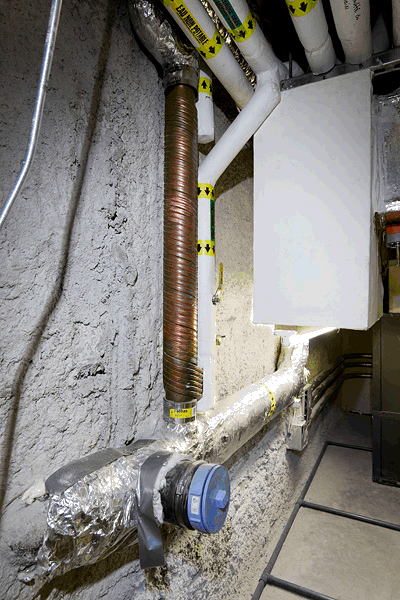
The other highlight is the incorporation of drain heat water recovery coil (DWHR) in all homes.  DWHR systems, as the name suggests allows for the recapture of heat from showers, faucets, and washing machines. Generally they are composed of a series of copper coils that are wrapped around a drainpipe to gather the heat.


3-f2


Just like HRV’s, drain heat water recovery coils take the heat from the waste and use it to pre-heat the incoming cold fresh water before it heads over to be heated by the water heater.  According the CMHC the benefits of this are reduced energy consumption, reduced energy costs, and a reduced environmental impact.


Conclusion

There is a wealth of more detailed information online: take a look… Let us know if you have any questions or comments.

Passive Solar Design in Ontario

Passive Solar Homes are gaining popularity once again, having first emerged into general public consciousness in the 1970’s. Defined succinctly by the US Department of Energy: passive solar design takes advantage of a building’s site, climate, and materials to minimize energy use.


In a “heating climate” like ours, where the major demand on the buildings is heating during the long cool winter months, a passive solar home requires careful design and planning.   The challenge is how to retain the solar thermal heat over the evening and radiate it within the house and then how to gain the solar thermal heat during the day, without in both cases compromising the thermal envelope of the building.  The overall strategies which need to be considered include orientation, thermal mass, windows, shading, distribution of heat, and insulation.


In our climate windows are the “weak” point in the wall in terms of insulation: even the best triple pane argon-filled windows will have an r-value that is only a fraction of the walls.  Therefore considering curtains, or “thermal shutters” , which are like insulated folding walls instead of fabric curtains can help overcome some of the challenge of our heating-dominated climate when it comes to passive solar home design.


Here are a few simple questions to consider if you are planning a passive solar home.


  • How is the overall home orientated?
  • What features aid or detract from solar exposure – landscape, trees, vines?
  • When and where do you want solar exposure?
  • What window coatings should you use? Some window coatings will block heat transfer: so on windows that you want solar gain, do not use a low-e coating.
  • What thermall mass will you use to store the heat and re-radiate it when needed?
  • How will the heat/cold be distributed throughout the house? Are there keys area which need more heat then others? at different times?


When the design is balanced the simplicity of the passive solar approach far outweigh “active systems”. Active systems are often machines or gadgets such as shutters or evacuated tube solar collectors, passive systems are often elements like overhangs or thermal mass walls.


Ontario’s Climate Action Plan and Homes

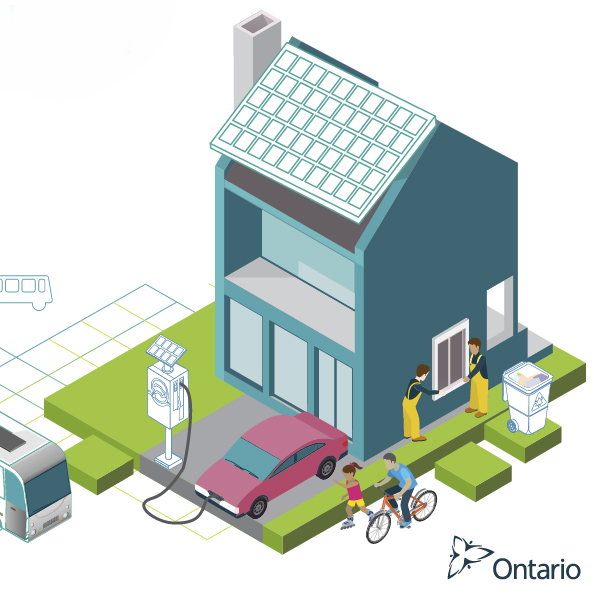
ontario-climate-action-plan

“Climate change is a fact in our daily lives — raising the cost of our food, causing extreme weather that damages property and infrastructure, threatening outdoor activities we love, and melting winter roads that provide critical seasonal access to remote northern Indigenous communities. It affects every aspect of our lives, so it is our collective responsibility to fight climate change together to ensure our children benefit from a cleaner planet… This plan will help households and First Nation and Métis communities transition to the low-carbon economy, use less energy and save more money by investing in initiatives that reduce greenhouse gas pollution, such as home energy retrofits, electric vehicle incentives, transit, and social housing retrofits. ” – Minister’s message to Ontarians


The Government of Ontario recently passed a Climate Change Action Plan that set’s out a five year plan to curb harmful greenhouse gas emissions, increase energy efficienc, and help the transition to a carbon-free economy.  Combined with expected Cap and Trade Legislation it seems like Ontario is finally waking up from an almost 2 decade slumber  (compared to the EU and many other regions) when it comes to the built-environments sustainability.


As architects we were heartened to see numerous measures to deal with the energy efficiency of homes and buildings in the Action Plan.  as this is the core mission of Coolearth.  Specifically we believe the rebates for nezr net-zero carbon homes will be huge for homeowners.  According the the Action Plan, “rebates will go to individuals who purchase or build their own near net zero carbon emission homes, with energy efficiency performance that sufficiently exceeds the requirements of the Building Code. In addition to reducing the higher up-front costs for homebuyers, this program will encourage construction of high-efficiency homes that pollute less.” Other components of the plan include improving the efficiency in multi-residential buildings and public institutions; to expand low-carbon energy generation choices for homeowners; measures to quantify and manage energy use; setting GHG reduction targets in the Building Code; and to support workforce training.  


See below for an excerpt from the Action Plan that pertains to buildings (full PDF here).  Let us know if you are curious about how this might impact you by calling us at 416-868-9774 or email us with the contact form below this post.  We are happy to help homeowners and building managers realize their sustainable goals!


1) Improve energy efficiency in multi-tenant residential buildings

Better energy efficiency in social housing and other multi-tenant residential buildings will improve comfort for residents and free up funds for owners to make other capital improvements. This action will:


1.1 Retrofit social housing apartments

Most of Ontario’s social housing towers were constructed in the 1960s and 1970s and can use up to 25 per cent more energy per square metre than a house. The installation of energy efficient and renewable energy technologies such as energy-efficient windows, lighting, boilers, chillers, and thermal insulation on piping and other mechanical systems will be a low-cost, high-benefit improvement to the province’s social housing. In addition to reducing emissions, these retrofits will improve comfort for residents and save money for social housing providers to make other improvements. Social housing for First Nations and Métis will be eligible for retrofits under this program.


1.2 Protecting tenants from the price of carbon

Ontario will consider options for legislative and/or regulatory change that lessen the impact on residential tenants of increased energy costs from cap and trade. The government wants to make sure that carbon pricing does not get passed on to tenants who are unable to make changes to reduce energy use, and that private building owners are able to take advantage of retrofit programs, including boiler replacements and geothermal technology.


1.3 Provide incentives for apartment building retrofits

Ontario intends to offer incentives to install energy efficient technologies, like boiler replacements, adaptive thermostats and lighting retrofits in multi-tenant buildings, such as apartments.


2) Improve energy efficiency in schools and hospitals

Investing in energy efficiency in Ontario’s public institutions will not only help reduce emissions, but it will help reduce energy costs and provide a healthier environment for students and patients. This action will:


2.1 Support schools

Ontario will provide funding for existing schools to improve energy efficiency and install renewable energy technologies. Technologies could include building automation systems, energy-efficient windows, solar energy and geothermal systems.


2.2 Support hospitals, universities and colleges

The government would establish a fund to help hospitals, universities and colleges retrofit their facilities with energy efficient and renewable energy technologies, including building automation systems, energy-efficient windows, solar thermal and geothermal systems.


3) Reduce emissions from heritage buildings

3.1 Showcase low-carbon technologies

Ontario’s heritage properties are excellent platforms to showcase low-carbon technology to the public and among the most challenging structures to retrofit. Retrofitting heritage buildings with low-carbon energy systems and high-efficiency materials provides the double benefit of showcasing to the public the uses and advantages of this technology, and preserving these important buildings for the enjoyment of future generations.


4) Help homeowners reduce their carbon footprints by supporting additional choice

Technologies that are readily available and being used today can significantly reduce energy demands and greenhouse gas pollution. Homeowners will be given the tools and resources to help make the right choice for them. This action will:


4.1 Boost low-carbon technology in homes

Ontario intends to help homeowners purchase and install low-carbon energy technologies such as geothermal heat pumps and air-source heat pumps, solar thermal and solar energy generation systems that reduce reliance on fossil fuels for space and water heating. This will include an increased benefit for low-income households and vulnerable communities.


4.2 Help retire older wood stoves

A new program targeting northern and rural communities, including Indigenous communities, would encourage households to switch out older polluting wood stoves for new high-efficiency wood stoves.


4.3 Near Net Zero Carbon Home Incentive

Rebates will go to individuals who purchase or build their own near net zero carbon emission homes, with energy efficiency performance that sufficiently exceeds the requirements of the Building Code. In addition to reducing the higher up-front costs for homebuyers, this program will encourage construction of high-efficiency homes that pollute less.


4.4 Keep Electricity Rates Affordable

Use cap and trade proceeds to offset the cost of greenhouse gas pollution reduction initiatives that are currently funded by residential and industrial consumers through their bills.


5) Set lower-carbon standards for new buildings

5.1 Update the Building Code

The government intends to update the Building Code with long-term energy efficiency targets for new net zero carbon emission small buildings that will come into effect by 2030 at the latest, and consult on initial changes that will be effective by 2020. Ontario will consult on how to best achieve these targets through Building Code improvements.


6) Promote low-carbon energy supply and products

6.1 Establish low-carbon content for natural gas

Ontario intends to introduce a renewable content requirement for natural gas and provide supports to encourage the use of cleaner, renewable natural gas in industrial, transportation and buildings sectors. The government will consult with industry on the implementation of this requirement. The goal is to ensure the lowest possible carbon content to help reduce building and transportation emissions. Methane released from sources like landfills, municipal green bin collection, agricultural residues, livestock manure, food and beverage manufacturing waste, sewage treatment plants and forestry waste can be renewed and directly substituted for conventional natural gas. Renewable natural gas is a low-carbon fuel that does not add new carbon to the atmosphere. It is fully interchangeable with conventional natural gas and uses the same infrastructure.


7) Help individuals and businesses manage their energy use and save money

By better understanding how people use energy, Ontarians can make informed choices on how to change their behaviours to help lower greenhouse gas pollution and fight climate change ― as well as how to save money through reduced energy use. This action will:


7.1 Provide free energy audits for pre-sale homes

Energy audits would be required before a new or existing single-family home can be listed for sale, and the energy rating will be included in the real estate listing. These audits are intended to be provided free of charge under this plan. The Home Energy Rating and Disclosure program will improve consumer awareness by allowing homebuyers to compare homes by energy rating. It will also encourage uptake of retrofit incentive programs. To meet the expected demand for home energy auditors, Ontario will support development of energy audit training programs and will further consult before launching this program in 2019.


7.2 Expand Green Button provincewide

Ontario’s Green Button program lets Ontarians access and share their data on electricity, natural gas and water consumption in a secure, standardized electronic format. Expanding this tool provincewide will help more households and businesses manage and conserve their energy and water use.


7.3 Boost public access to climate change tools

Ontarians would have access to a wide range of climate change tools to help them reduce carbon emissions. Publicly accessible tools will include carbon calculators, solar potential mapping, municipal level emissions data, climate change training materials, and guidance documents for businesses, municipalities and homes. These will be available starting in 2017.


8) Training,workforce and technical capacity

Reducing greenhouse gas pollution will require a workforce that is skilled in building retrofits and operations and energy management. Moving to a low-carbon economy will build on all the significant strengths of the existing workforce, and create new opportunities and new jobs for Ontarians. This action will:


8.1 Grow the workforce for a low-carbon buildings sector

New and expanded training programs would be developed to ensure Ontario’s buildings sector has the skilled workers it needs to compete in a low-carbon economy, and to help reduce the carbon footprint of Ontario homes and buildings.


8.2 Support post-secondary training and innovation

Training will be developed and delivered through post-secondary institutions and other training partners to be sure Ontario has the capacity to build, maintain and repair low-carbon buildings. This will include training for First Nation and Métis peoples. The province will support initiatives that advance low-carbon building science, technologies, materials and designs. Focus will be on stimulating product development and promotion, which includes support for research and pilot programs for innovations. A research program will be established for the design and engineering of tall wood-frame buildings.

Frank Llyod Wright Inspired Parry Sound Cottage

At Coolearth we are currently working with a couple to build their retirement home just outside of Parry Sound. The clients were attracted to Coolearth because of our sustainable specialization as well as portfolio of modern homes.  At the first design consultation they brought arm fulls of books on Frank Llyod Wright’s houses: and we worked together to realize the principles of design that FLW emboddied in his homes.

Laine-Ayer---Schematic-Desi

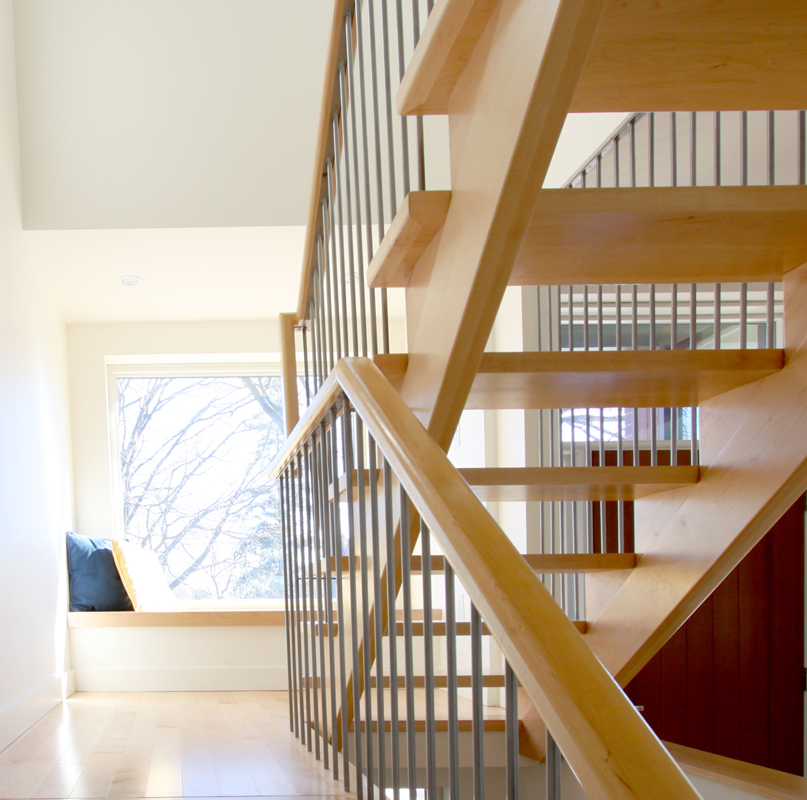
Strong horizontal lines, overhangs, a thin roof profile, clerestorey windows and more found there way into the design.  Stay tuned for more updates as the projects moves into Construction this Spring!


The Goal: Zero Greenhouse Gas Building, A Manifesto

Getting to the right vision, and expressing it simply, is not easy. Zero Green House Gas Emissions (GHG) is the right vision for us, because it says what we need to accomplish most succintly.

warming

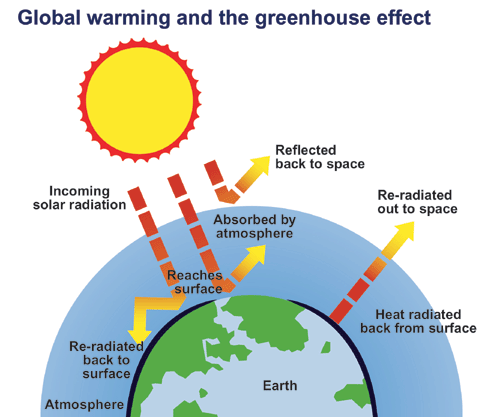
1.) Do we care about all Green House Gases? Yes. Therefore we need to stop burning gas entirely, starting now. The forthcoming Climate Change policy for Ontario contains provivsions to accomplish this.

2. On-site or off-site Energy Production? Making zero GHG can be accomplished in different ways using renewable energy generation, but it can also be accomplished via energy efficiency improvements — i.e doing energy retro-fits to existing buildings to increase their insulative value. We must ask: is the cost of building nuclear plants/solar farms and transmitting the electricity to consumers more or less than the cost of each building owner adding more insulation to their homes? We have to ensure that we don’t simply move the problem of Zero GHG onto the back of others, i.e “it will be solved out there on the grid.. by someone”.

3. Do we count embodied energy? Yes, but that is 5-15% of the energy buildings use in Canada — the remainder being used by the daily, monthly, and yearly operation of the buidings. The heating, cooling, lighting, and other plug loads account for the remaining 95-85%, so we need to focus appropriately! Some of this operational energy load can be reduced through educating occupants on energy efficient practices, but the remainder needs to come from envelope upgrades, window replacements, and more efficient use of solar thermal and shading.

4. Do we cover our buildings in plants? Plants and trees can help create micro-climates around our buildings. Studies have found, and you can test this yourself by going into the shade in summer, that deciduous trees and vines can lower temperatures around buildings by 10+ degrees Celsius. Green roof’s are often an example of “green washing” in so far as the proposed benefits may be outweight by the cost of the materials. Far more important then Green Roofs is the use of plants and trees to create micro-climates. Trees and Plants also embody and sequester carbon, clean the air, remove pollutants, refresh our minds, and can be used to grow food.

Symbolic gestures will not win this battle: we need to focus on eliminating GHG from all aspects of our buildings and ultimately our lives. At Coolearth we strive to make sustainable, eco-friendly projects and we work with clients to bring this about.

Opening Reception for Contact Photo Festival – This Saturday

The opening reception for “On Toronto’s Water” is fast approaching this Saturday. 


Just a reminder that you and a guest are cordially invited to the Opening Reception for Toni Skokovic’s “On Toronto’s Waters” photography exhibition as part of this years Contact Photography Festival.


The opening is May 7th from 6-9pm at Coolearth’s office and storefront gallery at 386 Pacific Avenue, and is a part of the Junction-wide opening for the Photo Festival.   Snacks and refreshments including cocktails by Famous Last Words, our neighbouring cocktail bar, will be provided.


About the Exhibition:

Busy urban life often makes us neglect the natural in our midst. With a pause from everyday rush, this exhibit offers a look at the unexpected beauty of our local waterways and nature at our fingertips. Featuring intimate landscape imagery of Etobicoke Creek and Humber Bay, the photographic narrative offers a different, a more reflective, look into the waterways that made our city the gathering place for centuries.


So much of today’s natural and landscape photography is about faraway places and exotic vacation destinations. Epic hikes and destinations are quite often defined as prerequisites to experiencing the best of what nature has to offer. To me, however, the natural world around us hides stunning scenery, we just have to look and see. The beauty of the landscape is not in its exclusivity and remoteness, but rather in an impact derived from timing and our desire to see.


About the Photographer:

Toni Skokovic is a West Toronto-based Nature and Landscape Photographer. For Toni, photography provides a way of capturing a surprising perspective into the natural world that surrounds us. Evolving from a hobby, his visual creations have converged toward natural beauty found in unsuspecting locations and moments of visual inspiration. His goal is to record and share these moments through the medium of photography.


The exhibition will be up from May 1st to May 31st.  We look forward to seeing you!


For more information visit:


The Photo Project Page: http://junctionrails.ca/on-torontos-waters/


Coolearth Architecture: https://www.coolearth.ca

Share this event on Facebook and Twitter

We hope you can make it!

Cheers,
Coolearth Architecture Inc.