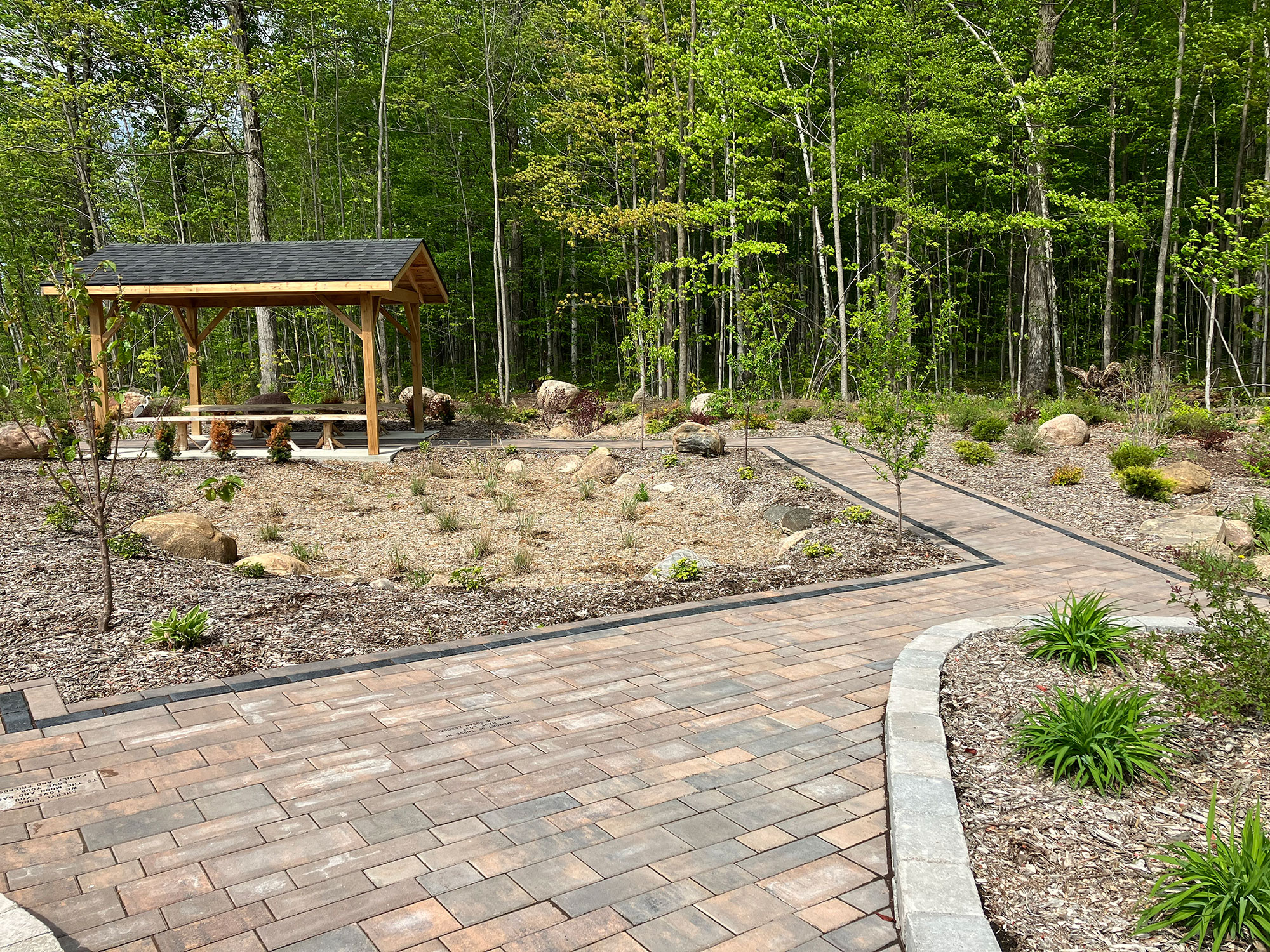
The Mariposa House Hospice in Orillia is a 10-bed (5 current and 5 planned) residential hospice set in a forested site, designed to provide dignity and comfort for residents and families. In 2022, a team of volunteers implemented a permaculture landscape design completed by Coolearth that now frames the hospice with a living, regenerative garden. The design uses perennial food plants, fruit trees, berry bushes, and pollinator species to create beauty, resilience, and abundance.
Above: A shaded pavilion anchors the permaculture garden, surrounded by young fruit trees and perennial plantings beginning to establish. In the centre is the raingarden (dry in photo) which absorbs the roof run-off from the hospice into the landscape.
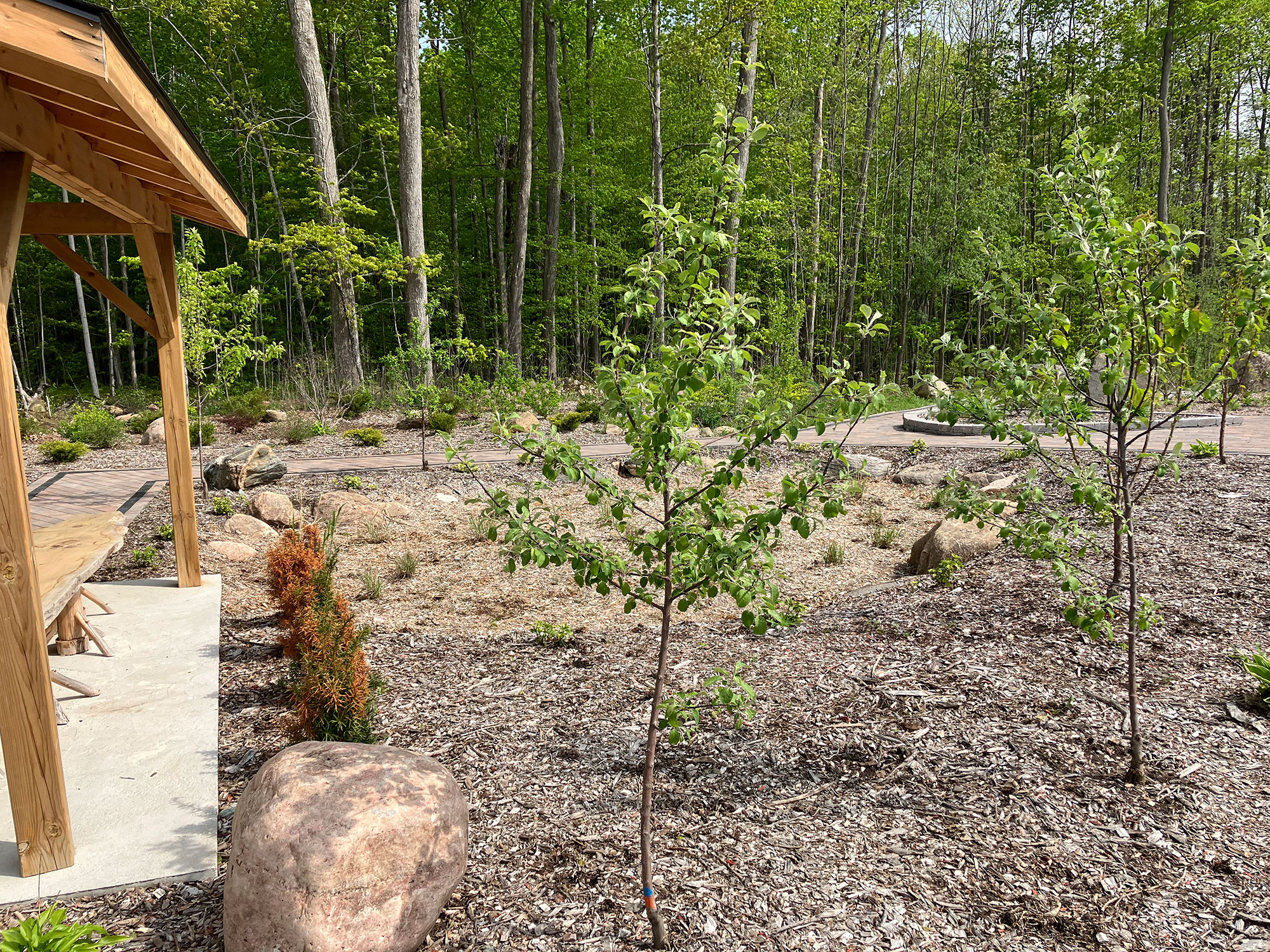
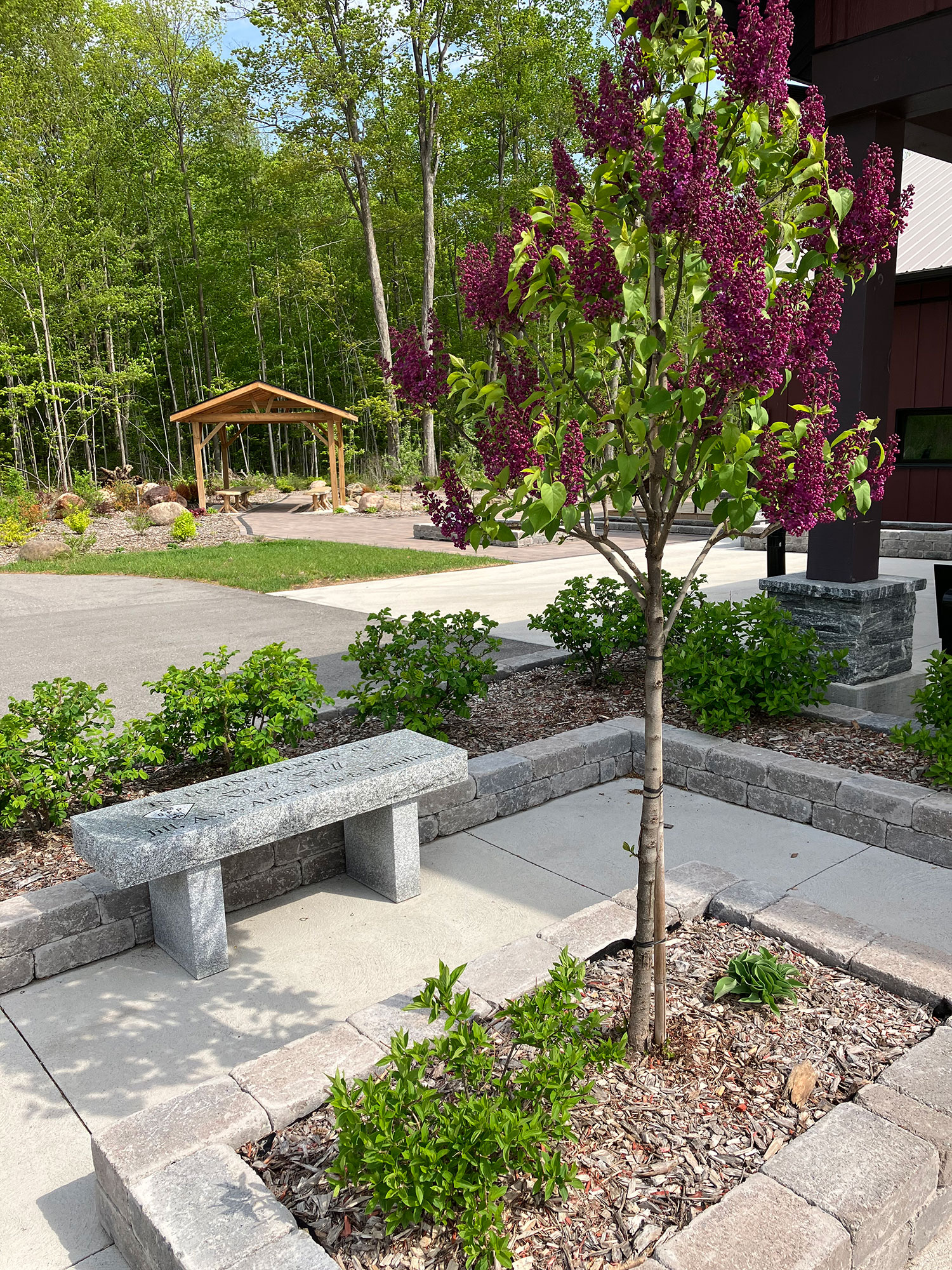
Although only one year old, the plantings are already taking shape: young apple and pear trees line the paths, berry bushes dot the mulched beds, and herbs provide seasonal color and fragrance. As the landscape matures, these guild-based plantings will create sheltered spaces for reflection while also providing food and habitat. Guests and visitors can wander through paved walkways, pause at shaded seating areas, or rest by flowering lilacs and blooming perennials. Paths and gathering spaces were designed for ease of movement by residents, families, and staff, including those with mobility supports. Built and planted by volunteers, the project has since been embraced and carried forward by the community, who continue to tend and expand the gardens.
Newly planted apple and pear trees grow alongside mulched pathways, part of the hospice’s emerging food forest.
Harvests from the gardens are brought into the hospice kitchen and gathering area, where fresh herbs, fruits, and vegetables support daily meals and community events. In this way, the permaculture landscape nourishes both body and spirit, connecting residents, families, staff, and volunteers through food, care, and shared experience.
Working with the Civil Engineer, we also designed the landscape to infiltrate all stormwater on-site. Rain from the parking areas and roofs is absorbed and filtered through rain gardens, swales, and detention ponds, preventing runoff, reducing strain on municipal infrastructure, and supporting a thriving habitat for plants and wildlife.
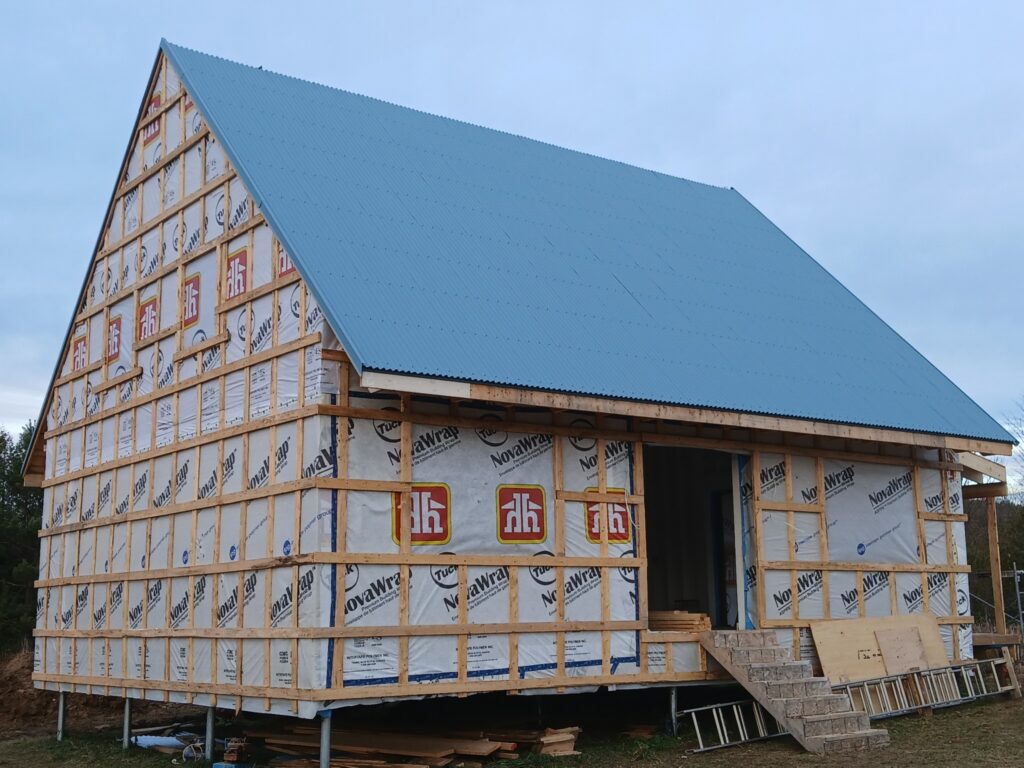
Construction is underway for this single family low energy home, the Pomona House! The client sent us photos of the progress:
The ‘Slate Blue’ corrugated metal roofing is currently being installed. The colour nicely compliments the surrounding sky and harmonizes well with the house’s surrounding environment. The image above was taken on a sunny day, while the image below was taken when it was cloudy, and the roofing is compatible in both situations.
The high performance windows and ‘Antique Linen’ corrugated metal siding will be installed in the coming weeks. The light beige colour of the wall’s cladding will compliment the surrounding field, so that the house is a fitting addition to the rest of the site.
Home retrofits are becoming more commonplace as society is now more conscious of the impact of climate change, in combination with people’s desire to age-in-place. Technology has evolved and developed to the point where sustainable and energy efficient design practices are more attainable. With all of these factors coming together, home retrofits that aim to improve thermal and energy performance has become a feasible and even preferred method of construction due to its cost effectiveness in comparison with a complete renovation. In this post, we will delve into a type of deep-energy retrofit that improves the thermal comfort and energy requirements in a building using the Passive House metholodogy. We’ll also touch on the benefits of getting your Passive House project certified.
Why consider an EnerPHit Retrofit Certification by Passive House for your home?
If you own a home in Ontario and you want to increase the comfort and improve the air quality of your home; reduce your carbon footprint; lower your annual energy bills; and increase your resilience in heat waves and snow storms, an EnerPHit home energy retrofit certified by the Passive House Institute is a great option to consider.
Before going further, let’s define “retrofit”. A retrofit is a renovation to reduce energy consumption. It doesn’t matter if your home was built recently or decades… or even centuries ago, EnerPHit is a flexible and comprehensive strategy and certification process that can apply to all homes. The EnerPHit standard involves incorporating Passive House design elements into existing buildings to reduce the building’s energy demand.
When you retrofit your current home you are leveraging the existing embodied energy/carbon, taking a truly climate-sensitive approach to retrofitting, which is why we are fond of the aphorism:
“The most sustainable building is the one that already exists”.
Existing buildings are Toronto’s “largest source of emissions, accounting for about 55% of total city-wide emissions” (City of Toronto ‘Net Zero Existing Buildings Strategy’ June 2021). Yet, these existing buildings also represent an opportunity, because building emissions reductions of over 80% are possible if Toronto’s existing building stock undergoes deep retrofits by 2050.
Before diving further into EnerPHit, we’d like to point out that often the NUMBER 1 item that homeowners in Toronto can do to lower their Carbon Footprint is to GET OFF GAS. Adding insulation, replacing the windows, installing a Heat Pump… all these items are great for lowering your carbon footprint, but the single most effective and impactful item is going all electric! Now, with that being said, let’s look at some of the benefits of an EnerPHit energy retrofit.
Benefits of EnerPHit
– Thermal comfort – be more comfortable on a daily-basis;
– Improved indoor air quality and monitoring – fresh, clean, and constant air supply;
– Increased Durability – minimize air leaks and thermal bridges, thereby reducing risk of mold or water damage;
– Climate protection – high performance building means increased resilience during storms and power outages;
– Increase the value of the house – real estate markets are increasingly valuing high performance – buildings (Studies have shown sales premiums of 7.6% on “green real estate” per 2022 Davos Agenda);
– Reduce energy demand – energy savings of between 75 – 90% = lower utility bills; and
– Increase Wellness – fresh air, good views, and no more cold feet or drafty doors!
Image of Sammon Passive House Retrofit Project
What exactly is an EnerPHit Certified Retrofit by Passive House Institute?
The primary advantage of seeking Passive House EnerPHit certification is not just the substantial (sometimes we can achieve close to 80-90% reductions in energy use during deep-energy retrofits, but also because the certification indicates that the building has a quality-control validation. In most cases when retrofitting existing buildings/houses, it is impossible to achieve the very stringent levels of the Classic Passive House Standard, which led to the creation of the EnerPHit Standard. The primary differences between EnerPHit versus the Classic Passive House certifications are:
– A space heating and cooling demand of 25kWh/m2/year (compared to the Passivhaus standard of 15kWh/m2/year);
– An airtightness performance of 1.0 air changes per hour, instead of 0.6;
– EnerPHit certification via a “components” method, as opposed to the “performance” method; and
– EnerPHit certification via a “step-by-step” process, or “all at once”.
In general, an existing EnerPHit energy retrofit involves:
High levels of Insulation on the envelope of the building;
High performance triple-glazed windows and external doors;
Reduction of thermal bridges to a reasonable extent (on existing buildings this can be very challenging – one of the benefits of taking an “external” insulation approach to adding insulation); and
Use of renewable energy sources.
As we mentioned above, one of the unique features of the EnerPHit standard when compared to the Classic Passive House certification is that EnerPHit can be achieved in one of two ways:
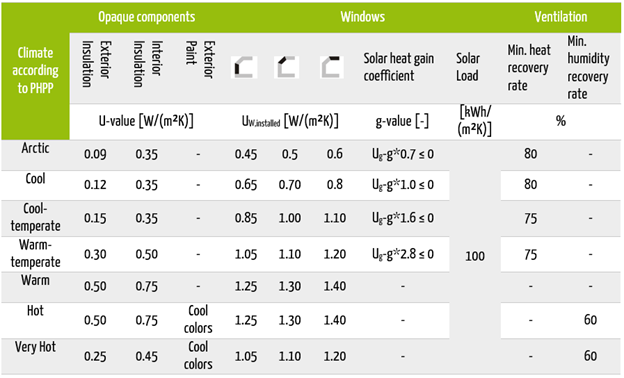
1. Passive House Components — where all the individual building components on average should meet the qualitative criteria listed in the Table to the right
2. Energy Demand method via climate zone, this requires meeting the climate-zone-dependent requirements on heating and cooling demand
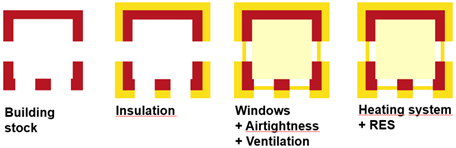
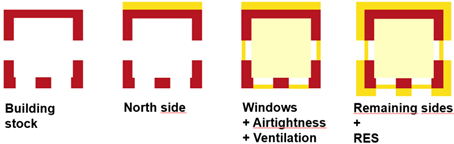
EnerPHit certification can be achieved by completing all the renovations at once, including the air tightness testing and ventilation commissioning, or via a step-by-step process.
Complete or Step-by-Step Retrofit
To make EnerPHit retrofit more accessible, the Passivhaus Institute has introduced a step-by-step certification process. Many building owners cannot undertake a complete renovation all at once, but may rather upgrade/repair each building component as required. It is often possible to reach a high level of energy efficiency with low additional costs using Passive House components.
Another benefit of taking this path is that payments for certification and the process itself can be done in stages, which help fund retrofit projects. In Toronto, there are numerous grant programs that can also be used to fund different project phases.
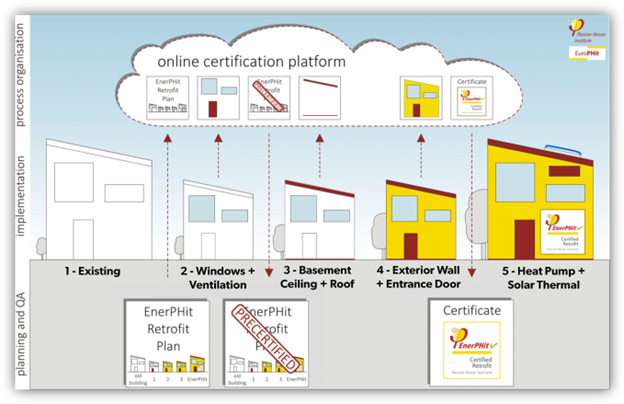
Certification Process and the EnerPHit Retrofit Plan (step by step)
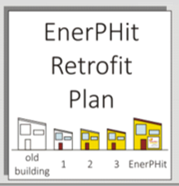
EnerPHit Retrofit Plan
Before renovations begin, an overall plan should be developed. This is the only way to ensure everything will fit together, so there will not be any unintended health and safety or building science situations created by the renovation steps (condensation, air quality, location of air-barrier in walls, etc). The Retrofit Plan means that the owner can count on having a comfortable, safe, high performance building with low energy costs once all the steps are completed… and ensure the building is able to achieve certification. The Plan is made with the help of the PHPP energy modelling software and product database, as well as the overall methodology developed by the Passive House Institute. The approach is designed to evaluate the pros and cons of the different retrofit options, such as whether insulation will be applied to the inside or outside the walls.
It is important to have an experienced Passive House Designer who creates the EnerPHit Retrofit Plan using the PHPP (Passivhaus Planning Package) design tool and methodology as well as an accredited Passive House certifier. The Designer and the Certifier work closely together to balance the client’s goals and the certification requirements.
For additional quality assurance, the Passive House Institute offers pre-certification of an EnerPHit Retrofit Plan. This requires an EnerPHit Retrofit Plan showing that the first retrofit step has been implemented and achieved at least 20% energy savings. The pre-certification provides assurance to building owners that upon completion of all of the steps of their plan, they will achieve the desired EnerPHit certification class.
EnerPHit – certified retrofits with Passive House components.
A master plan can be tailored to fit the needs of the building and/or its owners/users, using a couple of different approaches:
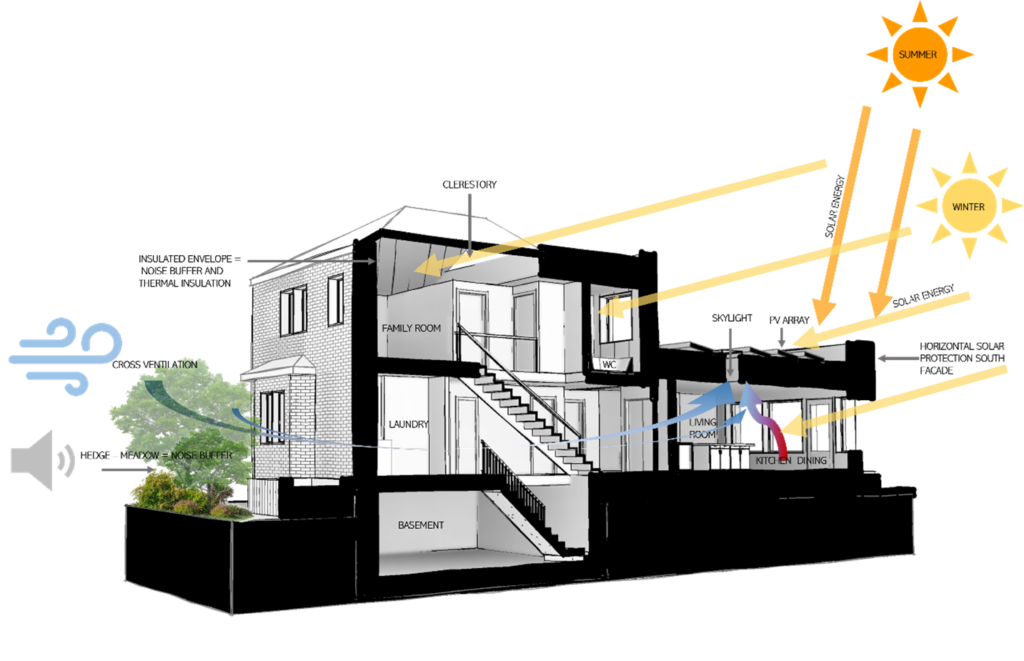
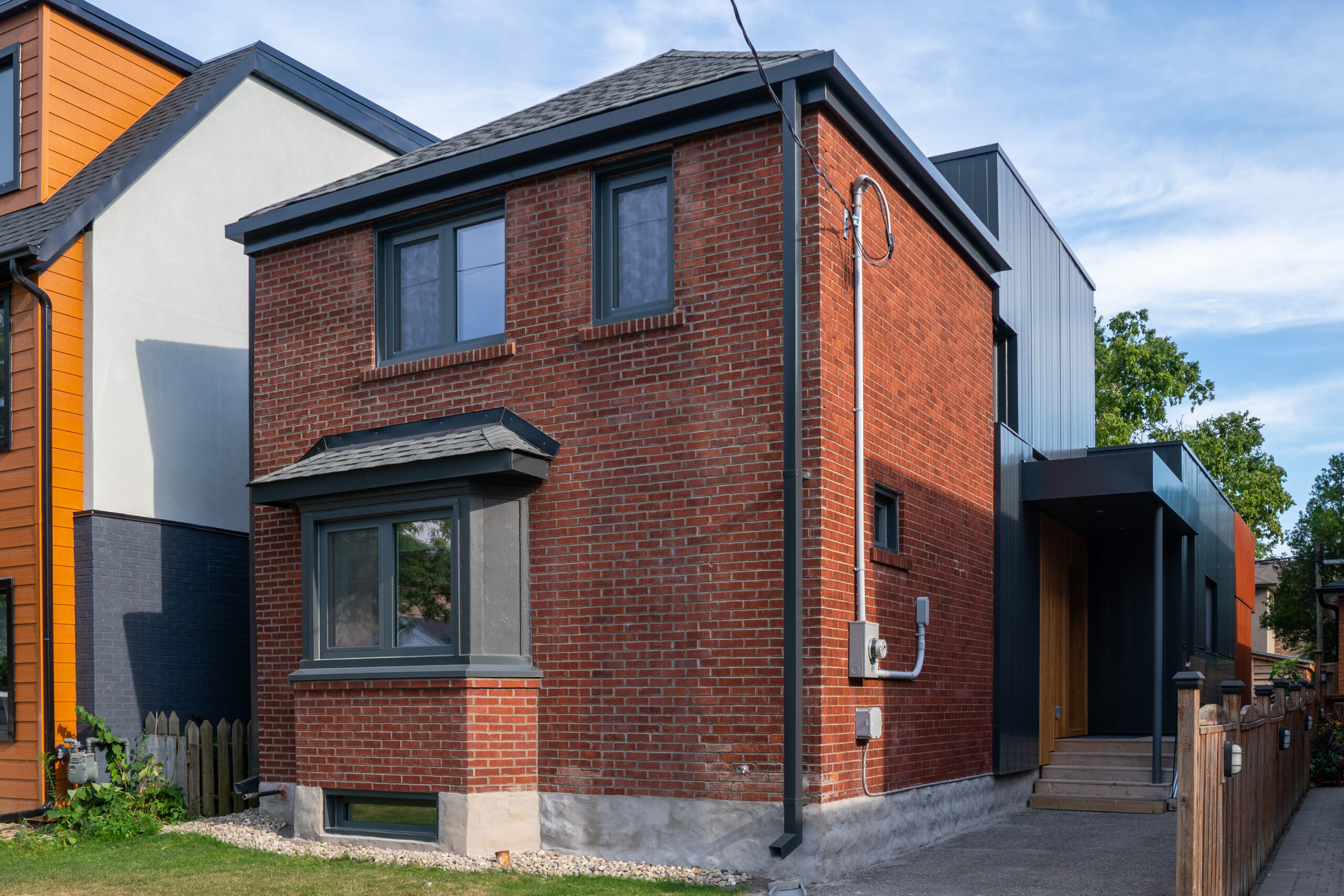
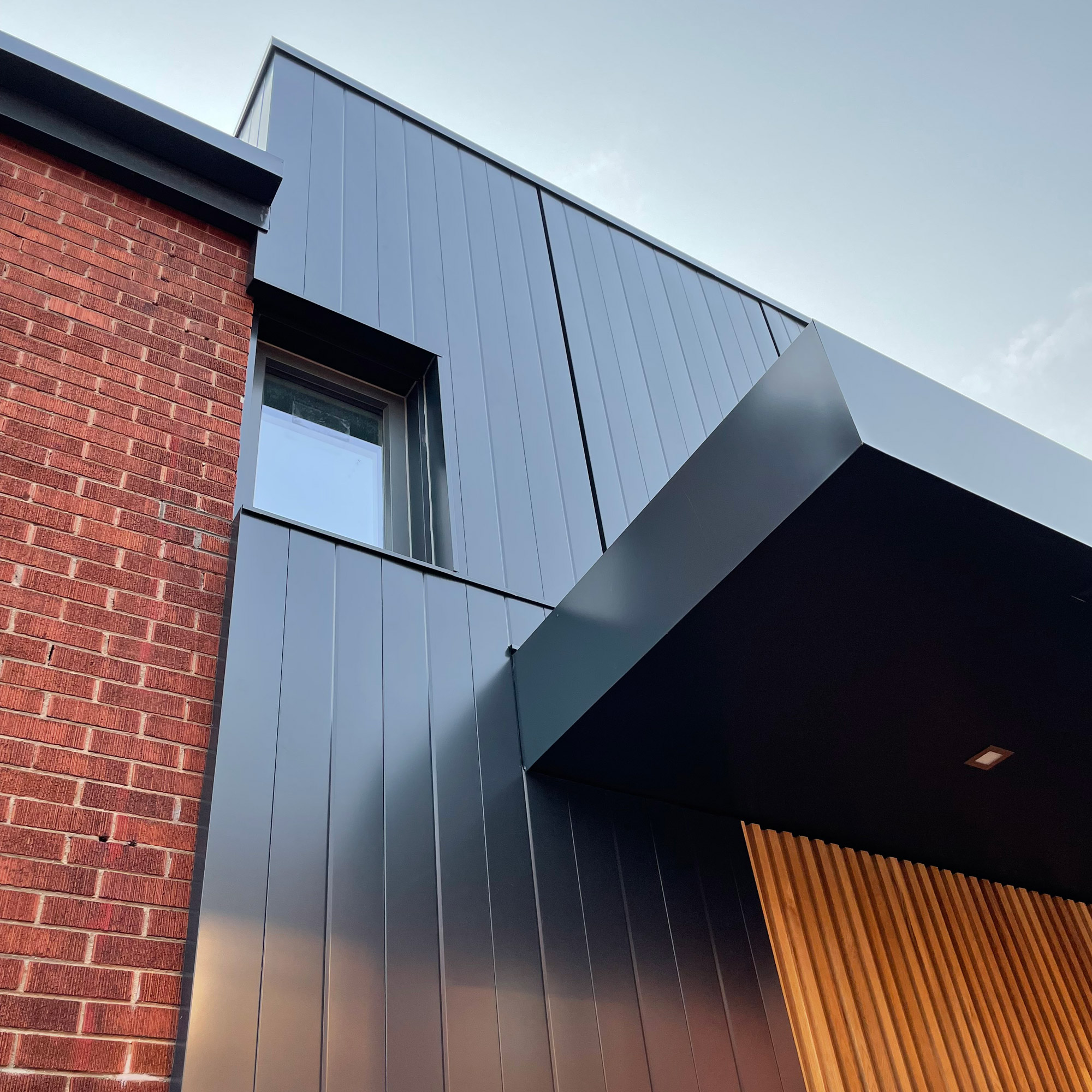
As far as we know, this is the first home in Toronto to receive EnerPHit Passive House Institute certification. Majority of the existing home’s structure and layout was kept, substantially reducing the embodied carbon emissions for the project. Over 80% of the brick walls of the home and much of the concrete and wood framing were retained.
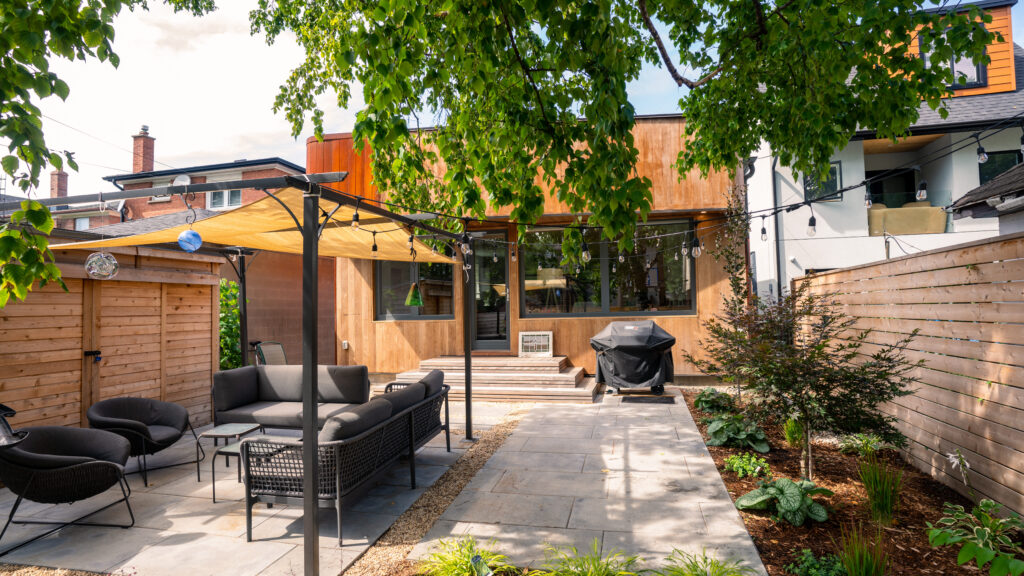
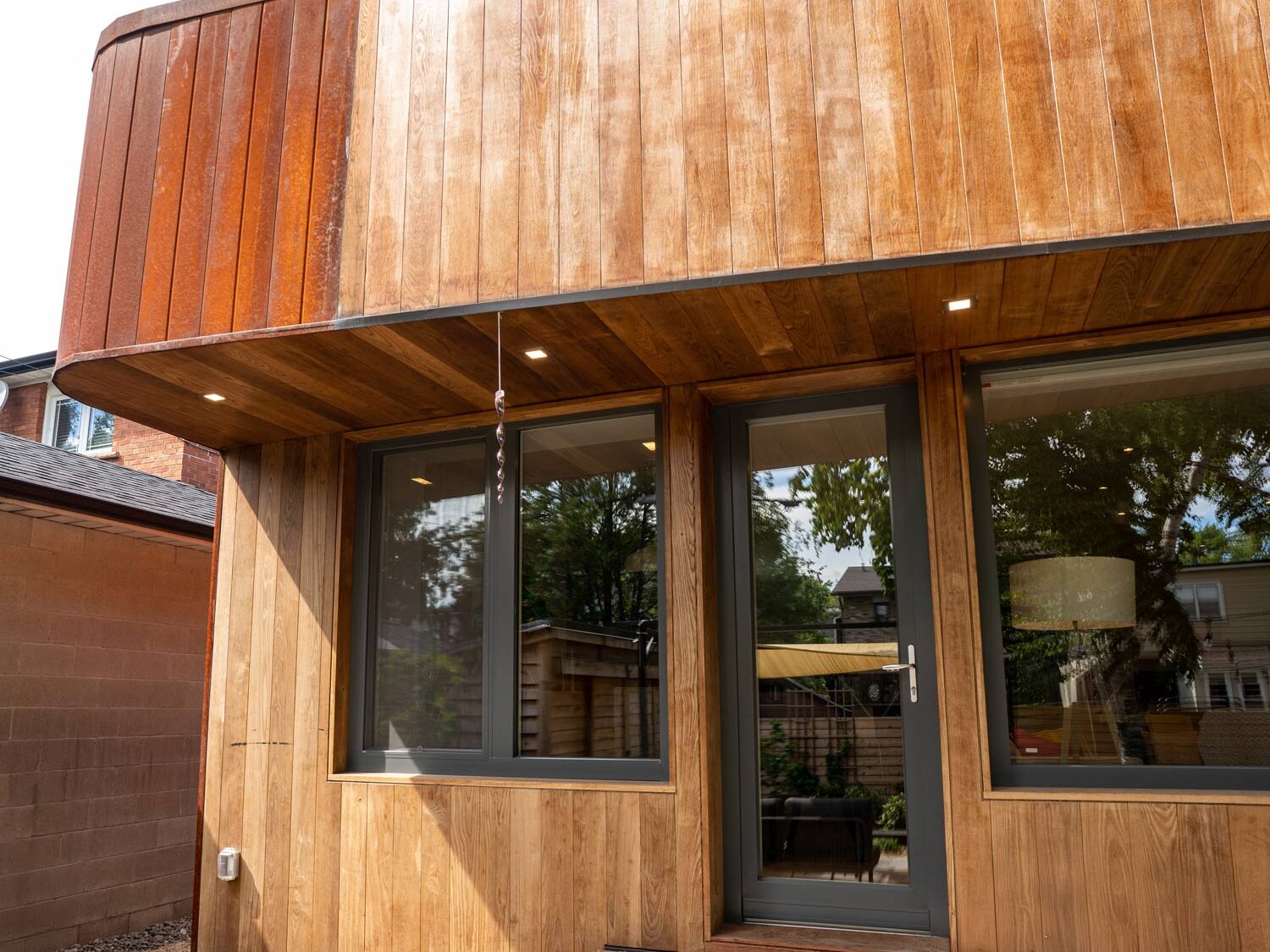
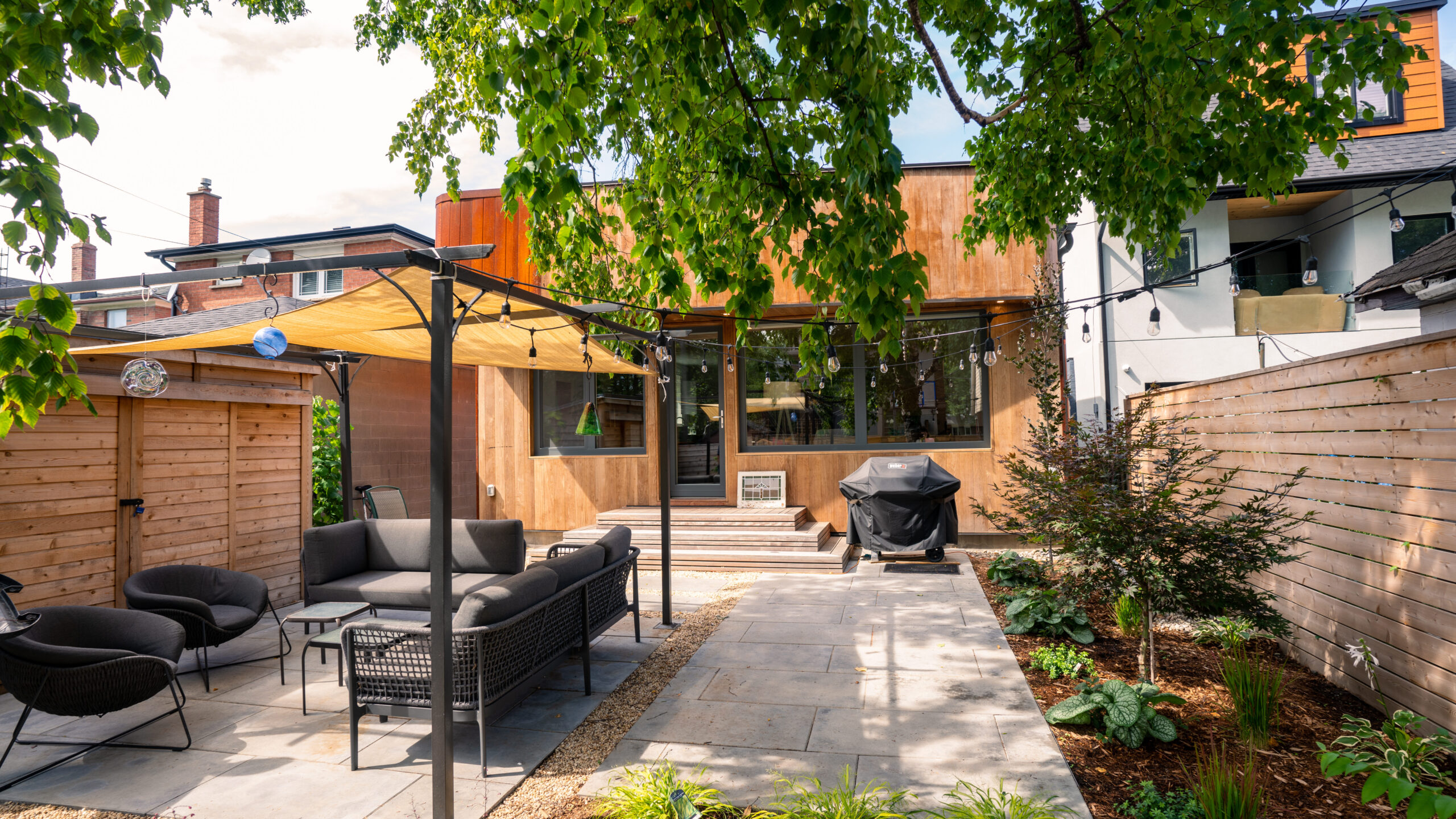
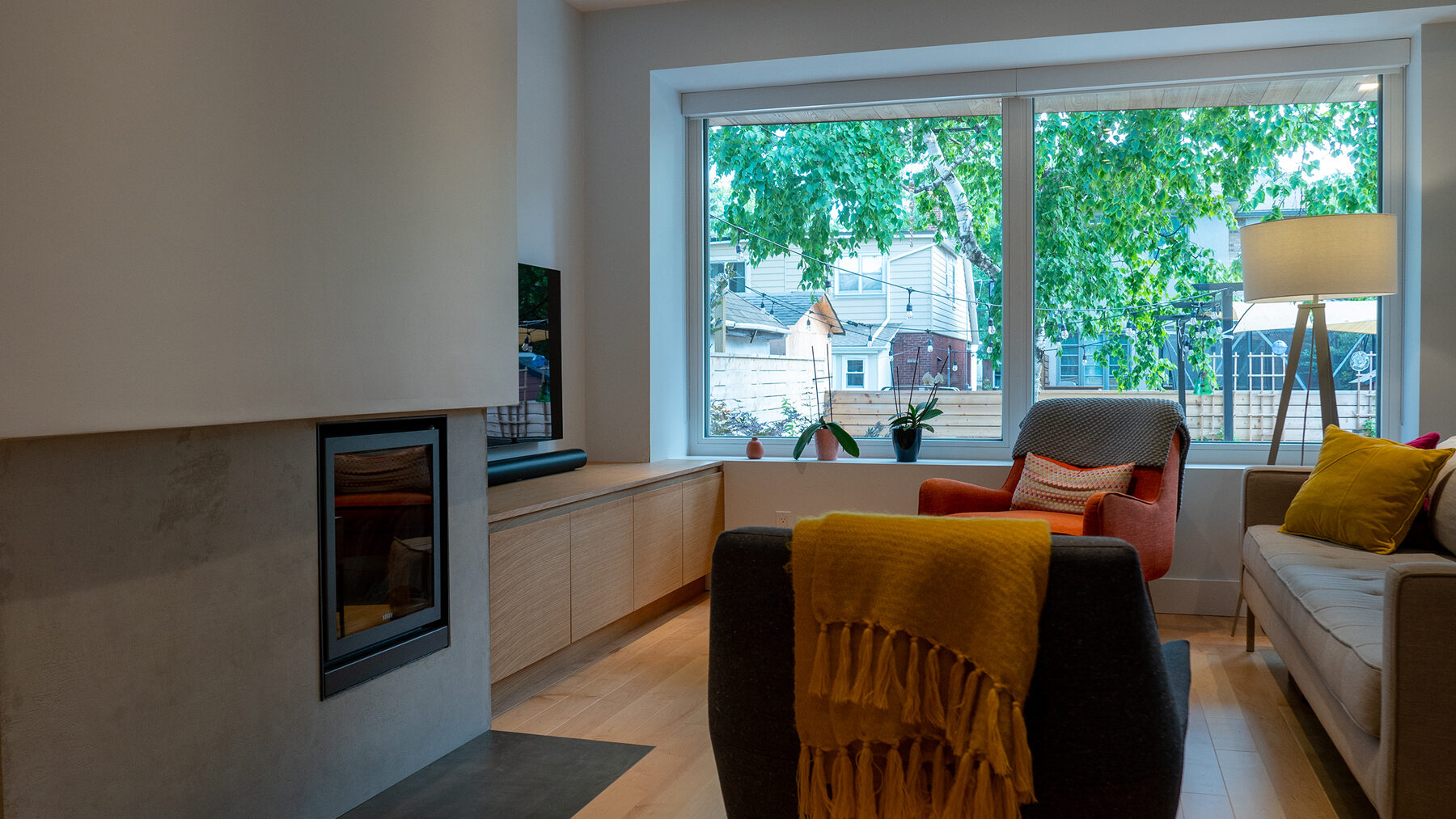
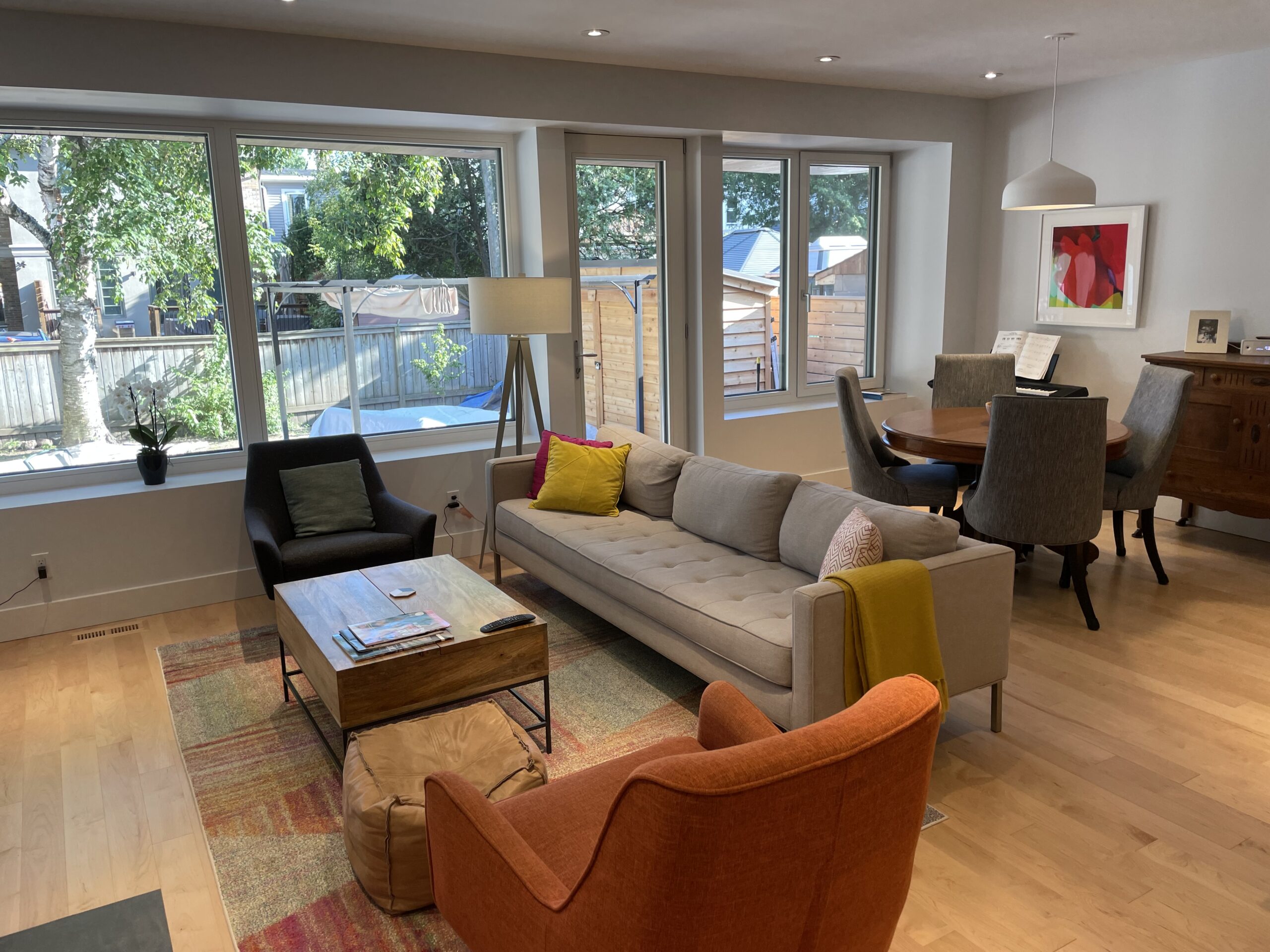
The project was just featured in the CAGBC Ontario Focus Fall 2022 magazine as well as in Canadian Architect. Teagan McCanny took these awesome pictures for the magazine spread. The project has a bright open concept living area-kitchen, with large windows facing into a serene outdoor backyard social space and garden.
So after all of this information, why should you consider an EnerPHit retrofit for your next home? First and foremost, improving an existing building’s energy performance will decrease your home’s energy usage and these savings will be apparent as costs. Not only can the building’s thermal and energy performance be optimized, but your home’s appearance can be updated to reflect your current preferences.
Therefore it makes a lot of sense to do an EnerPHit retrofit of your home if you are already considering a renovation, remodelling, or adding an extension to your house. With the builder already on-site, the mobilization and overhead costs of the work will be lower then doing an addition and/or later retrofit. Numerous grant programs can help offset retrofit costs, which also makes this option more feasible, no matter your budget.
Increase the life span of your home while being conscious of its impact on the environment through an EnerPHit retrofit and give your home a new life! Learn more about our EnerPHit certified retrofit project, Sammon House, in our portfolio. Reach out to us to plan an EnerPHit retrofit for your next home!
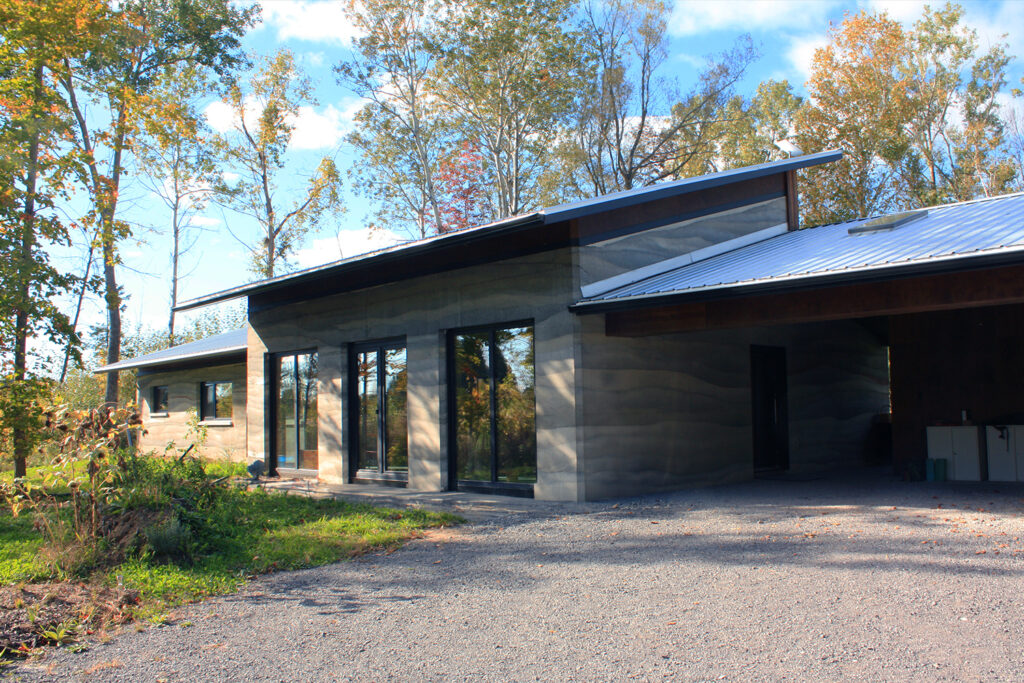
We are pleased to show you photos of the Cherry Valley Rammed Earth house that was completed this past summer. Located in Prince Edward County, the site inspired the design of this minimalist single storey home.
The main house and guesthouse are separated by a covered breezeway, which shelters a carport and three-season screened porch. A perennial herb and flower garden is located on the north side and a small fruit and nut tree orchard is in the front.
The private residence and guesthouse is a high performance building, designed to maximize the home’s thermal performance. The client was inspired by ancient stone monolithic structures, leading to stabilized rammed earth becoming the primary material choice. To offset this feeling of solidness from the rammed earth walls, the building’s shape and its plentiful windows, skylights and clerestory windows all help increase the natural lighting entering the house.
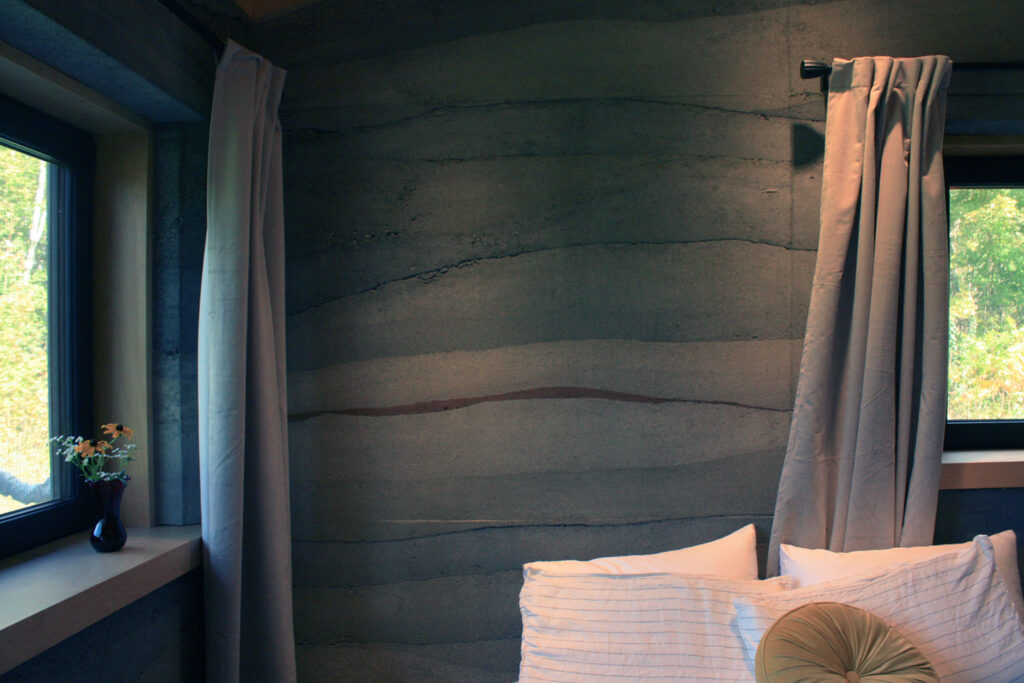
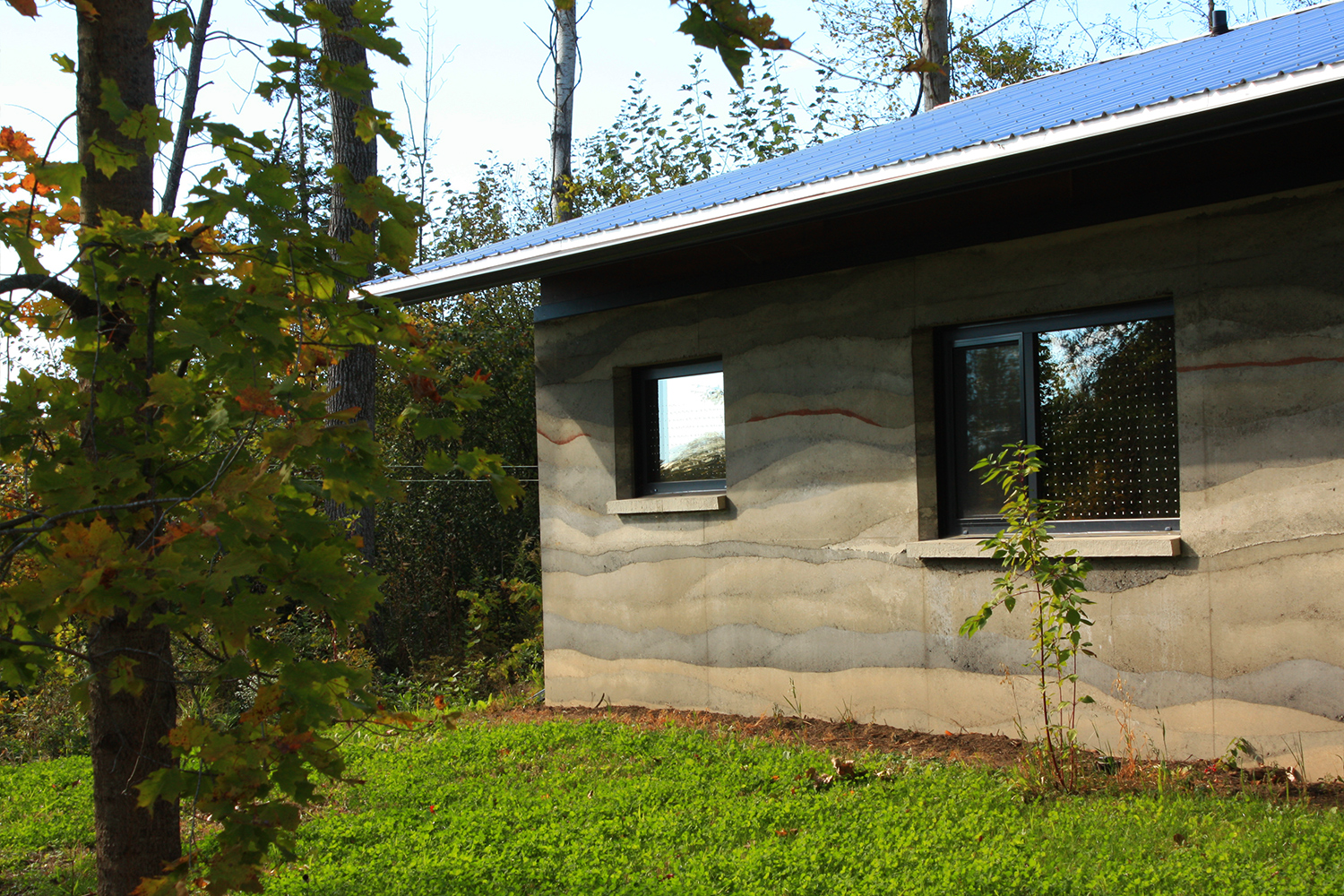
Taking a closer look at the walls, rammed earth is an extremely durable material, with a lifespan greater than 200 years. It consists of compacted natural raw materials including earth, chalk, lime or gravel. This results in walls with hues of grey, blue and red depending on the amount and direction of sunlight entering the windows.
Rammed earth has a low embodied energy, non-toxic materials, and a high thermal mass. The combination of the materials with the overall design allows the walls to easily trap heat and maintain a stable temperature within the home.
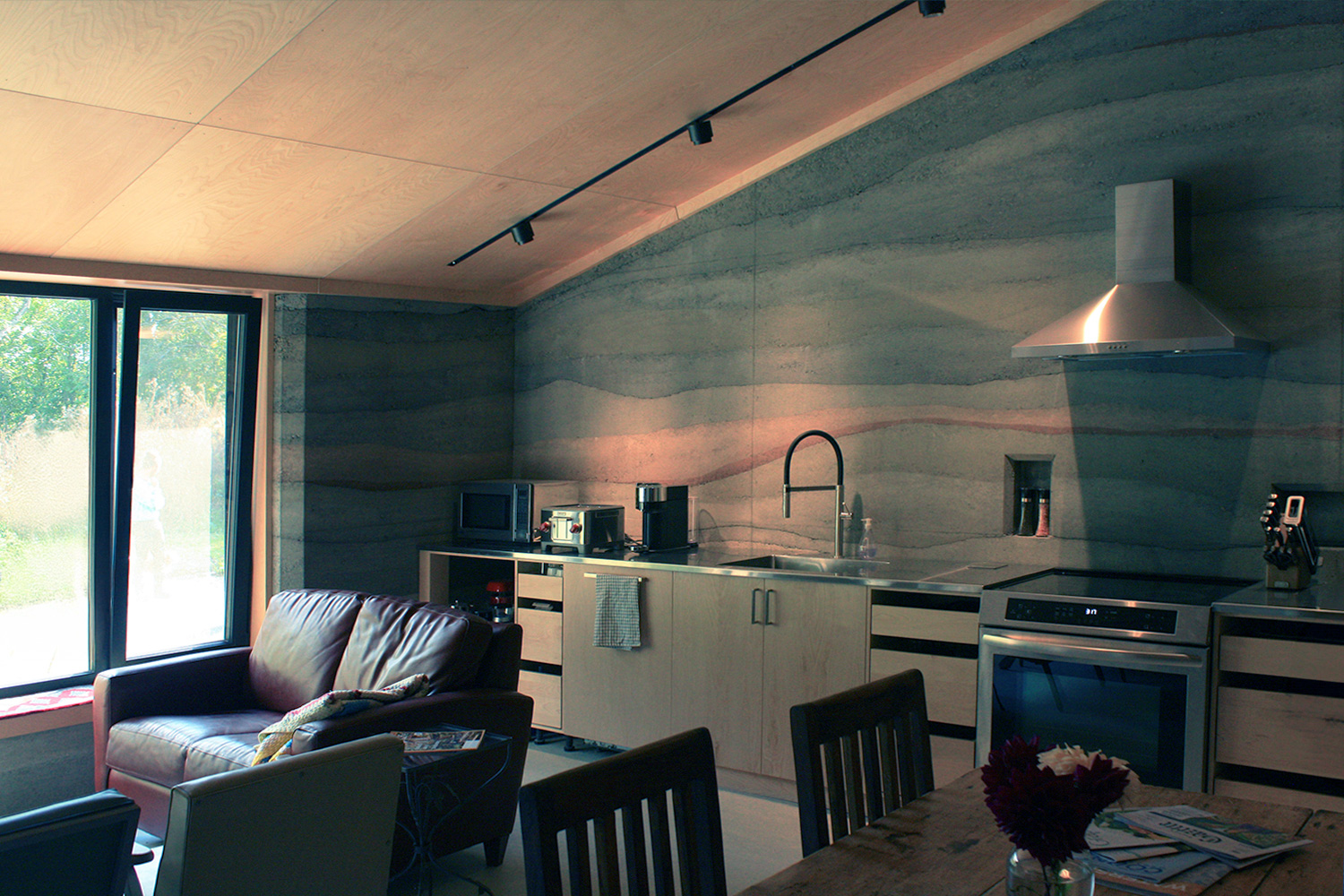
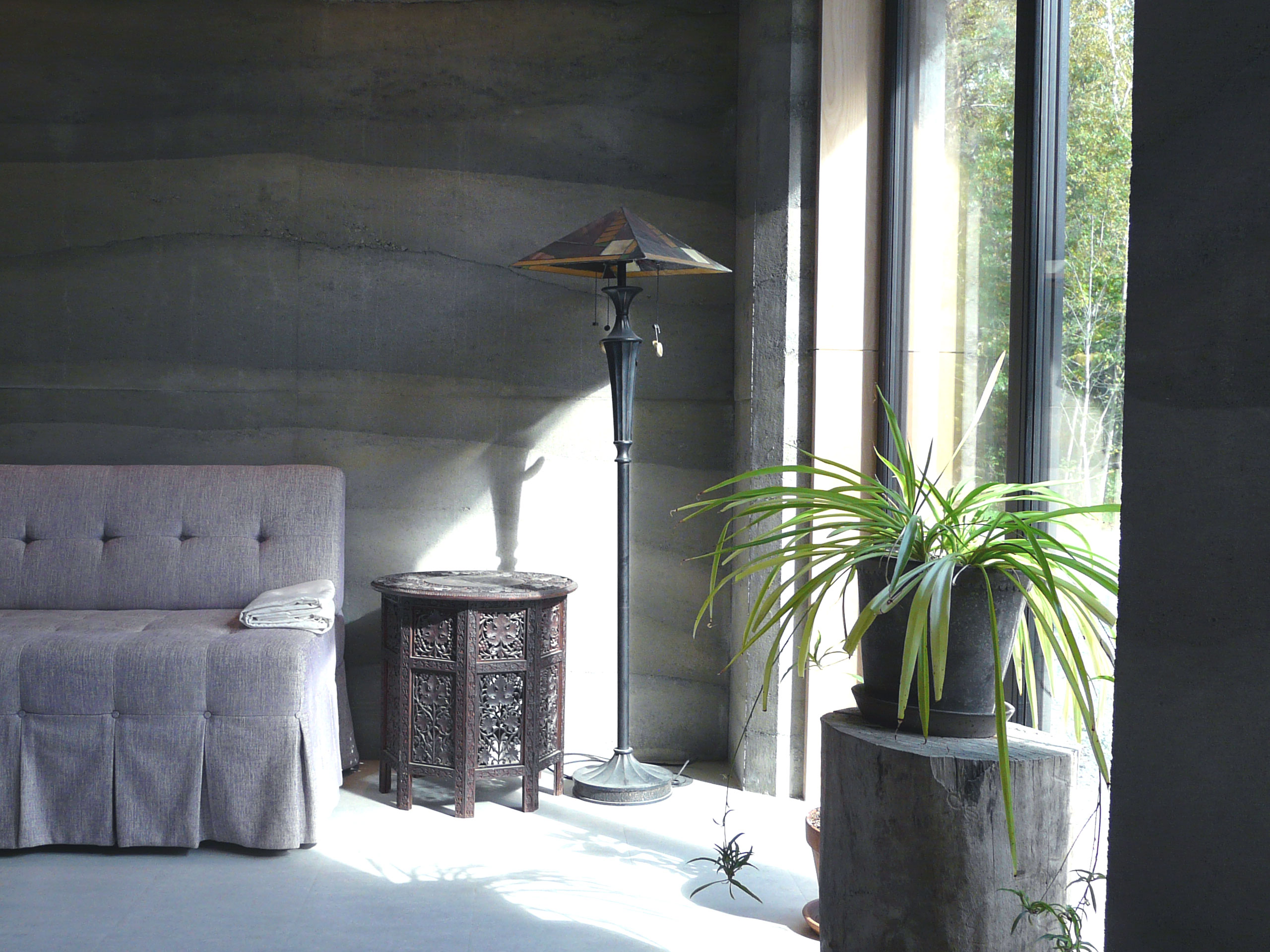
The main living room and kitchen and dining area on a sunny day can be seen in the photos below. Here the walls appear very warm with the red hues.
In contrast, the walls appear more cool in the image to the right, with grey and blue being the prominent colours.
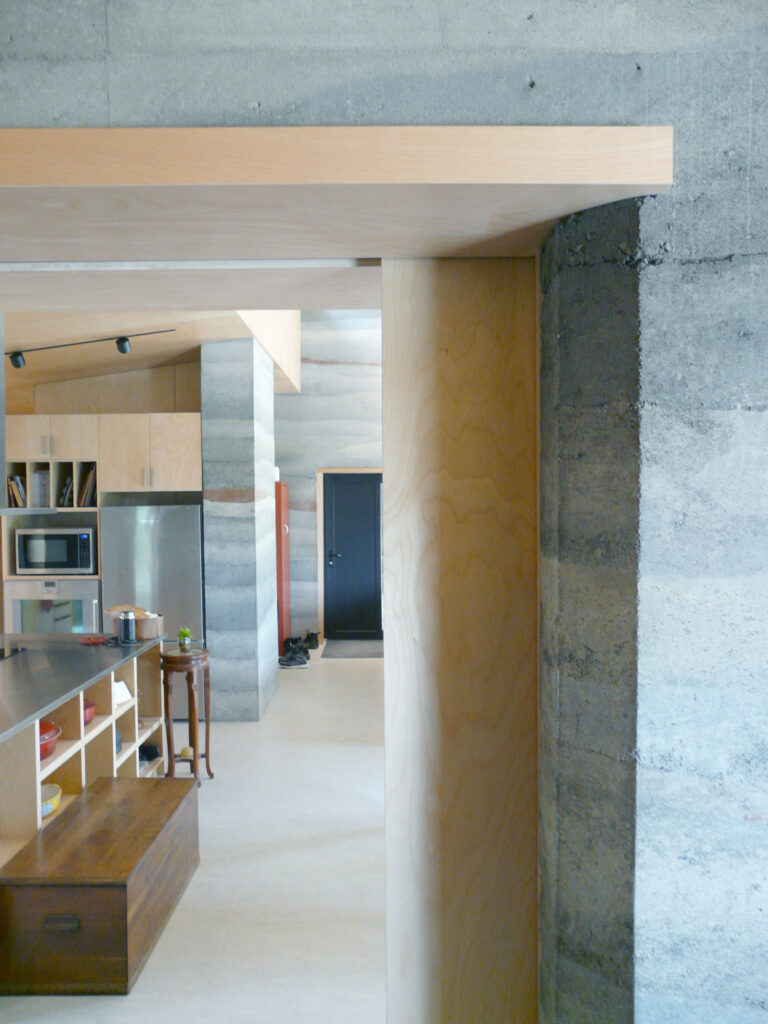
Delving into the building, the interior combines exposed rammed earth walls and white oak panelling with natural wood beams and columns. The contrast between the materials is clear in the image to the right.
The colour palette was inspired by the work of the Nordic Minimalists found in Sweden and Denmark, which evokes beauty with the simple natural materials and results in a calming experience for the homeowners and guests.
The main living, dining and kitchen area features wrap-around windows on the south and west walls with subtle chamfers around the windows and on the corners to create a rich-palette of light-effects and shades. The exterior overhangs are designed to keep the hot summer sun out, and let the winter sun stream inside.
Rammed earth is a uncommon building material that effective at controlling heat flow due to its compact nature, which removes the need for a typical envelope system that includes air, water and vapour barriers. The material also has a variety of hues that create a beautiful appearance outside and inside of the building which is highlighted in this project. This project showcases the beauty of rammed earth and how it can be used in a high performance house.
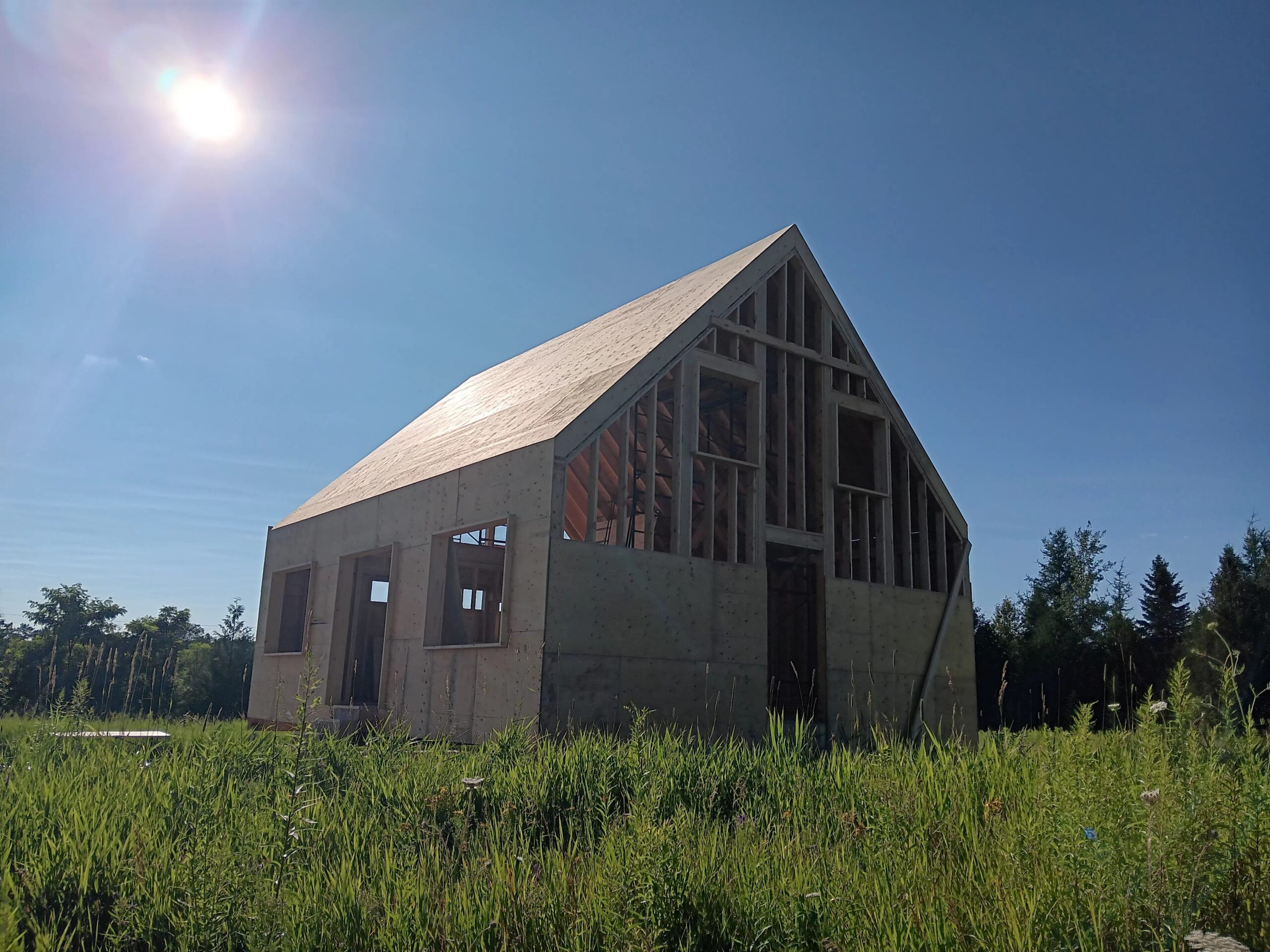
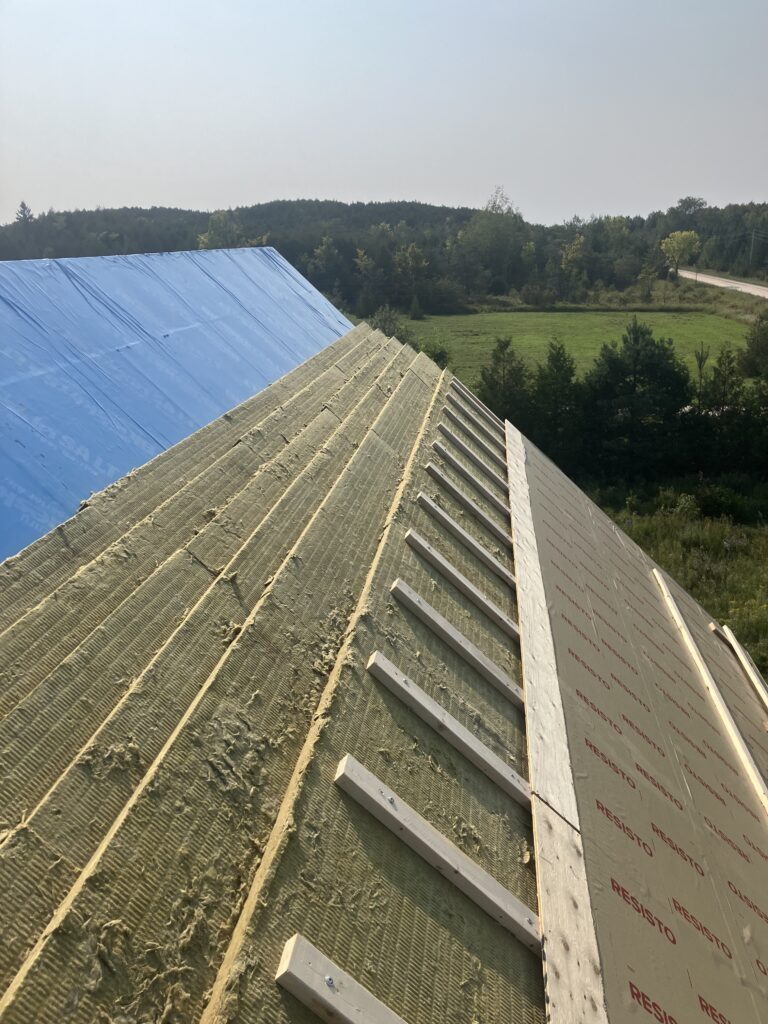
Since 2023, we have worked with a client to design a beautiful 1,100 sf home located in Priceville, ON. The home features elements of passive house design including external insulation in the walls and roof, as well as energy efficient fixtures. We are excited to show you the current status of the build.
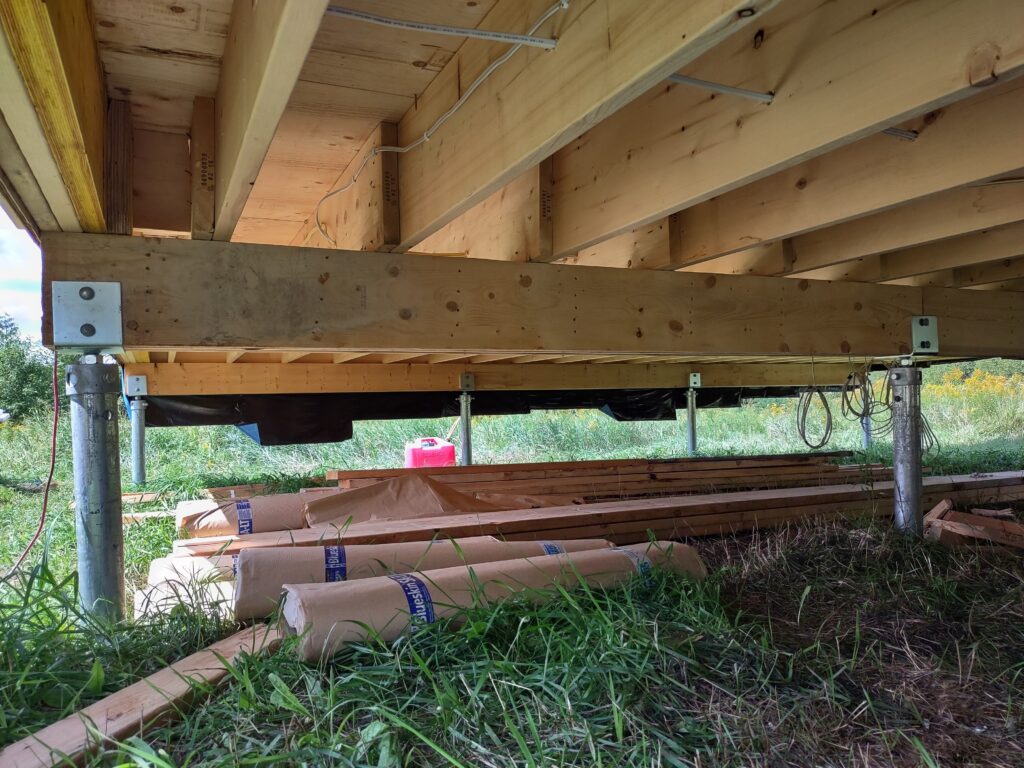
The two-storey house is a high performance, low carbon, minimalist retreat. Set on a beautiful site surrounded by forests and fields, the property includes permaculture gardens, orchards, a root cellar, and a solar panel system. Helical piles were used for the foundation, minimizing site work and elevating the house, which is seen in the image below.
Helical piles allow for the building to be slightly elevated from the ground, reducing the need for site work, and elimination of concrete on the project. They are made from Hollow Structural Steel (HSS) and are drilled into the ground, beyond the frost depth. The ifoundations where completed within 1 day with no site work or disruption.
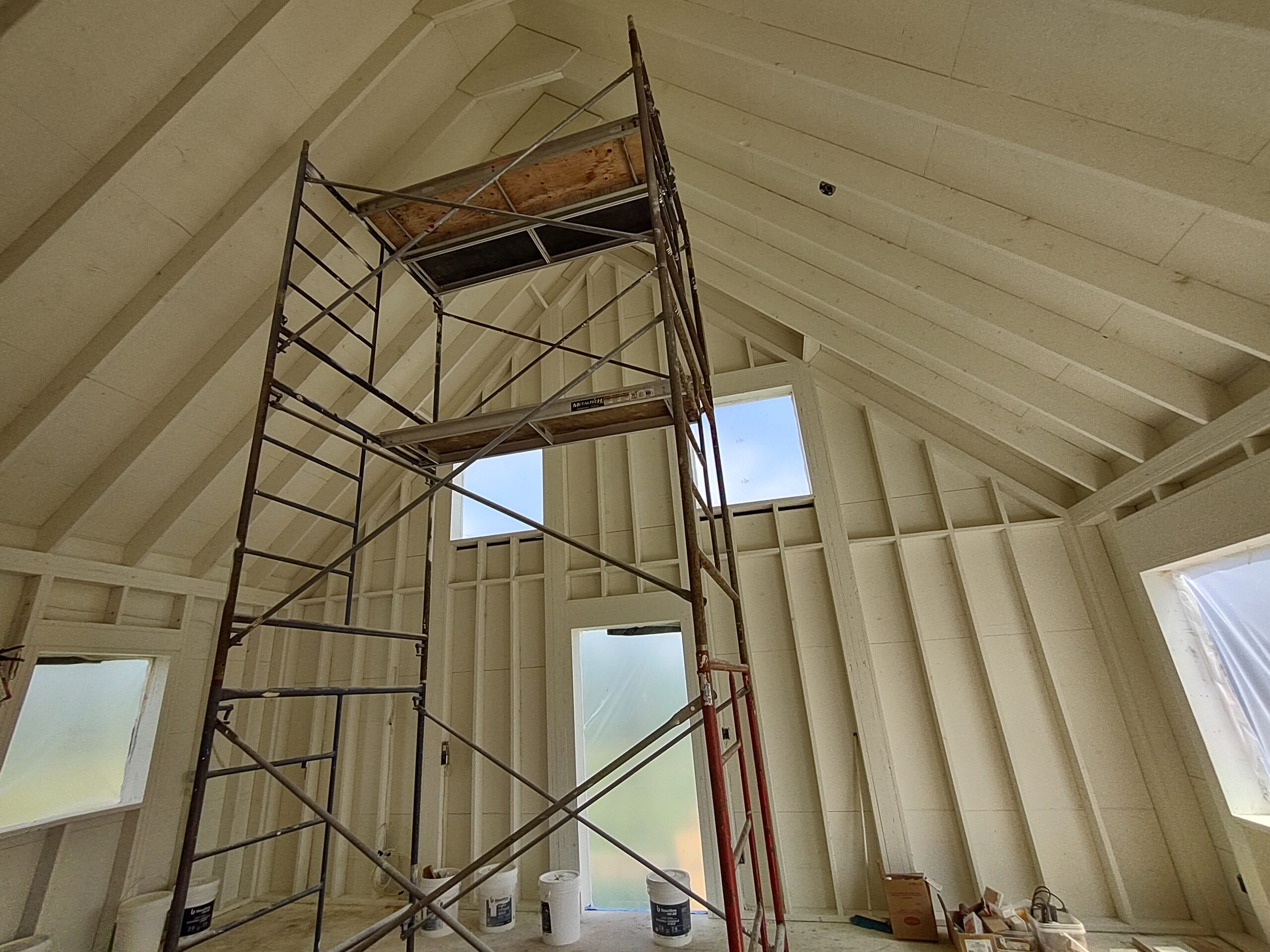
Due to the external insulation, the wood structure is exposed to the interior. It is painted in light beige for a minimalist aesthetic and creates a spacious atmosphere. When fully finished, the home will have a loft above the bedroom and washroom, overlooking the living and dining area and kitchen. The image below is an interior render that shows the transition between the ground floor and loft space.
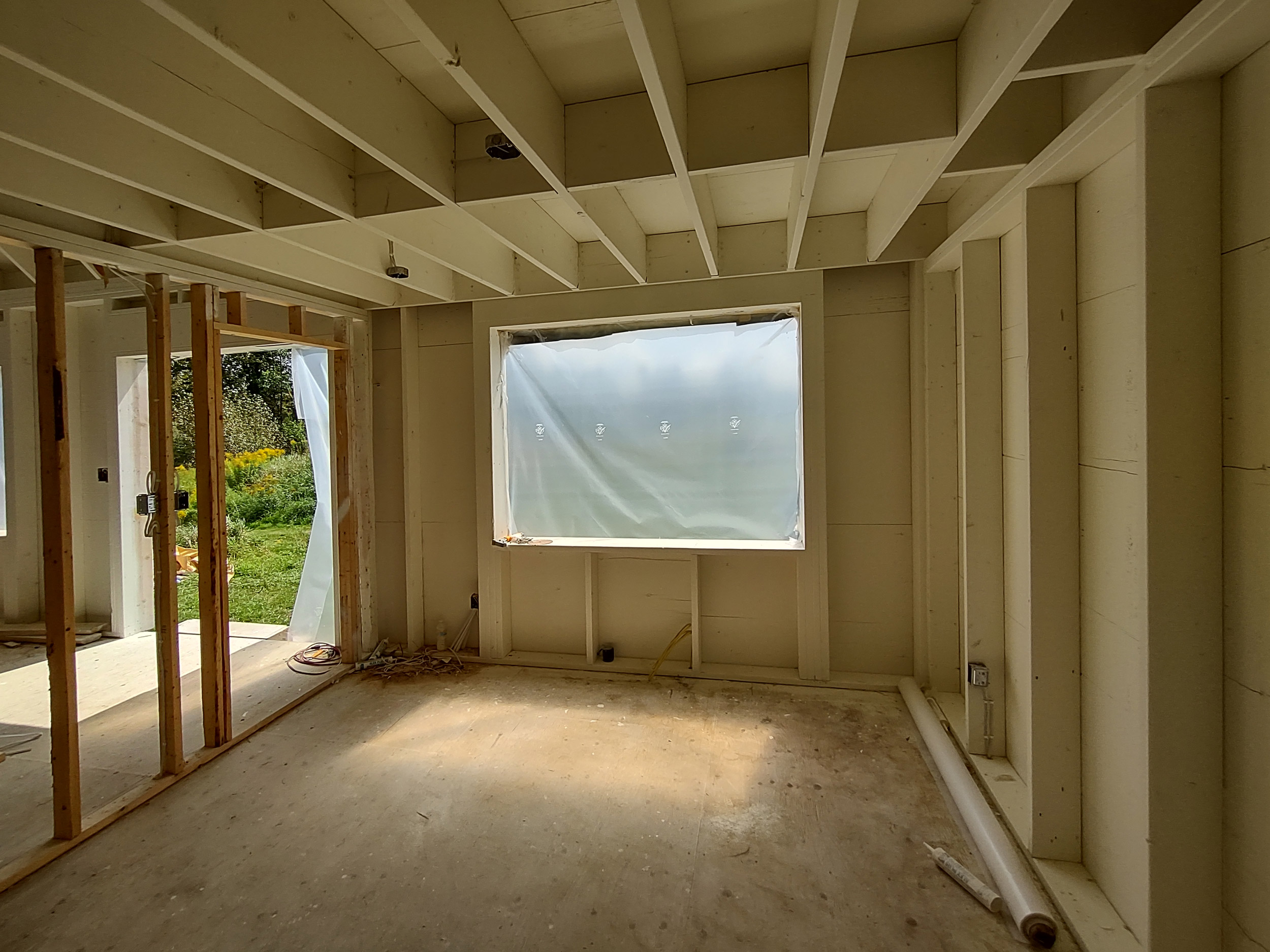
The bedroom and loft areas can act as either bedrooms or offices for the residents. The window placements allow for light to penetrate deep into the rooms for either activity as shown in the images below.
The exposed continuous roof beams and wall studs create long lines of continuity throughout the interior, creating a design motif. This aspect transitions to the outside as seen with the vertical corrugated metal panel cladding to be installed on the building’s walls.
Although the building is not seeking Passive House certification, it would qualify for Passive House Low Energy Building certification if pursued due to its all-electric mechanical and heating systems.
The overall home design and methodology are part of Coolearth’s development of an affordable modular design-build kit for rural and infill properties. We will post an update for the house once construction is finished, as well as for the launching of design-build kit with build partners in the coming months. Learn more information about the project in our portfolio.
As of September 30th, registration for CAGBC ZCB Version 3 is now closed and all new projects will need to register for Version 4. This blog post will detail what the CAGBC ZCB Standard is, outline our approach to meeting that standard, provide a few examples of ZCB certifications we have worked on, and outlines the biggest differences between V3 and V4.
Why Choose CAGBC ZCB?
CAGBC ZCB (Zero Carbon Building™) is a Canadian-made framework for all building types which provides a rigorous and flexible path for the project’s net zero carbon goals. Its main purpose is to encourage innovation based on carbon reduction (embodied and operational) and it serves as a certifiable and recognized guide to demonstrate and prove zero carbon design efforts. As the leading zero-carbon building standard, the ZCB standards are an important tool to guide efforts in decarbonizing buildings for clients like municipalities, institutions, and developers.
By having a project certified under CAGBC ZCB, organizations values can be embodied in their building and capital projects. Similar to LEED certification ZCB Certification is a form of quality control, so stakeholders can be confident that the building is proven to be sustainable. Governments and investors recognize CAGBC ZCB and its importance — ZCB Certification provides opportunities for funding options, such as tax incentives, rebates, and grants. As architects and energy modelers, we at Coolearth understand the process of building design from feasibility through detailed design and construction, and can optimize the building design with the consultants and sub-consultants early to manage certification.
The process to fully certify a project as low-carbon with the CAGBC is straightforward, but two-fold: ZCB-Design and ZCB-Performance. The Design phase’s goal is to design for Performance metrics including embodied carbon, greenhouse gas emissions, air tightness, refrigerants, and other metrics. While one can apply for ZCB-Performance without going through ZCB Design process, such a building would have to be operational for three years before it would be eligible to apply. With the ZCB-Design application, that wait time gets cut to 1 year and you have greater assurance of success.
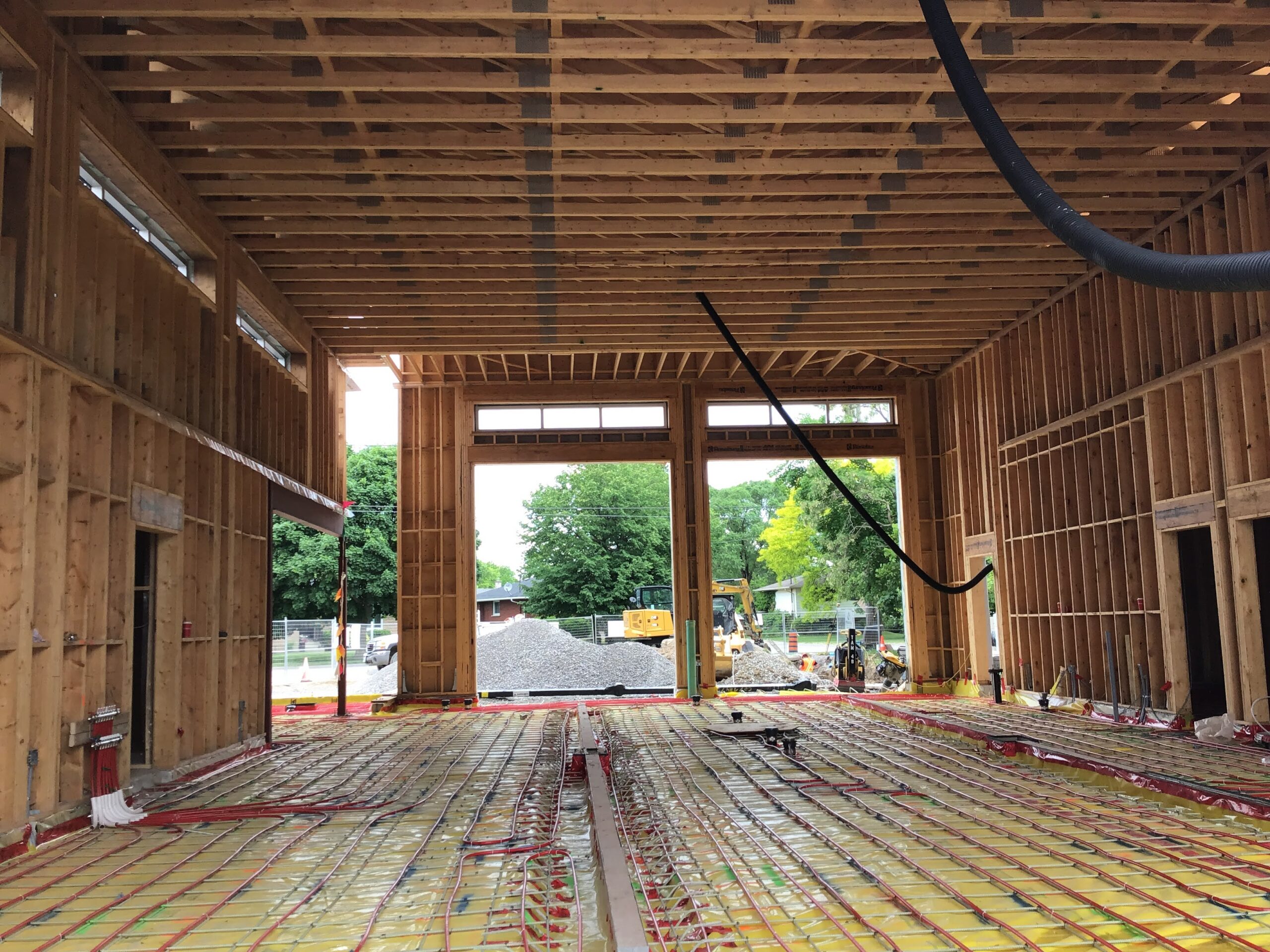
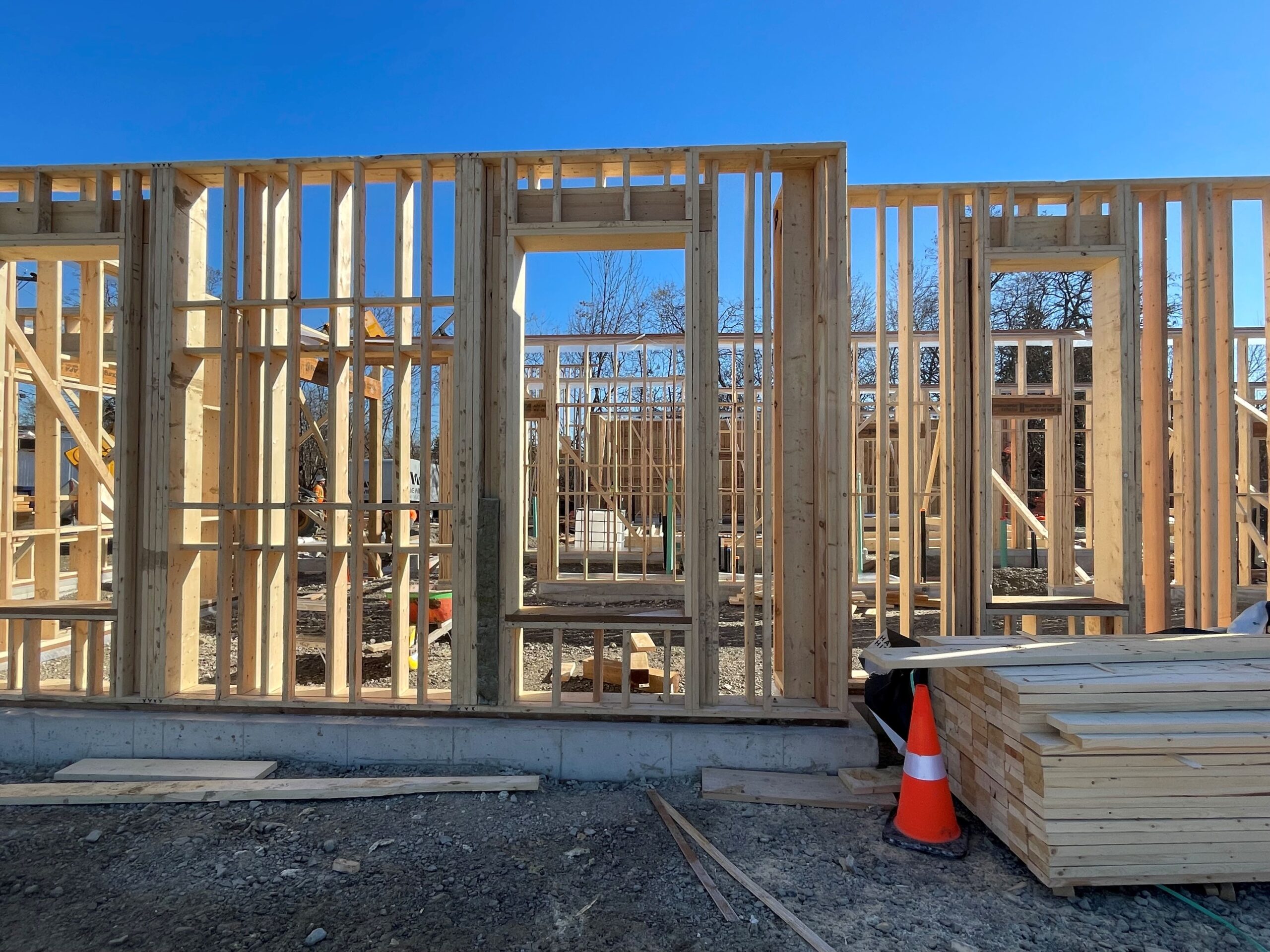
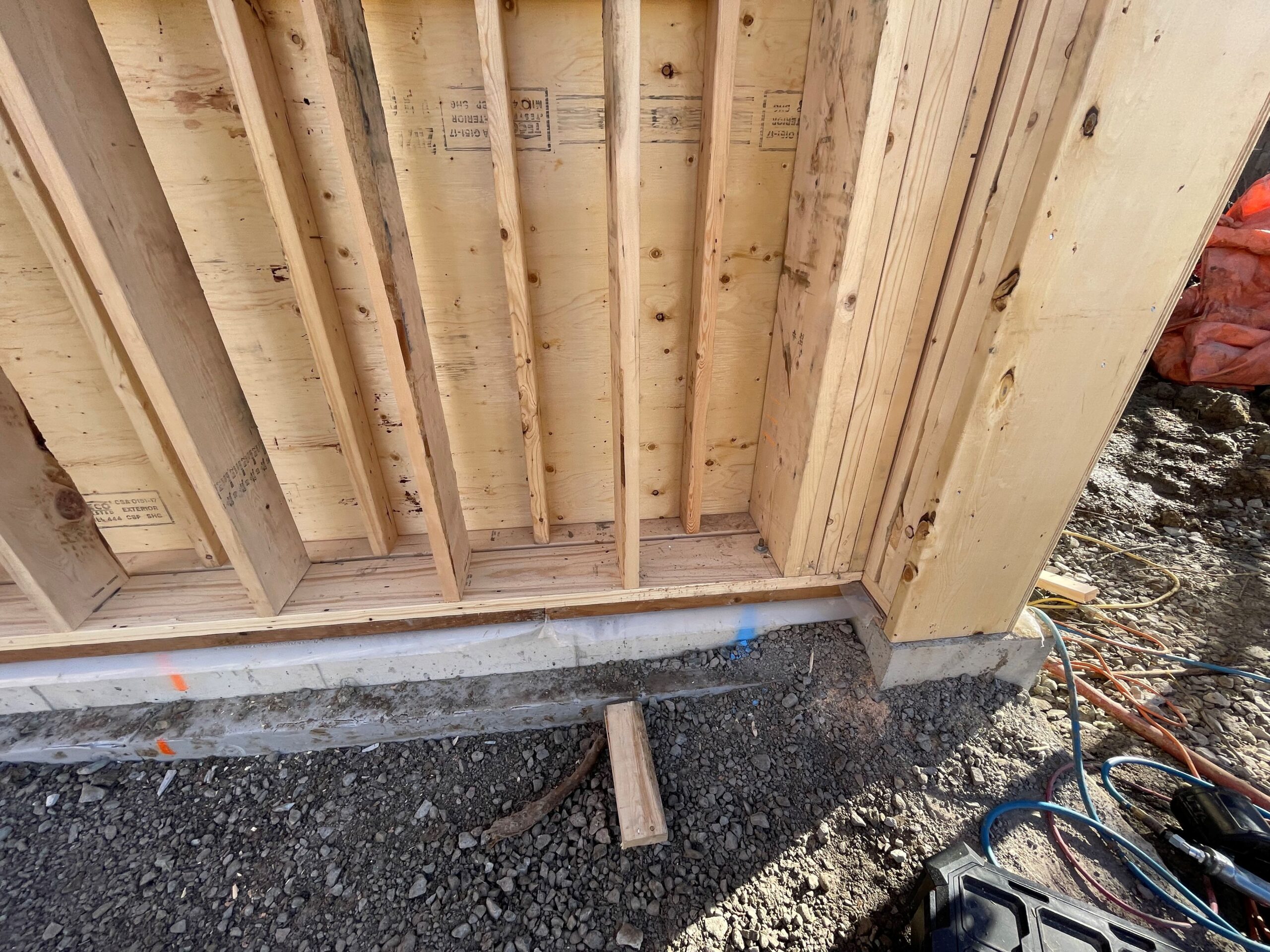
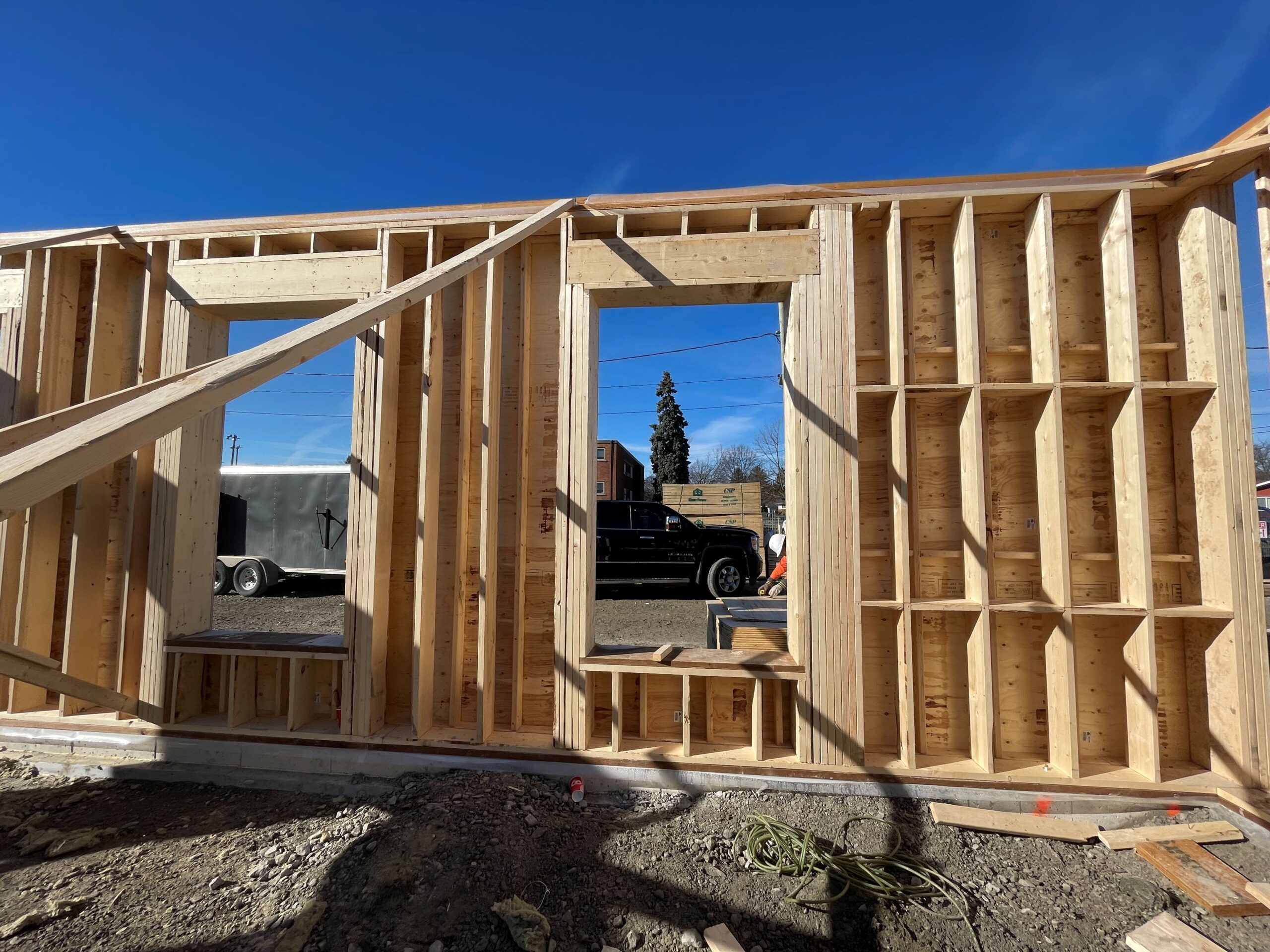
ZCB-Design also encourages smart sustainable decision making in the design of a project. For example on a Fire Station project in St. Catharines targeting ZCB-Design certification, we worked with the architectural design team as sustainability consultants, to identify an envelope and structural strategy (light wood frame construction, cellulose insulation, low GWP materials). Below are a few photos of the construction of the Fire Station as of May 2024.
View of the equipment bay of the Fire Station showing wood frame wall and roof truss construction, both to receive blown-in cellulose insulation. The 15-mil air barrier beneath the concrete floor slab with hydronic piping is also visible.Double study wall framing waiting for sheathing. Close up of the double-stud wall.Double stud wall ready for roof trusses.
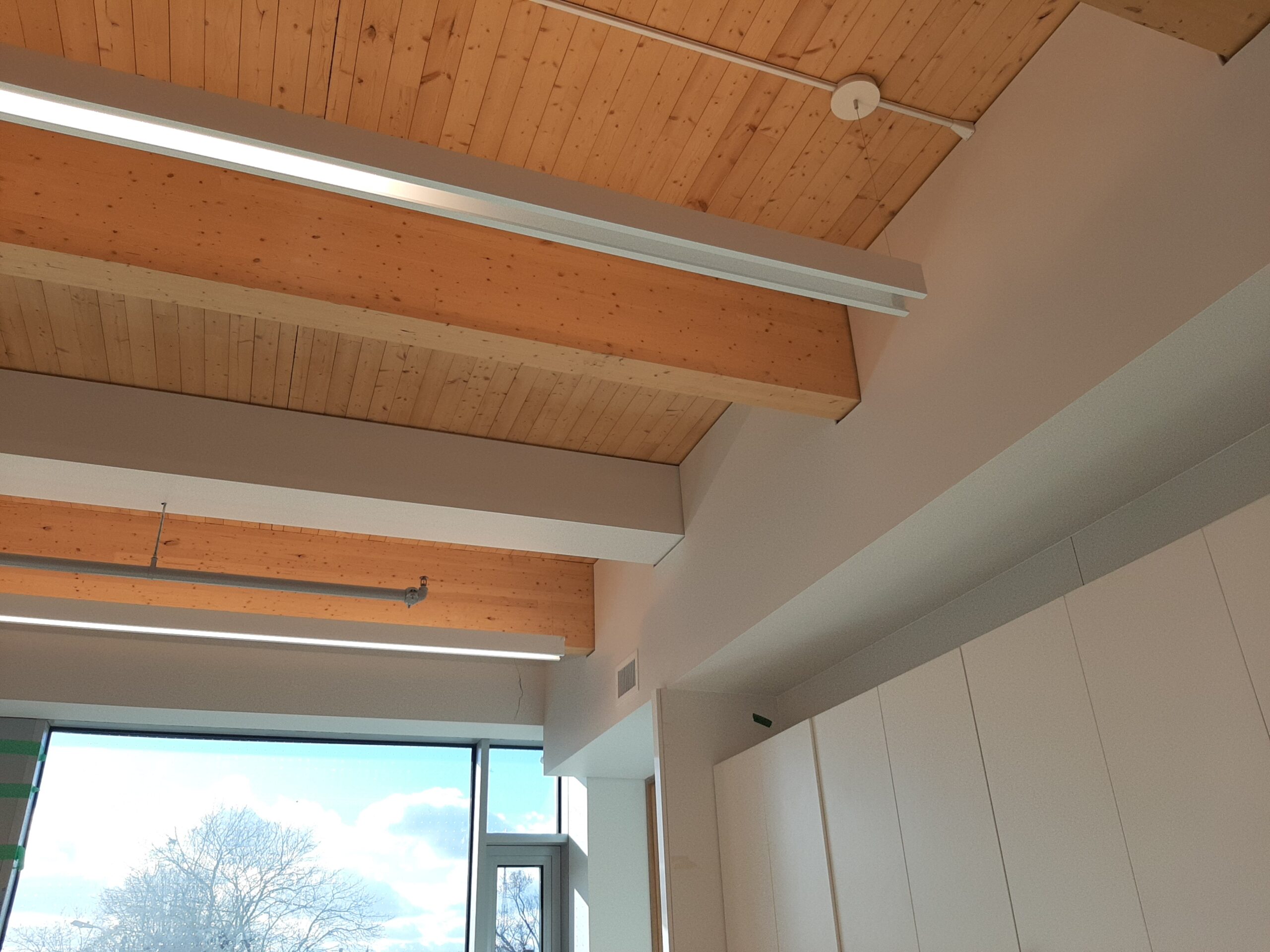
Another example, the Mount Dennis Childcare Centre for the City of Toronto which has ZCB-Design certification and is targeting ZCB-Performance certification once operational for one year, uses of mass timber in the form of nail-laminated timber for the floors, and glue-lam columns and beams where possible. Below are a few photos of the in-progress construction from early 2024.
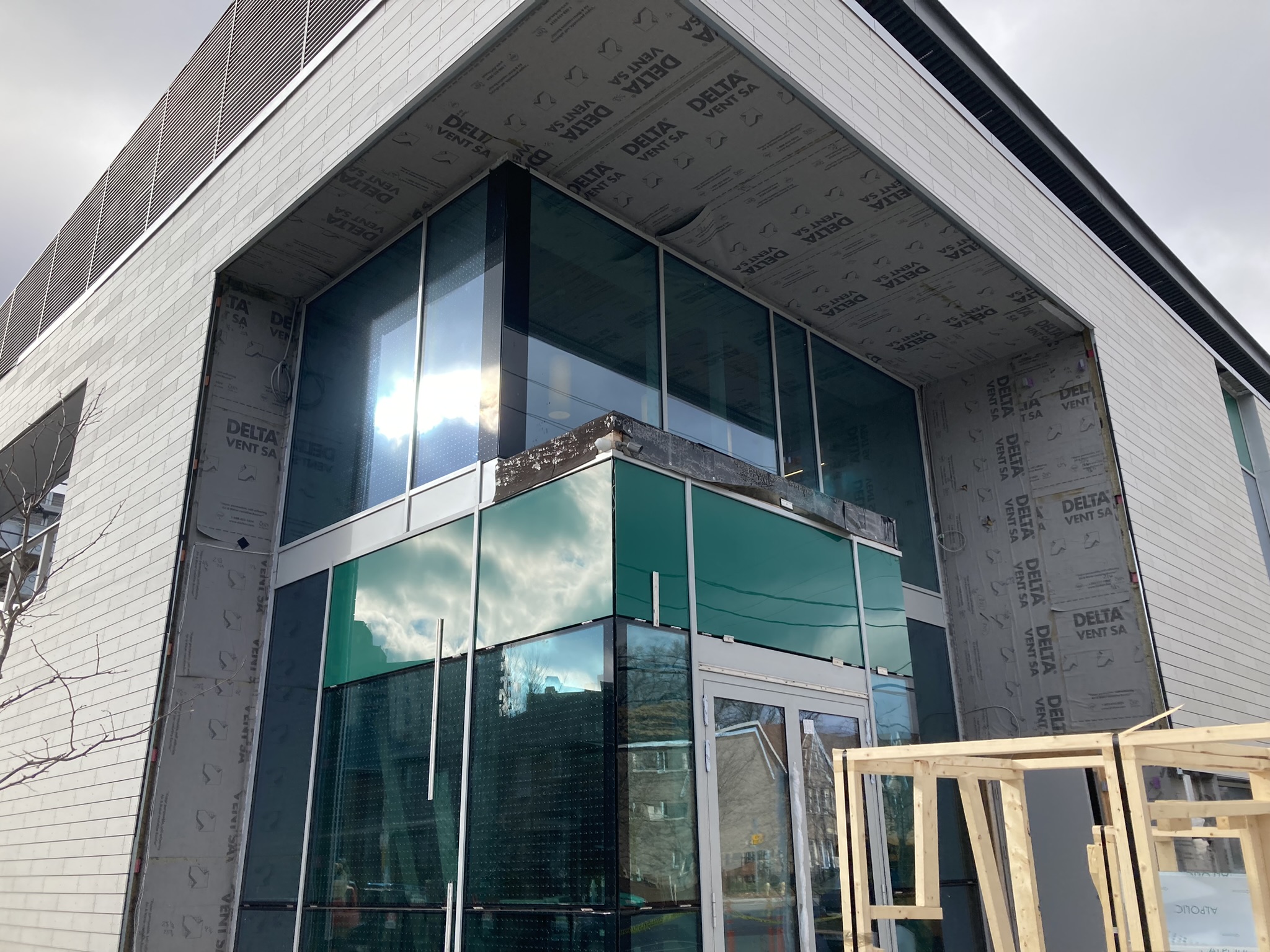
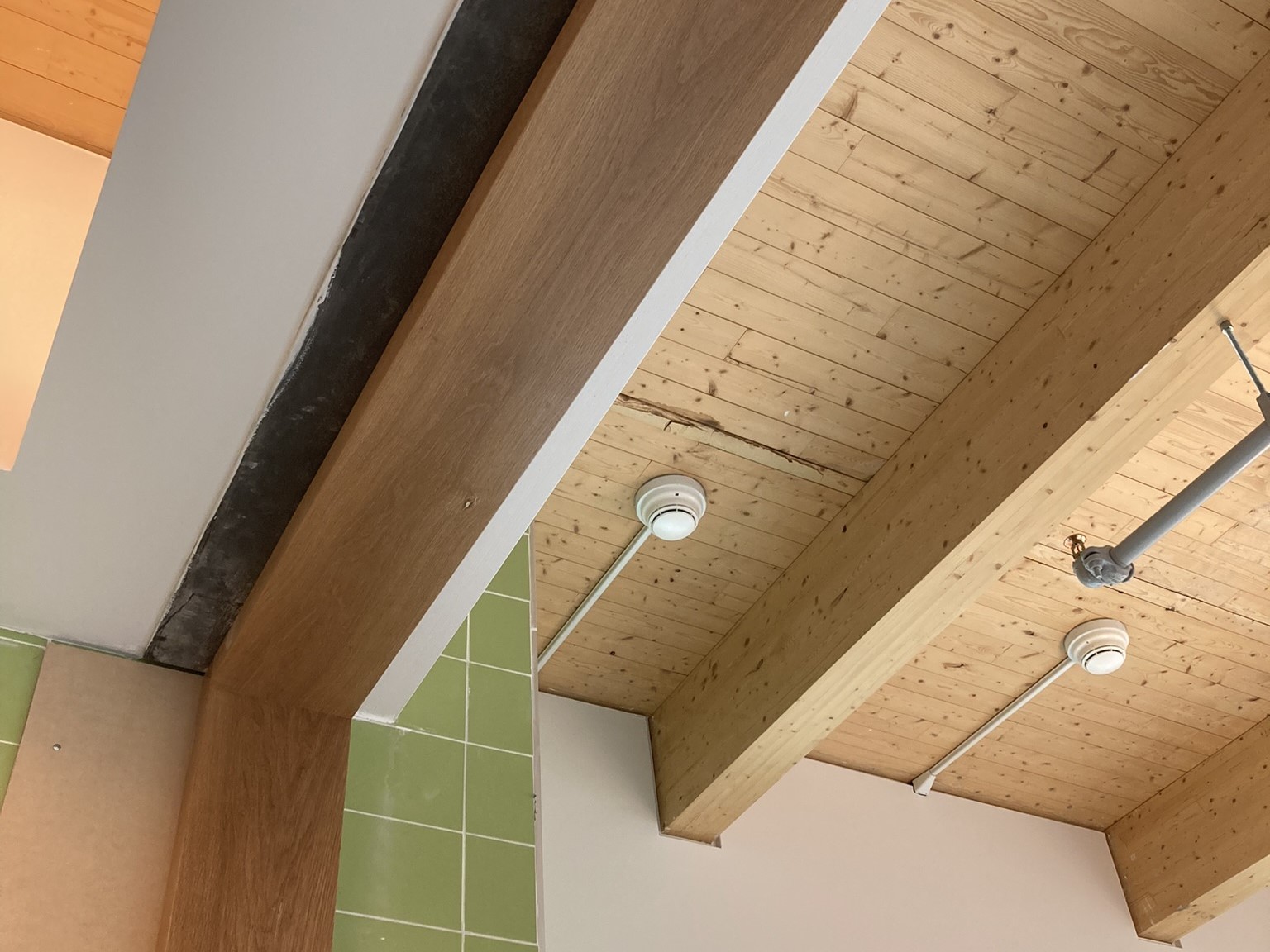
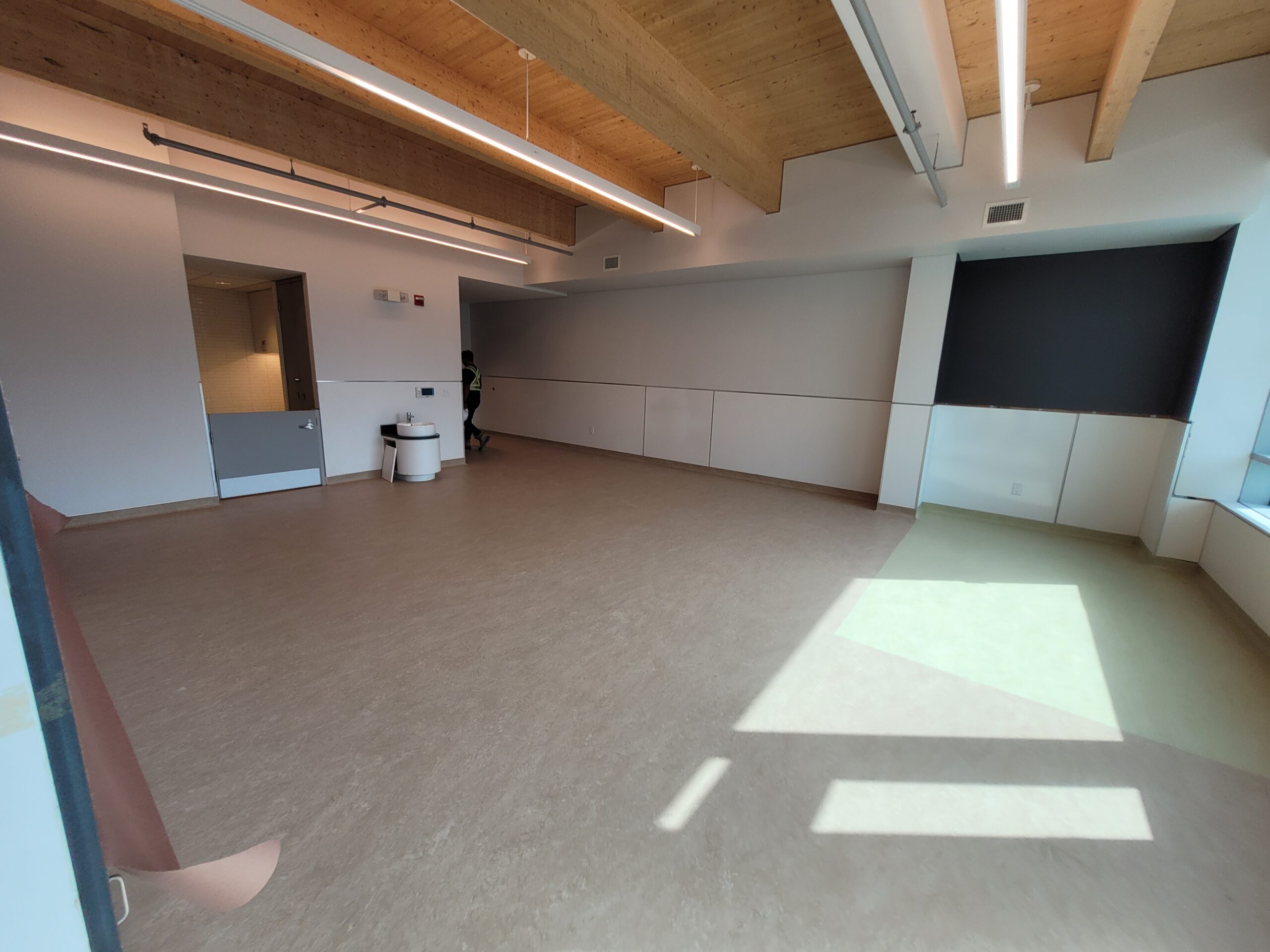
Front Entry with triple pane curtain wallNail laminated timber ceiling and glu-lam beamsInterior daycare space with wood ceiling.
The 2030 goal of the ZCB-Design is to award new buildings for achieving zero operational carbon and to demonstrate a 40% reduction in embodied carbon — this is their 2030 target. New versions of the ZCB program will be introduced over time until that target is achieved. The ZCB has established five guiding principles which influence the structure of the set standards:
Prioritize carbon emissions reductions
Ensure energy efficient design
Incentivize reductions in embodied carbon
Encourage good grid citizenship
Keep it simple and accessible
As of October 1st, 2024, ZCB-Design v4 is the standard for any new building application under the program.
What’s new in CAGBC ZCB V4?
V4 is a major update to the CAGBC ZCB certification program that includes more stringent criteria for zero carbon buildings and pushes the bar higher for innovation and decarbonization. The changes were based on the following principles:
Raising the target on embodied carbon
Increasing stringency on combustion
Capping the impact of refrigerants
Introducing new metrics for good grid citizenship
Providing guidance for assessing resiliency
The decision for these principles was made in part by the analysis of the current market demand and requests. As technology, trends, climate, and need of users, stakeholders, and clients evolve, the design prerequisites will become more stringent towards their 2030 goal and yet be obtainable goal for all buildings. We believe trends are moving in the zero carbon direction for buildings — market forecasts predicts that the zero carbon adoption will rise, along with climate risk disclosure standards, risk management, and future proofing of new buildings.
The market’s evolution towards high performance can be observed in places like the National Building Code’s new 2030 target updates, and policies such as the Toronto Green Standard v4 (May 2022), Vancouver’s Zero Emissions Building Program (Oct 2023), Treasury Board Secretariat Standard on Embodied Carbon in Construction (Dec 2022), and a growing number of cities and provinces considering Net Zero policies.
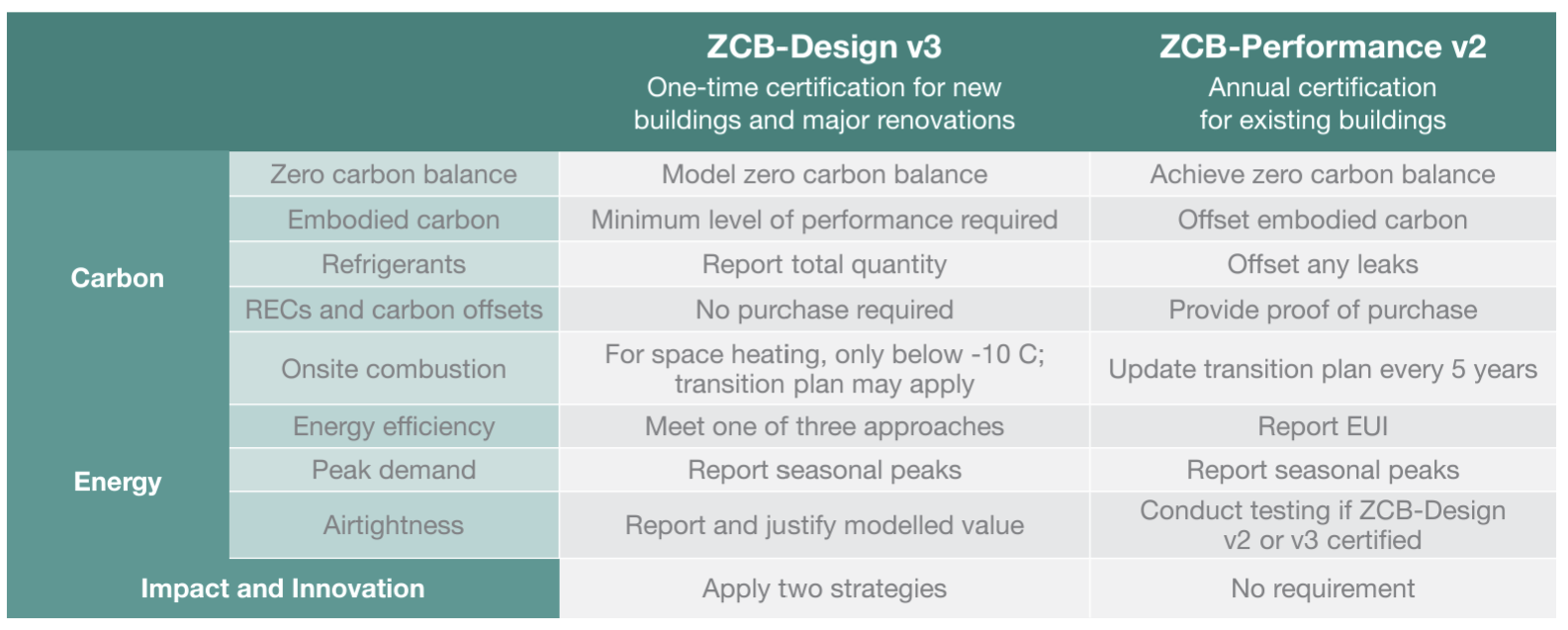
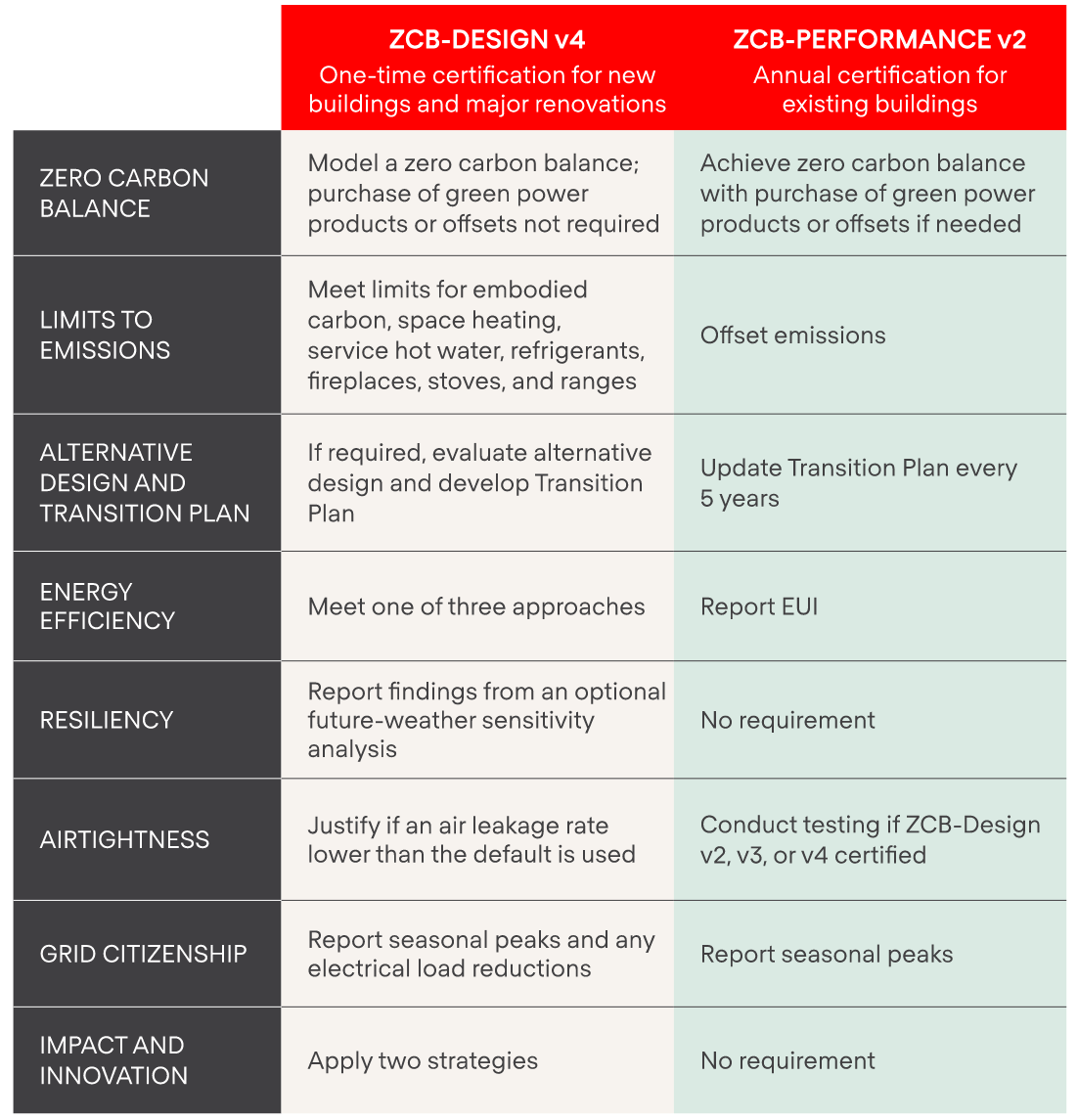
The following charts come from the ZCB-Design v3 and v4 guidelines. Immediately one can notice the categories have increased from three (Carbon, Energy, Impact and Innovation) to eight (Zero Carbon Balance, Limits to Emissions, Alternative Design and Transition Plan, Energy Efficiency, Resiliency, Airtightness, Grid Citizenship, Impact and Innovation).
Version 4 has reorganized the certification structure and added more requirements the previous version. Some categories and subcategories appear in both versions, while others have been organized to group into one category or have been separated into its own section. For example, ‘Limits to Emissions’ hosts embodied carbon and refrigerants as part of it’s category. Aside from the organizational changes to the certification standards, the new categories added are Alternative Design and Transition Plan, (Environmental) Resiliency, and Grid Citizenship.
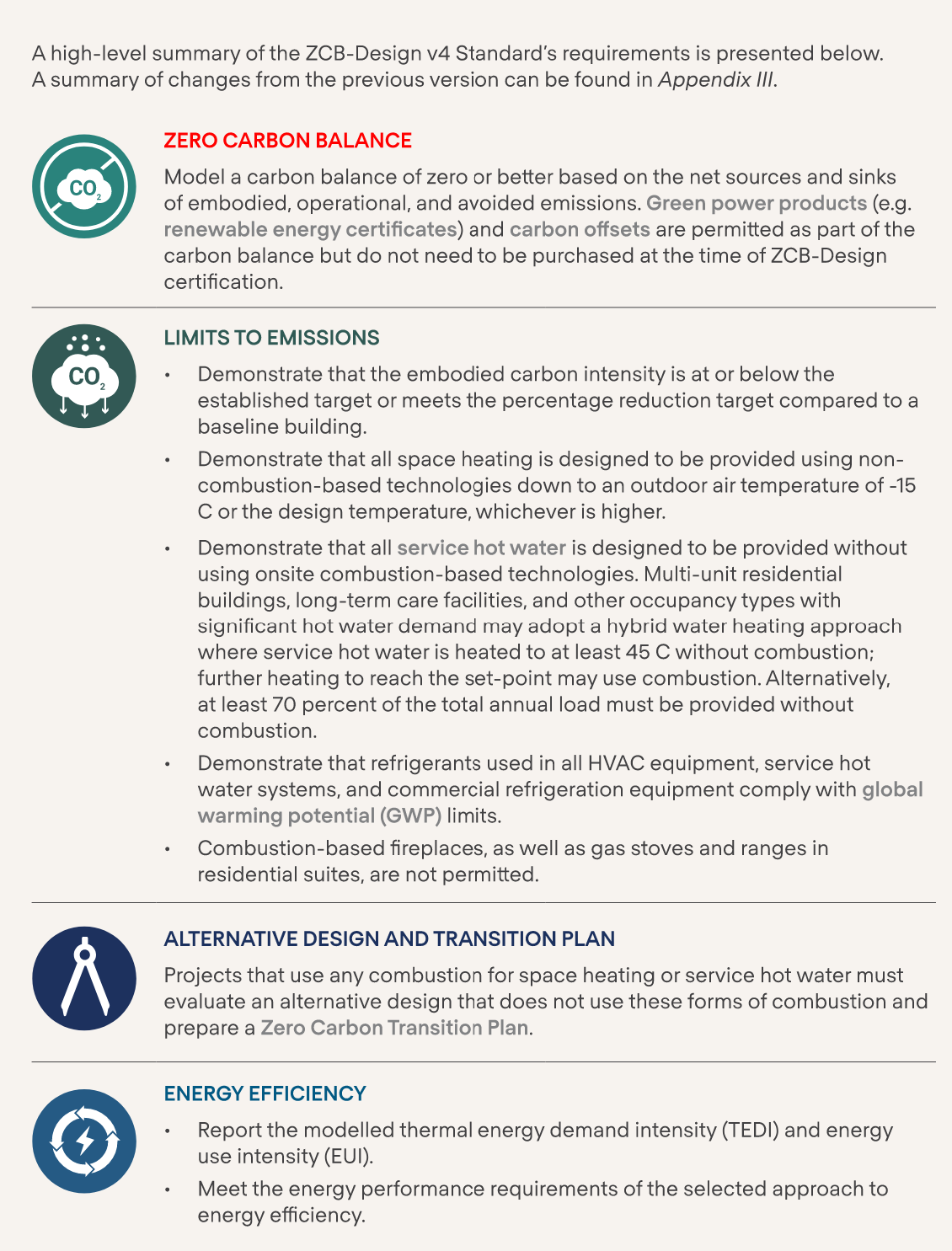
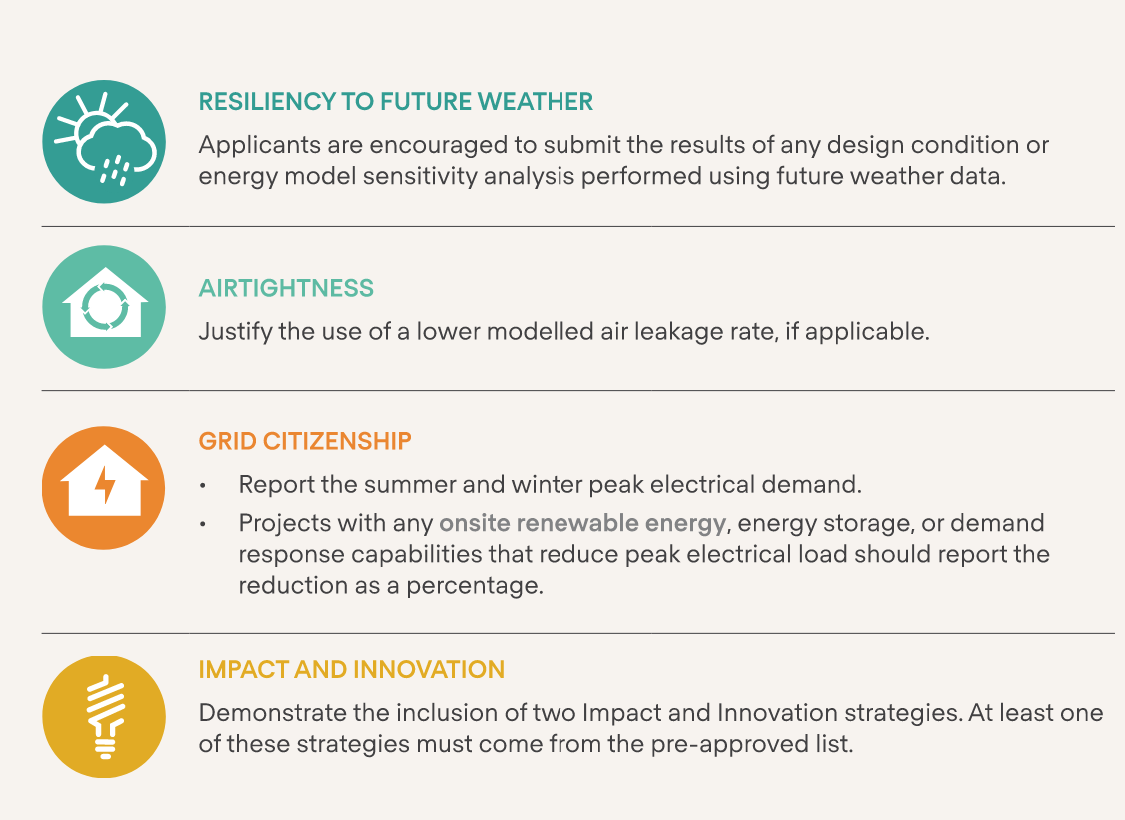
The CAGBC summarizes the categories as seen below in Figure 3:
Figure 3: High Level Summary of CAGBC ZCB-Design v4 Standards
It is helpful to navigate the categories by reading them in groups. (1) Zero Carbon Balance, (2) Limits to Emissions, and (4) Energy Efficiency can be thought of as one large category. The first section (1) is structured by the equation “Net Emissions = Embodied Carbon + Operational Carbon – Avoided Emissions)”. The second and fourth sections (2 & 4) describe the various pathways to navigate emissions and energy efficiency and compliments the first category to realizing a project. (3) Alternative Design and Transition Plan works perpendicular to this first group of sections as it asks to show a different approach to the design strategy.
The last four sections are items to keep track of during the design process throughout the design, regardless of the path and model chosen in the first group. A major part of these four sections are to do with future-proofing the building against changes in climate and the growing stress on the electrical grid. Solutions to hotter temperature extreme, changes in weather patterns, wildfires, thermal comfort, and minimizing overheating risk are all examples of possible challenges to tackle in the design.
There are specific advancements in the V4 compared to V3 which make it a bit more challenging for buildings to achieve the ZCB standard. The first major innovative decision is that the maximum embodied carbon intensity is being lowered from 500 to 425 kg CO2e/m2. Included in this calculation are parkades as the standard is recognizing that the whole structure impacts embodied carbon. Since parkades contain a lot of carbon in its concrete, this may pose a challenge for some projects.
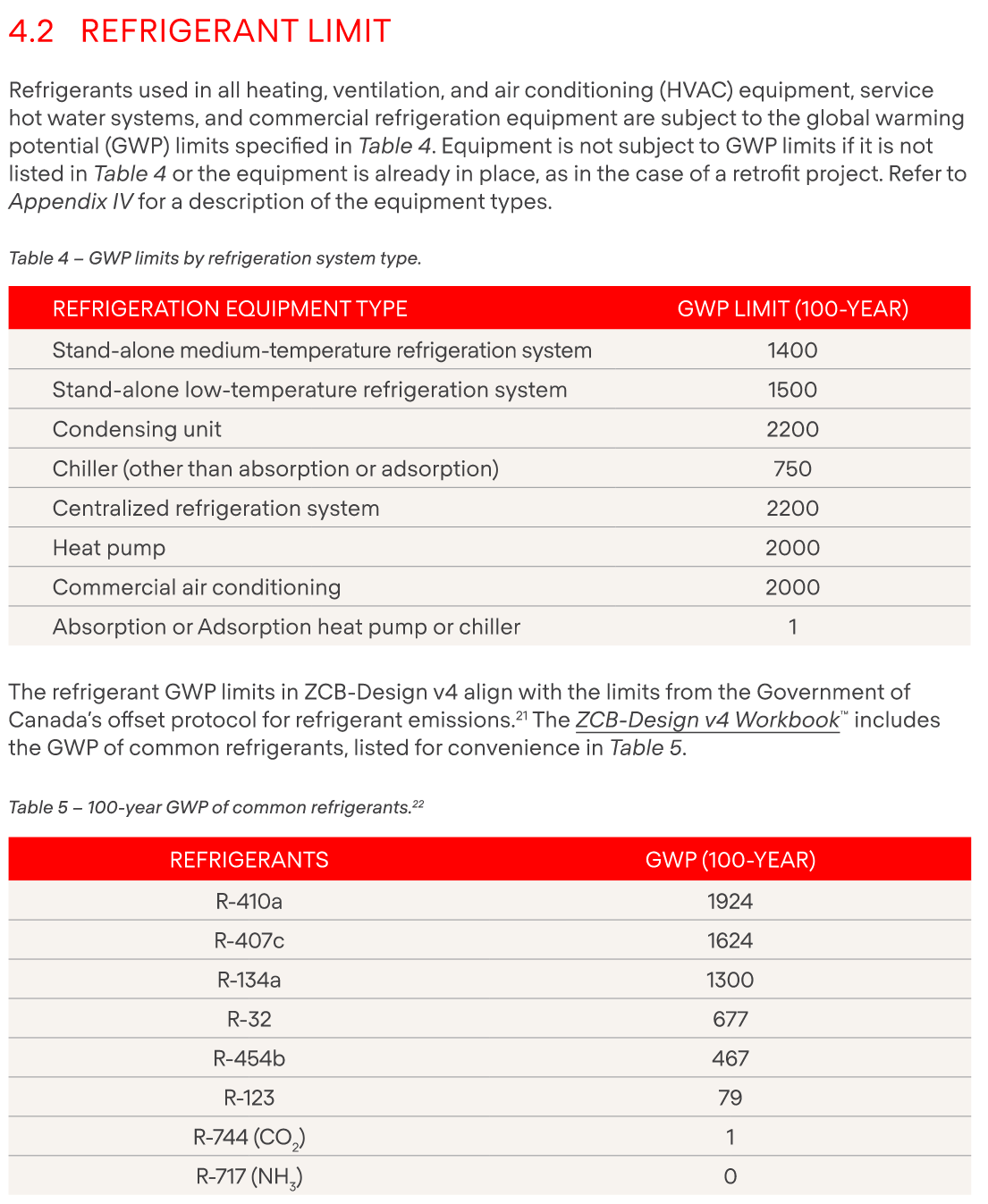
Next, looking at operational carbon, Version 4 is requiring buildings to be designed to provide all space heating down to -15C instead of -10C and all service hot water to be provided without onsite combustion. It is also limiting the permitted GWP (Global Warming Potential) of refrigerant by equipment type. The Average Annual Refrigerant Leakage amount has also been added into the calculation for Zero Carbon Balance.
Figure 5: Excerpt from CAGBC ZCB v4 showing limits set for refrigerants.
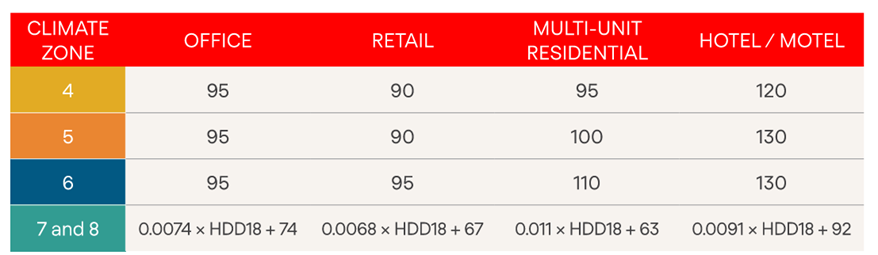
As for Energy Efficiency, the EUI targets are decreased by 5 – 10 kWh/m2 for Offices and Multi Unit Residential Buildings (see Figure 5). These changes are directed to advance design thinking and innovation leading to the 2030 goal set by the CAGBC.
Figure 5: EUI Targets for Path 2: Energy Use Intensity
Conclusion
The CAGBC ZCB V4 standard is meant to be easy to integrate for clients as well as flexible for any building type. In our experience with ZCB at Coolearth we have found this to the be case. We recommend projects targeting CAGBC ZCB standard begin considering the requirements as early as possible in the design phase. The increasingly stringent requirements for ZCB V4 certification are a great tool to keep pushing clients, builders, and architects to meeting the 2030 challenge targets.
We at Coolearth welcome these V4 changes, especially the focus on refrigerants and energy use, and are excited to continue to work on projects seeking CAGBC Zero Carbon Building certification.