Winter Stations and the Issue of Comfort in Homes

Yesterday German, Coolearth’s Building Science Specialist, went with some friends to check the winter stations design contest at the Beaches. This competition explores a winter design for the life guard stations that are not used in the winter with the goal of providing protection from the weather and in some cases providing a warm up space, certainly needed in a cold windy day at Lake Ontario’s shore.

 
dlAttach.php

 
At the Coolearth lately we have been talking about how sustainable homes not only decrease energy bills, but also immediately contribute to comfort and wellbeing.

 
German has this report from this walk:


“After exploring the stations, we headed back to the main street to get dinner and refuel our bodies. We entered a nice place and we were asked to wait 10 minutes until a table is available even though there was an empty one at front window. One of my friends asked about the table by the window. The waitress told us that we will get very cold there so we waited and got a table far away from the window. It was a weekend and I didn’t want to bemoan the poor building details.. but one of my friends asked me what do I do at Coolearth.

 
dlAttach2php

 
I explained: “we do High Performance houses”. While the conversation turned to energy savings and the cost of these poorly performing windows through heat loss (i.e increase energy bills), I pointed out that there is actually an immediate benefit to high performance houses: comfort. The example of the table near the window that we decided not to take was a perfect example. But this table is not the exception, we hear it when winter hits: people moving their sofas 4 feet away from the windows in their new condos, heating systems that cannot keep up with the desire temperature or power outages that make impossible to stay in the house because the furnace fan is not working.


GERMAN

 
At Coolearth we not only provide a design service but work with clients to study the long term implications of early decisions. Providing a High Performance house means approaching a project in an integrated way, because it is not only about adding insulation but being sure that the building enclosure (slab, walls and roof) is properly connected to minimize air leakage.

 
We just started the design of a new house that is aiming to be comfortable and resilient. Our client wants a house where he can be barefoot in every corner while it is -15 degrees outside. He said that this realization (that homes, which we spend so much on, should be comfortable) happened when he went to a friend’s house this winter and saw his 3 year old kid wearing only a T shirt and shorts, running around without shoes. There was a snow storm outside with 2 feet of snow and this kid was having fun inside dressed for summer. From that moment on he decided that he wants to do a high performance house.

 
… Before leaving the restaurant at the Beaches I gave my card to the manager, in case they want to make that table usable and comfortable!

PassivHealing

We are excited today to share a guest post by Nabia Majeed, on her thesis work at the University of Toronto around healing environments. Nabia participated in the Passive Building Show at Coolearth Architecture in the Fall of 2015.
 
Nabia Majeed is a Master of Architecture graduate from the University of Toronto who completed her thesis on healthcare architecture and palliative care. She is currently involved with design and planning projects at Toronto General Hospital, Princess Margaret Hospital, and Toronto Rehab as an employee of UHN Infrastructure.
 
In this post she looks into what qualities a “healing” environment has, and goes on to develop an approach around “user-centered” architecture.


PassivHealing by Nabia Majeed

 
A healing environment is considered to be:

 A place to heal the mind, body, and soul

A place where respect and dignity are woven into everything

A place where life, death, illness, and healing define the moment, and the building supports those events or situations (Cynthia S. McCullough in ‘Evidence-Based Design for Healthcare Facilities’)

 
More specifically, a healing environment includes the following characteristics: thermal comfort, light, noise control, privacy, air quality, views of nature, visual serenity for those who are very ill, and visual stimulation for those who are recuperating. Initially it may seem that the PassivHaus Standard (also known as Passive House outside of Germany) has little to do with a healing environment – however, there is a great deal of common ground between the two.


PassivHaus Standard

Healing Environment (Malkin, 1992)

Compact form and good insulation Thermal Comfort
Southern orientation and shade considerations Light
Energy-efficient window glazing and frames Noise control
Building envelope air-tightness Privacy
Passive preheating of fresh air Air Quality
Highly efficient heat recovery from exhaust air using an air-to-air heat exchanger Views of Nature
Energy-saving household appliances Visual serenity for those who are very ill
Less than 15kWh/m2/yr total energy demand for space heating and cooling Visual stimulation for those who are recuperating


As seen in the table above, of the eight characteristics of a healing environment, several factors are also attributed to PassivHaus design: air quality, thermal comfort, noise control, and light. When a PassivHaus home is built with compact form, good insulation, energy-efficient window glazing and frames, and building envelope air-tightness, it is simultaneously conserving energy as well as providing thermal comfort and a healing environment for its inhabitants. The orientation of a PassivHaus ensures a strong amount of healthy daylight, both reducing heating costs and preventing tangible sickness such as Vitamin D deficiency and Seasonable Affective Disorder. The excellent insulation and air-tightness of PassivHaus buildings can also result in noise control of surroundings, providing the quiet peace of a healing environment. The passive preheating of fresh air in a PassivHaus further ensures a strong level of air quality required of a healing environment.
 
image001

[Figure 1: Passive / Active Systems: A Sustainability and Health, Eco-humanist Matrix, Nabia Majeed, M.Arch Thesis]


The intersection between PassivHaus Standard and Healing Environments need not stop here – many other passive energy and sustainable strategies also simultaneously fall under the existing characteristics of healing environments, and also further expand the territory of health design. Listed below are a few examples:


  • Green walls, bio-walls, gardens:

    air quality, views of nature, visual serenity for those who are very ill / palliative

  •  

  • Greenhouses, food-growth stadiums, composting (i.e. UHS unit), hydroponics:

    air quality, visual stimulation for those who are recuperating, therapeutic activity for those suffering from mental illness, therapeutic activity for the elderly, retired or ill who may lack a sense of purpose, rehabilitative activity for those recuperating from illness resulting in disability

  •  

  • Heat Recovery Ventilators (HRV’s):

    constant fresh air supply; less pollen, less allergies, less dust mites; helps limit and eliminate radon build up, quieter home as windows can be kept closed, no fungal or mould growth in bathrooms and bedrooms

  •  

  • Greywater Shower / Laundry System (i.e. Washit):

    therapeutic, unrestrained use of relaxing, calming, pure activity of showering

  •  

  • Low VOC Eco-friendly Rubber Flooring:

    breaking potential falls of the elderly / disabled


image003

[Figure 2: The Urban Harvest Series (UHS) is a set artefacts and furniture that integrate nature’s closed cycles and cultivation into our own daily routines. Created by Design Academy of Eindhoven’s Sebastiaan Sennem, the unit allows people to grow, store, prepare, and compost organic waste, actively engaging them in a holistic and fundamental practice.]
 
Over time, the list of healing environment specifications has grown to include several other factors, including: access to nature, positive diversion (positive visual stimulation can lessen the stress of waiting times and improve the healing process), access to social support, options and choice (control), elimination of environmental stressors such as noise, glare, and poor air quality (McCullough). As new passive energy strategies and products emerge in our time, it is important to tie these innovations, or repurpose them, as contributions to healing environments, as applicable. This approach will ensure the creation of innovative passive homes effectively designed with the user in mind.
 
User-centered design is an important way to approach PassivHaus and Healing Environments –when the home becomes a product with a user, the design of the home should reflect the needs of the user. Users in 2016 and beyond will look for homes that conserve energy and reduce energy costs, but they will also seek out more from their dwellings: homes that are conducive to their own health and the health of their partners, children, and their elderly family members.
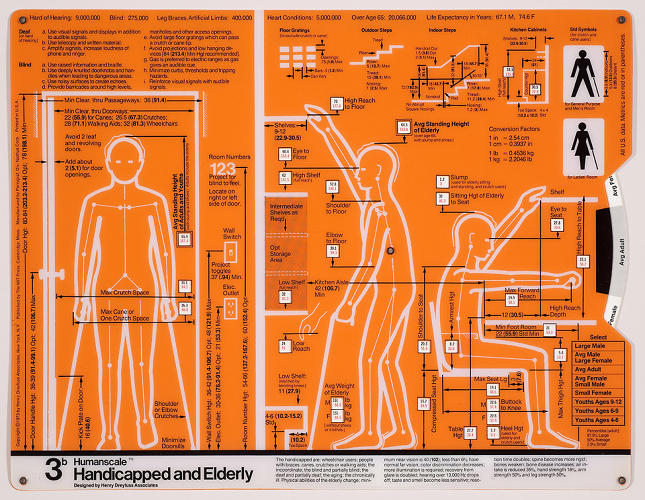
 

image005


[Figure 3: A diagram from Humanscale 1/2/3: A Portfolio of Information, the definitive guide to the human body by Henry Dreyfuss Associates, part of the CCA-curated exhibit Imperfect Health.]

The HumanScale system of measurements is an example of the approach PassivHaus may consider in its approach to home-building – as designers are building PassivHaus homes or creating energy-saving products, they need to continually circle back to the individual, and ask how users will eventually engage with these spaces, strategies, and products. There are many types of users: human beings with a range of age and culture; people with distinct sizes and abilities; individuals with different professions and occupations; and persons of varying levels of health and well-being, both physical and mental. Comprehensive Healing Environment strategies, many of which overlap with PassivHaus standards, possess the potential to give new purpose, fresh direction, and innovative use to the PassiveHaus Standard.

The principles of PassivHaus could readily expand to include passive homebuilding standards conducive to healing and health, and in this way design and build homes that create an energy-conserving, safe, healthy and ideal user experience. This experience could in turn decrease accidents, injuries, illnesses, fatigue, stress, absenteeism, turnover, and general health costs experienced by both the individual and the health system at large. Studies show increased positive outcomes for home healthcare patients, and slightly decreased readmission rates and mortality rates compared to hospitalized patients. Satisfaction levels are recorded as 10% higher with reduced cost of care due to shorter lengths of stay in patients returned to their home environment, as compared to hospitalized patients (Cryer et al., 2012). Further, studies have also shown home healthcare to result in a 38% reduction in mortality compared to hospitalizations (Shepperd et al, 2009).

As advancements in healthcare prolong lives, but cures to diseases and illnesses lag behind, homes will need to be designed to serve as safe healing environments for a growing number of aged and ill people. The joining of PassivHaus Standards with Healing Environment standards could serve as the impetus to design innovative therapeutic, rehabilitative, and palliative homes that improve health outcomes for patients, reduce strain on healthcare facilities and the health system at large, and ultimately serve as healing environments for people, their families, and the environment itself.


image007


[Figure 4: The formal design concepts relating to this spectrum remain ambiguous – morphological explorations of form complement the technical matrix of smart building (Figure 1) to further possibilities and to begin to forge a new eco-humanist design impetus; Nabia Majeed, M.Arch Thesis]


Reframing “Sustainable” Payback: Cost or Comfort?

A common element in Sustainable Design is projected payback period. Payback is in this sense defined as cost savings in dollars that the sustainable measure will have over the long term, i.e by using less electrcity or natural gas.


Here is an example of a typical pay-off calculation:
 

If the typical home is 1500 sqft at an average cost of $250/sqft this works out to $412,500.  According to Statscan, in 2007 households spent on average $1,147 on electricity and $610 on natural gas equaling $1,757 a year.  Assuming you live somewhere for 20 years and there is no change in the price of utilties, that is a cost of  $35,140 for gas and electricty.


A building designed to passive House Standard can expect to save 80-90% of the operating costs of a typical building, and costs roughly the same (some sources say 10% more). For a Passive House let’s assume the overall cost of construction is 10% more: that is $453,750. With an 80% reduction in utilities usag that works out to $351/year, over 20 years that is $7028.


Therefore overall the cost to build and heat a “standard” Canadian home for 20 years is $447,640 while for a Passive Home it is $460,778… the home owner is still “negative” $13,000.


The pay-offperiod for that extra 10% cost turns out to be closer to 30 years.


I’d like to offer a different perspective on “payback”.

Have you ever noticed that your feet are cold in your home? Or that you cannot sit near the windows or doors in the winter because it is too chilly?  How the basement floor is usually cold to the touch? How the air can become stuffy, or too dry in certain rooms?


ballicane3


I’d like to suggest that  the payback on building a Passive House is immediate because when you are in a comfortable, well designed and balanced space it can improve your families quality of life right-away. Every day this investment pay’s itself off. Being comfortable in your own home can have incalculable “trickledown” benefits on every facet of your families life, improving mood, energy levels, and long-term health.


One example of this immediate benefit is a family whome we design a  sustainable home for in Toronto last year.  In their old home their children would not go into the basement because of the darkness and discomfort: they were in many ways afraid.  In their new house which features a well insulated design and lots of natural lights, their children use the basement constantly.


ballicane1

The pay-off on sustainable improvements and features in you home can have immediate payback by improving your families quality of life.  Through careful design and detailing it is also possible to work within each homeowners budget to achieve a result that works and is comfortable.


Another benefit to invesmting in sustainable solutions is resiliency: if the power fails in the winter, as happened in Toronto a few years ago, then a well insulated home can retain the heat longer and prevent pipes from bursting due to freezing.

MAGICBOX Installation up this week for Toronto Offsite Design Fesitval 2016

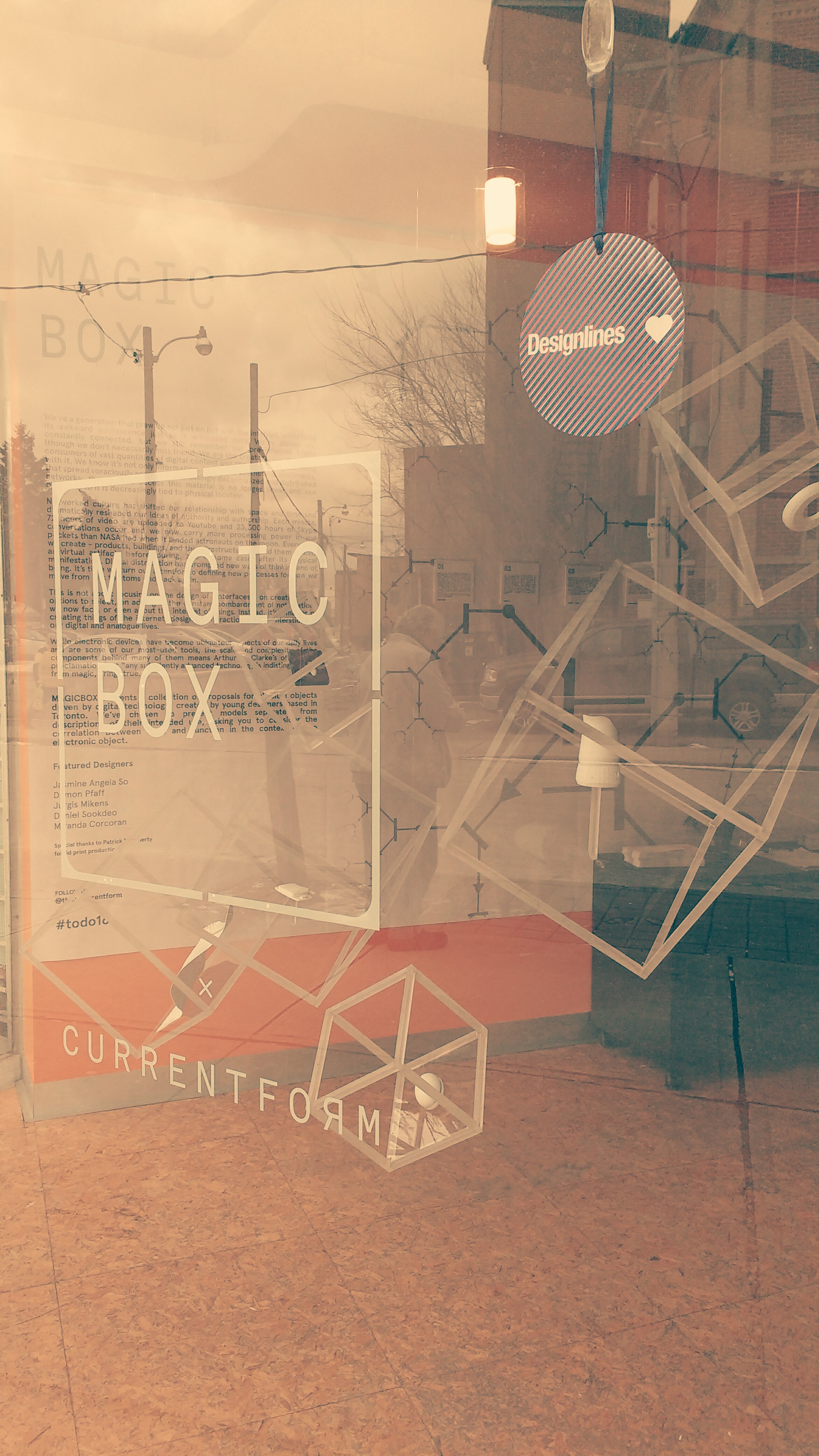
Tonight is the opening reception for the installation entitled “MAGICBOX”, as part of this years Toronto Offsite Design Festival.


IMG_20160120_150156


Swing by to see the work, meet the artists, and enjoy snacks and refreshments! January 20th 7-9pm is also the Junction wide reception with over 14 other artists and designers installations.


IMG_20160120_150220


MAGICBOX is an installation exploring how the world of “smart devices” still remains in an old paradox of flat, rectinlinear screens and boxes, as opposed to the shapes of the body via 3d models and designs for smart devices by young designers.
IMG_20160120_150501
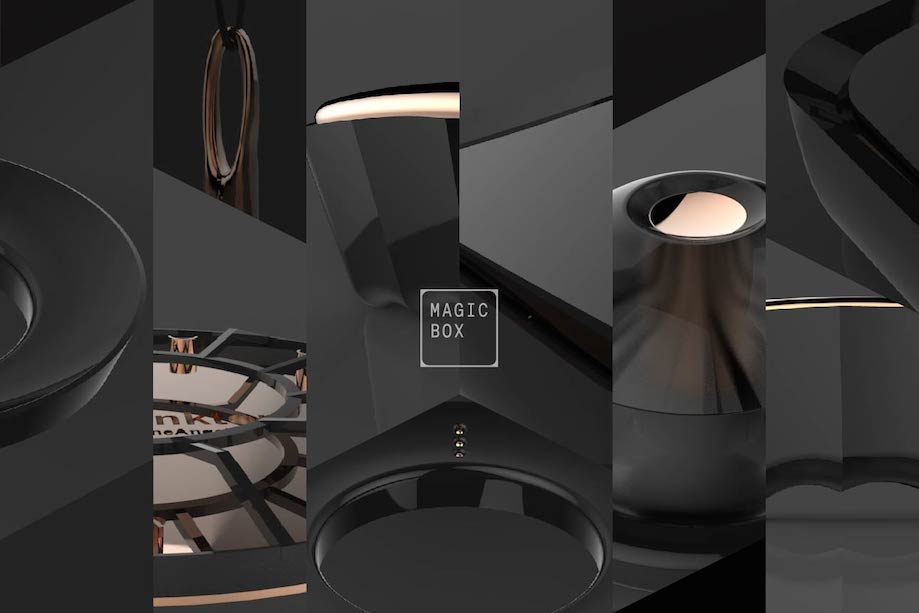
MAGICBOX presents a collection of models for smart devices created by young designers based in Toronto alongside proposals for their intended function.
Electronic devices have become ubiquitous aspects of our daily lives and are some of our most-used tools. The form of these objects continues to reflect the architecture of flat circuit boards and screens, rather than that of the body. The scale and complexity of the components driving many of these devices means Arthur C. Clarke’s oft-quoted proclamation that “any sufficiently advanced technology is indistinguishable from magic,” rings true. We expect our various devices to work with little understanding of how they function and there is a tendency towards disconnect between the appearance of an object and its use.
The exhibition aims to investigate the potential of form to engender specific ways of interacting with these objects. By showcasing the models separately from their proposed functions viewers are asked to consider the relationship — or lack thereof — between form and function in the context of the electronic object.
Check out the Toronto Offsite Design Festival’s site to learn more.

There are also a few more renderings of the projects here.

MAGICBOX – Window Installation for Toronto Offsite Design Festival

In 9 days the Toronto Offsite Design Festival will begin, and once again Coolearth is hosting a window installation.  See our previous years installations here, and here.


We’re happy to be hosting MAGICBOX, and installation exploring how the world of “smart devices” still remains in an old paradox of flat, rectinlinear screens and boxes, as opposed to the shapes of the body.


We are hosting the opening reception as part of a Junction-wide event on Wednesday January 20th, 7-9pm.  Swing by to see the work, meet the artists, and enjoy snacks and refreshments!
 
2016_MirandaCorcoran_MagicBox_03_web


MAGICBOX presents a collection of models for smart devices created by young designers based in Toronto alongside proposals for their intended function.


2016_MirandaCorcoran_MagicBox_02_web
 

Electronic devices have become ubiquitous aspects of our daily lives and are some of our most-used tools. The form of these objects continues to reflect the architecture of flat circuit boards and screens, rather than that of the body. The scale and complexity of the components driving many of these devices means Arthur C. Clarke’s oft-quoted proclamation that “any sufficiently advanced technology is indistinguishable from magic,” rings true. We expect our various devices to work with little understanding of how they function and there is a tendency towards disconnect between the appearance of an object and its use.
 
The exhibition aims to investigate the potential of form to engender specific ways of interacting with these objects. By showcasing the models separately from their proposed functions viewers are asked to consider the relationship — or lack thereof — between form and function in the context of the electronic object.

 
Check out the Toronto Offsite Design Festival’s site to learn more.

Mud and Rammed Earth Structures


At the firm recently we have been discussing the embodied energy of the materials we use to build (see our post two weeks ago, on the Greenhouse Gas Emissions of various types of insulation).  Because, while the operation of the building (heating, lighting, cooling, and other plug loads) constitutes the lion’s share of emission over the lifetime of the building, when we build a passive house or net-zero building these emissions are mitigated almost or totally completely… leaving the embodied energy of the materials as the main Greenhouse Gas emissions generator.  Therefore with energy efficient buildings it is important to consider the energy required to manufacture and transport the parts required to build it.  Within this vein we will be publishing a series of blog posts exploring different “natural” building materials and some examples of their use.


Natural Architecture, in the sense we are using it, is defined as a method of building which uses materials which are minimally processed with little to no manufacturing or industrial requirements and is produced/grown/harvested locally.  Some groups use “natural” or “organic” architecture interchangeably, and invest both terms with complex ethical and aesthetic values, resulting in bio-mimetic shapes or neo-archaic final results… in our perspective this is not necessary.  Using natural materials doesn’t mean you need to adopt a different political or ethical viewpoint, it simply means that instead of using Concrete Masonry Units for wall construction you might use rammed earth or adobe.   Indeed, the more one looks into the possibilities for natural architecture, the more quickly it becomes apparent that un-manufactured and minimally processed materials can be used in myriad ways: as walls, floors, and even roofs!   This blog post surveys a few methods for building with earth (also called cob or adobe).
 

800px-HouseBuildingInNorthernVietnam
 

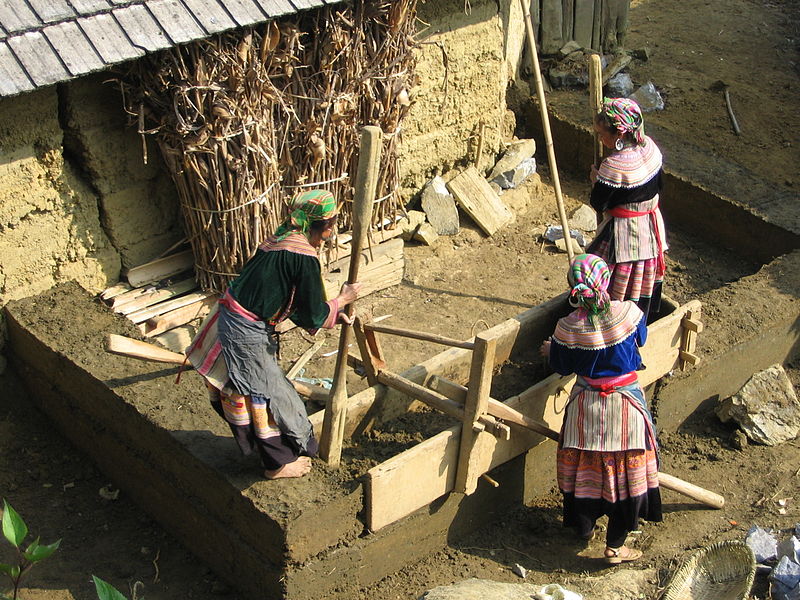
Rammed earth homes and buildings are found around the world: a result of the ubiquity, durability, and functionality of the materials from which they can be assembled.


 “More than 30 percent of the world’s population continues to use earth as a building material” (source)


They can be made with dirt, chalk lime, gravel, clay, sand, and can include cement, straw, and even animal blood.   They can be among the most sustainable materials to build with, especially when made with soil from the site, and when lime or other natural stabilizers are used in place of concrete.  Because dirt is inert, and does not contain preservatives, harmful chemicals, or VOC’s (volatile organic compounds) indoor air quality can be very clean.   Earth walls are also fire resistant, can store thermal energy (store heat during the day and release it at night),  can control humidity, are durable, can be easily repaired, and can have a beautiful finish.


Below is a mosque in Mali made from sun-dried earth blocks covered in plaster that has, with repairs, lasted hundreds of years.
 

Mosque in mali
 

There are two general methods of working with earth:  one involves loose material, the other cast or compressed material:
 

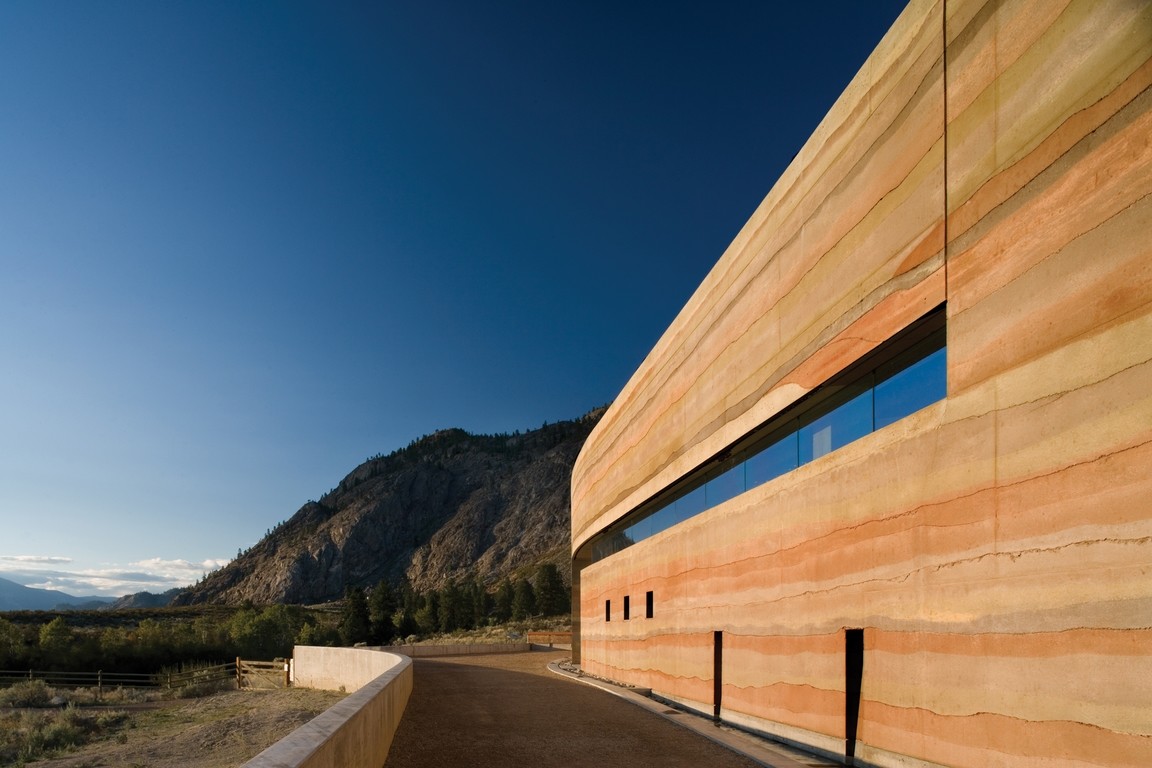
1.) In the first method a formwork is made and the material is poured into the framework and tamped down in layers.  This is known as “Rammed Earth”.  The “earth” in this case is sand mixed with gravel and clay.  The mix can also include a stabilizer such as lime or cement to add additional strength, although this is unnecessary and can compromise the sustainability of the wall.  Once the wall is complete the formwork can be removed right away, exposing the finished wall.  Pigments and dies can be included in each layer to create beautiful colour effects as illustrated in the Nk’Mip Desert Cultural Centre in  Osoyoos, British Columbia, Canada.


278d.022


“Rammed earth is probably the single lowest environmental impact building system that is readily and commercially available today for solid masonry buildings” (via wikipedia)


There are variations on this method, such as cob which does not use the tamping or the formwork, but involves the application of the material in rows which are then smoothed into a unified surface. Another variation is pouring wet adobe (made from earth and often organic material) into a formwork of reinforced metal which is then let to set.


One team of Canadians, Cobworks, on the West Coast has begun a resurgence of cob-building, with over 10 completed homes to date http://www.cobworks.com/
 

CBWKS_DVF_ext8
 

One unique aspect of this method is that when the formwork is removed the surface can be carved or etched with patterns. This allows hand-sculpted decorative or functional ornament on the interior or exterior .  See the shelves on the photo above from Cobworks Deacon Vale Farm project.
 

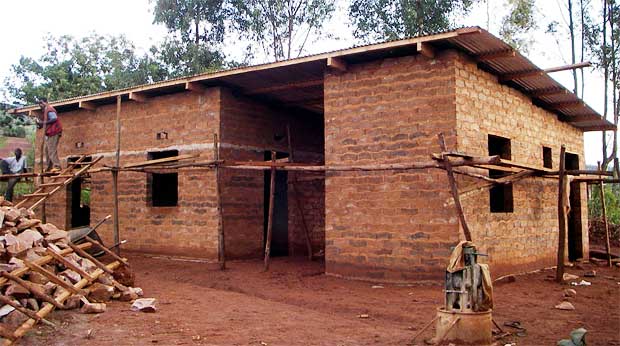
2.)The other type of method for building with earth is when the material is compressed, or cast and left to dry into bricks, such as adobe or “Earth Block” construction. In the case of compressed earth blocks, either an on-site compressor-machine or remote factory compacts the earth to 50% of it’s original volume. A stabilizer can be used, such as lime or cement to bond the materials together.  The result is a “brick” that can be laid with a muddy slurry acting as the mortar.
 

simple-earthblock-home


In the case of traditional adobe-use, the blocks are cast in molds and left to dry before being assembled like bricks, and then encased within a layer of dirt-plaster.  In boths cases the earth blocks and adobe are assembled much like brick, and can include a surface treatment with plaster, water resistant coatings, rain-screens or siding.


The suitability of rammed earth for cold climates has been demonstrated for large parts of Canada’s praries, where it is combined with exterior insulation.  As the push for sustainable, net-zero building gather strength we can expect to see Building Code departments and architects increasingly turn to rammed earth as a sustainable alternative to concrete walls and floors.


There are so many exciting design potentials with rammed earth: we look forward to seeing how the research develops as well as the opportunity to begin introducing rammed earth elements within our projects.