Thank You to Everyone Who Attended the Opening

A huge thank you to everyone who came out to the opening reception of “Toronto System” by Shawn Micallef. We hope you enjoyed the photography and the junction-wide event. The show will be up until May 31st, swing by!!
 
11193134_825702030849607_1562052393_n
 
Best Wishes and Thanks again for making the opening such a success.
 

The Coolearth Team,
Sheena, Craig, Mark, and Geoff

Opening Reception for Shawn Micallef’s “Toronto System”, May 2 6pm

dlAttach


You and a guest are cordially invited to  the Opening Reception for Shawn Micallef’s “Toronto System” photo- series as part this years Contact Photography Festival.

The opening is May 2nd from 6-9pm and is hosted at Coolearth’s office and storefront gallery at 386 Pacific Avenue, and is a part of the Junction-wide opening for the Photo Festival.

Please join us in celebrating Shawns work and enjoy local Junction Beer, Wine, Spirits and snacks. RSVP on the event page.


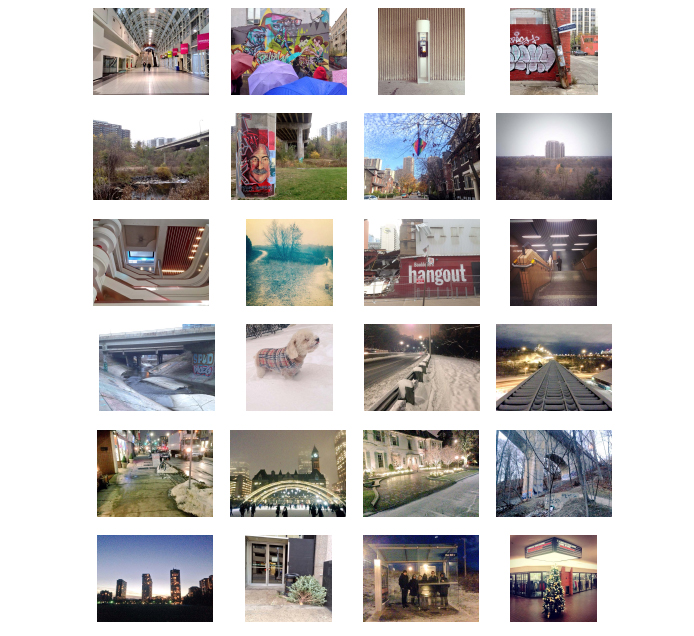
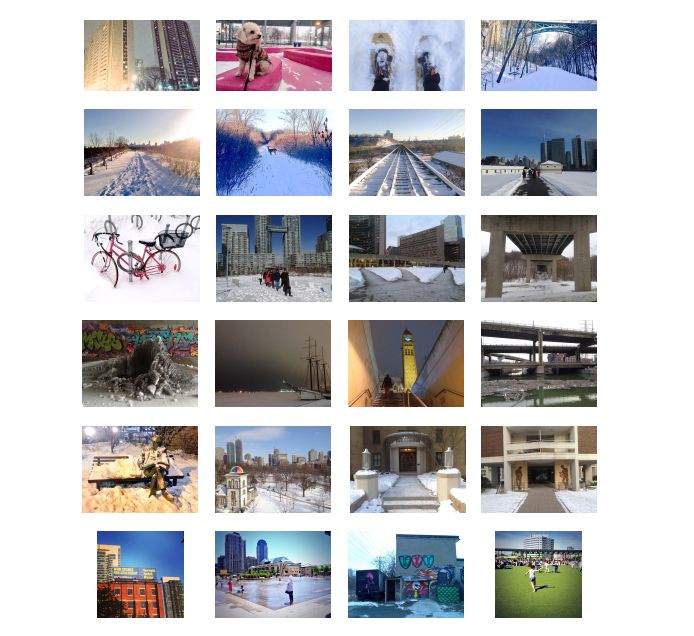
In “Toronto System” Shawn Micallef explores Toronto leaving a trail of tweeted and instagramed photos behind him. These photos sometimes have people in them, but often don’t.

“They are an oblique aggregate of the city’s interesting and banal parts seen through a psychogeographic lens, where the details and feeling of each place matter. These are probably not artworks but rather a volume; a volume of city that continues to amplify.”


We hope you can make it! But if not, the show will be up from May 1-31st at 386 Pacific Avenue.


Cheers,

Sheena, Craig, Mark, and Geoff

Coolearth Architecture Inc.


Shawn Micallef – Contact Photography Festival

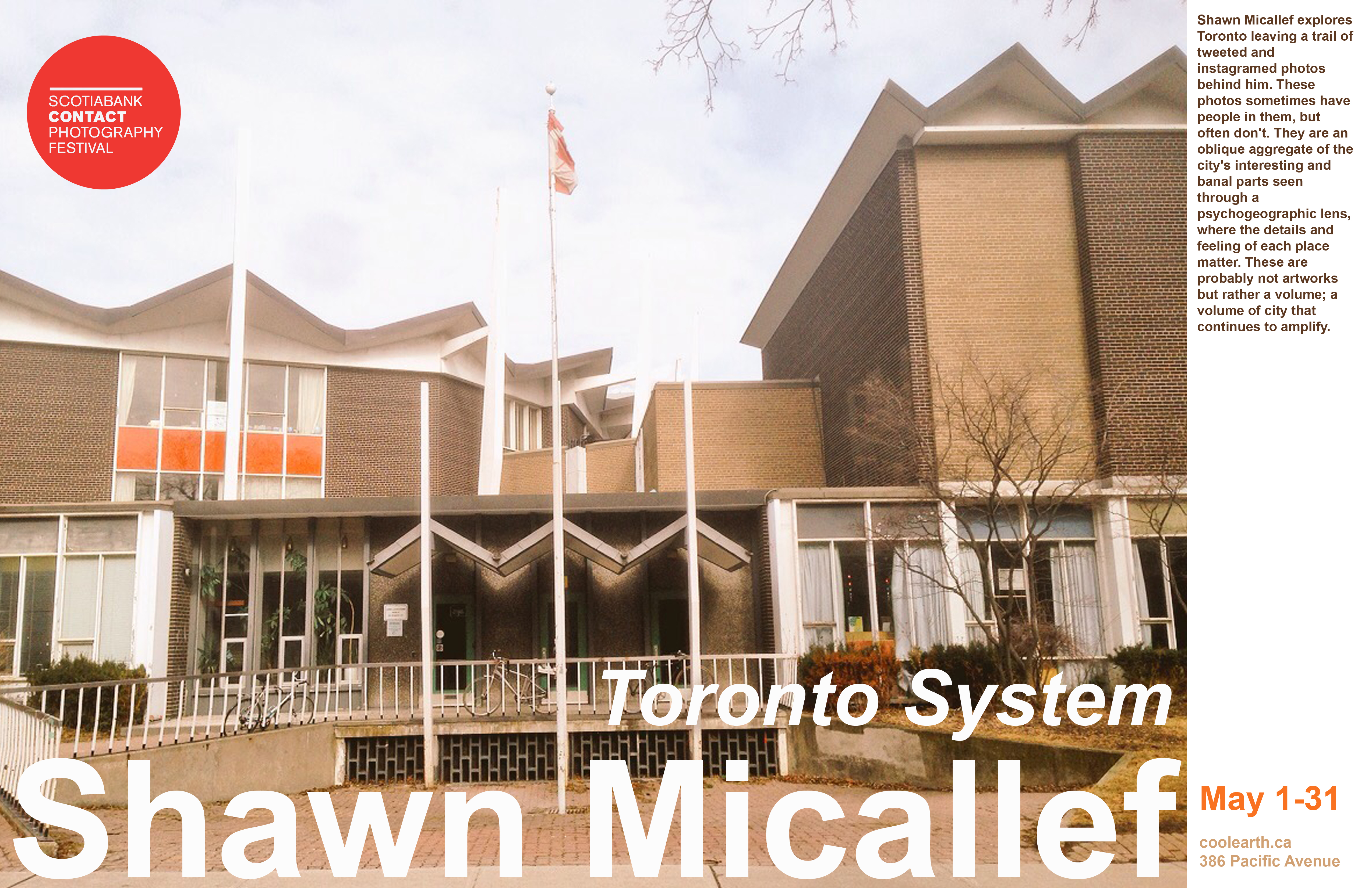
We are excited to announce that we are hosting Shawn Micallef’s “Toronto System” photo-series as part of this years Contact Photography Festival.

Contact 2015_poster copy
 

Shawn Micallef explores Toronto leaving a trail of tweeted and instagramed photos behind him. These photos sometimes have people in them, but often don’t.


They are an oblique aggregate of the city’s interesting and banal parts seen through a psychogeographic lens, where the details and feeling of each place matter. These are probably not artworks but rather a volume; a volume of city that continues to amplify.


The show will be up from May 1-31st at 386 Pacific Avenue.  Please visit: http://scotiabankcontactphoto.com/events/251 for more information. 


2030 Commitment – 2014 Report – 65% Reduction over Average

2030 Commitment Report


It’s that time of year again: when Architecture firms across North America who are participants in the 2030 Challenge report their results.  This year we exceeded the target of 60% reduction by achieving a 65% reduction.   This means that we are working effectively towards the 2030 Challenge goal of all new construction being carbon neutral (or “net-zero”) by 2030.


The results from 2013 show that there was an explosion of Net-Zero Energy products in 2014: a 500% increase!  It is also shows sobering facts: the average Predicted Energy Use Intensity (PEUI) reduction of the square footage logged was 34% and that only 7% of the total square footage met or exceeded the 60% reduction target.   This means that there is still a substantial requirement for improvements.


We will have to see what new this years report brings!


To learn more about the 2030 Challenge visit our blog post on it from last year, or check out the 2013 Report.

Coolearth Mentioned in Canadian Architect for our use of the SR&ED program

Kingspan Joint Detail

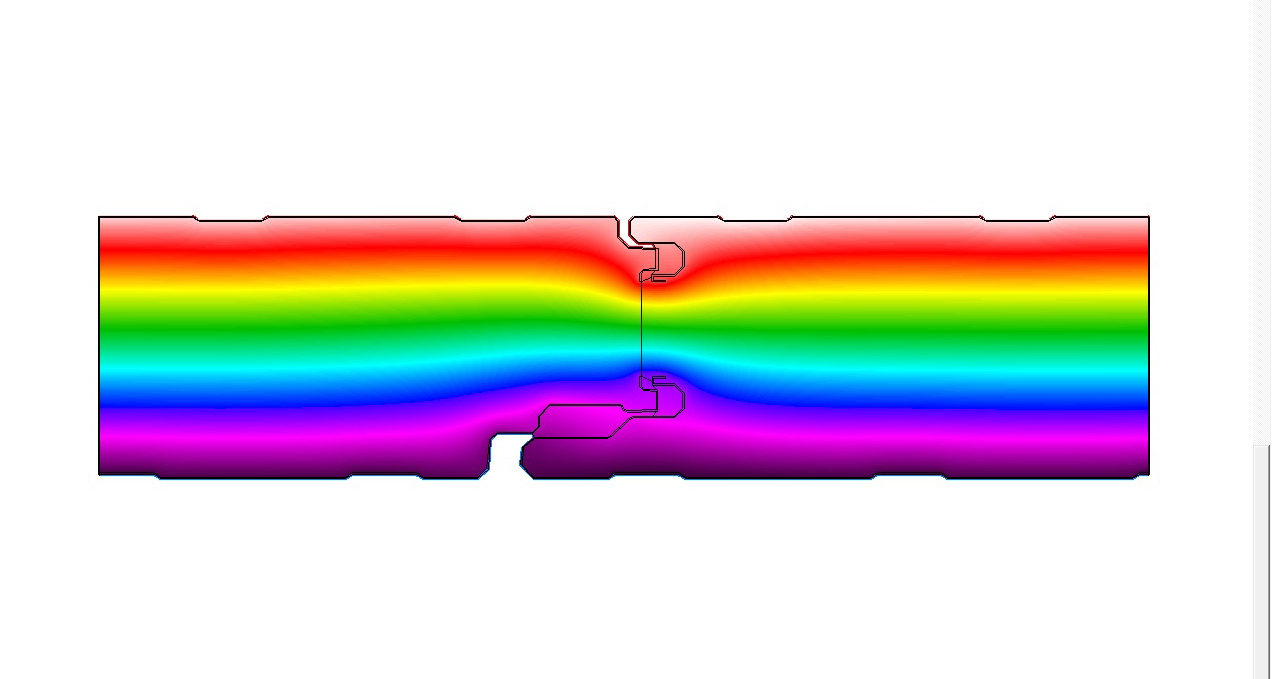
Coolearth was mentioned in Canadian Architect March 2015, in regards to our use of The Scientific Research and Experimental Development Tax Incentive Program (SR&ED) to conduct research and development in Canada.  For us this program was used to do research and develop an understanding in using Energy Models.


An excerpt from the article:


Sheena Sharp, FRAIC, former OAA President and principal of Coolearth Architecture, has also taken advantage of the program. “It takes a lot of experimentation and research in order to offer your clients appropriate service,” she says. “The SR&ED program assists in doing that.” In the case of her small firm, which specializes in sustainable architecture, she regularly faces challenges that go beyond standard practice, such as developing a deep understanding of energy-modelling software. She found that SR&ED was able to defray some of these costs, which often go beyond billable hours. Sharp does note that “as a small firm, the owners do a fair amount of the billable work but are not paid hourly,” so as a result, much of the time expended does not qualify. “That said, the program has been important to our ability to deliver innovative services.”


The full article can be seen here.

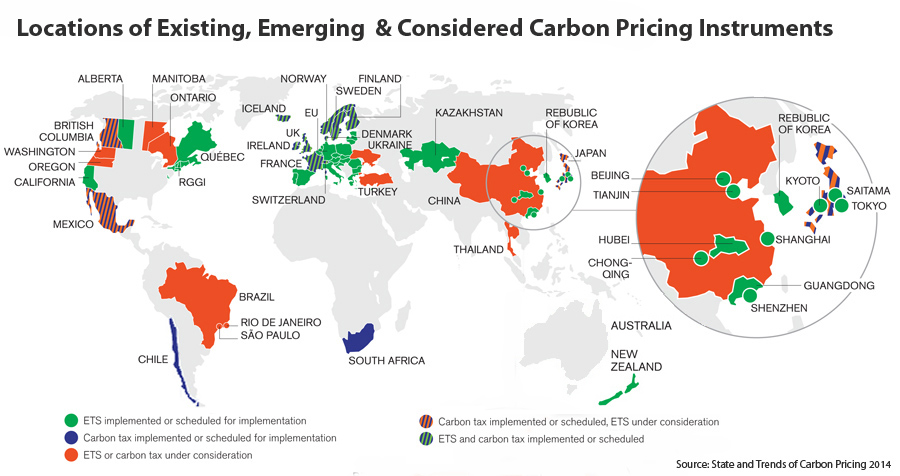
Carbon Pricing: A Key Driver of Climate Change Mitigation

carbon-pricing-map-900x476-c

Last week, In a lecture to students at Georgetown University in Washington, D.C., World Bank Group President Jim Yong Kim spoke about the main drivers of climate change, and how these can be addressed.


“We have to keep the economy growing – there is no turning back on growth… What we have to do is decouple growth from carbon emissions.” (Kim)

The first step he proposed was by creating a method to price carbon Emissions.

According the the World Bank, carbon pricing captures “what are known as the external costs of carbon emissions”.  These are the costs that the public and community pays for indirectly.  Driving a car, buying take-out food with tons of packaging, using plastic bottled water, etc doesn’t “seem” to be harmful, or “generate” carbon emissions but it does.  The emissions are generated upstream while it is being manufactured.   Carbon Pricing seeks to connect the impact of these external sources via putting a price on carbon.


“A price on carbon is the single most important thing we have to get out of a Paris agreement. It will unleash market forces” (Kim)

There are generally two approaches to Pricing Carbon.  The first is known as Carbon Cap and Trade, the second a Carbon Tax.  In a Cap-and-Trade system, the total level of greenhouse gas emissions for the region is set, and allows those industries with low emissions to sell their extra allowances to larger emitters. By creating a market condition (supply and demand) for emissions allowances, a market price for greenhouse gas emissions is determined by the businesses. The cap ensure the required emission reduction take place to keep the entire region within its target.


On the other hand, a Carbon Tax  sets a price on carbon (usually by the ton — In BC it is $30).  By setting a tax rate on emissions or the carbon in fossil fuels it is different from the Cap-Trade system which lets the market determine the pin that the emission reduction outcome of a carbon tax is not pre-defined but the carbon price is.   British Columbia is the first province in Canada to implement a Carbon Tax.  The BC revenue-neutral carbon tax was implemented on July 1, 2008.   The carbon tax is revenue neutral, meaning every dollar generated by the tax is returned to British Columbians through reductions in other taxes.


The tax puts a price on carbon to encourage individuals, businesses, industry and others to use less fossil fuel and reduce their greenhouse gas emissions; send a consistent price signal; ensure those who produce emissions pay for them; and make clean energy alternatives more attractive (link)

The advantage of a Carbon Tax is that it provides an incentive to reduce emissions without favouring any particular method: allowing stakeholders to find the solution which works best for them.   By reducing consumption, increasing  efficiency, and using cleaner energy sources, businesses and individuals can reduce the amount they pay in carbon tax, or even offset it altogether.


The remainder of World Bank Group President Jim Yong Ki’s summary of the key drivers of climate change, and how these can be addressed can be found here.