Passive House in Canada?

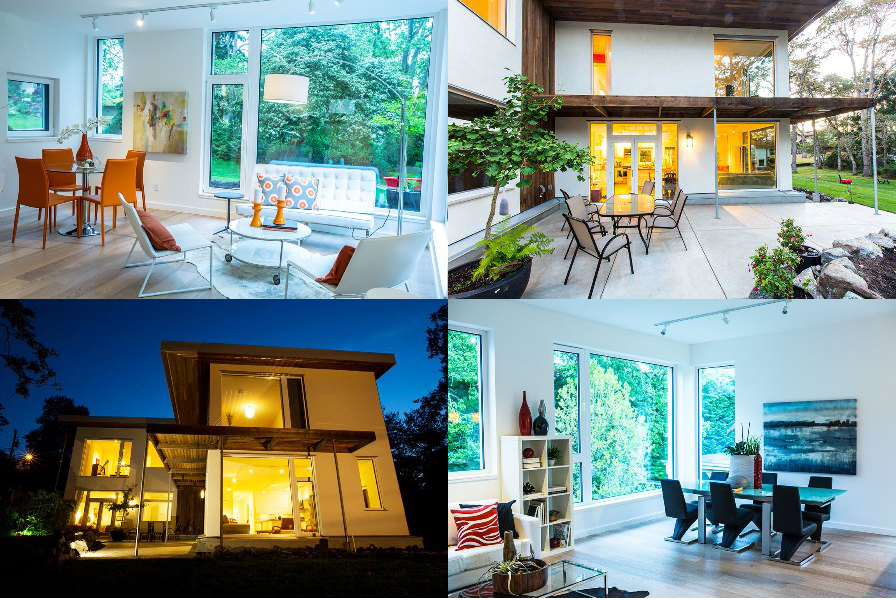
A Passive House in Victoria, BC by Greg Damant. A Passive House in Victoria, BC by Greg Damant.


Passive House is a standard which certifies buildings who achieve high levels of energy efficiency, and comfort.


The strangest part, perhaps, is not the reasonable price point for which this efficiency and comfort can be gained (in Canada approximately 10% more initial construction cost then standard)… but rather the significant cost SAVINGS over the long term compared to standard building techniques.  The extra capital costs are “heavily outweighed by the net fuel savings (and that’s without taking into account possible dramatic rises in fuel prices in the future)” via CanPHI.


Passive Houses use insulation, airtightness, mitigation of thermal bridges, the sun, internal heat sources, and good heat recovery systems, to make conventional heating systems unnecessary… even in our Canadian winters!  During the spring, summer, and fall, Passive Houses use  passive cooling strategies such as shading to keep comfortably cool.  Because of the high-level of insulation, air-tightness, and minimal thermal bridges, the fluctuation of the indoor temperature is very small.


Passive House offers a realistic option for cost-effective structures that provide high levels of comfort while using very little energy for heating and cooling. In the face of rapidly
increasing energy prices, this makes Passive House an economically attractive option. via


The Passive House Standard does not apply to any particular type of construction: the principle are basic and can be used for every type of building.  There are over 25,000 certified Passive Houses, and many more which follow the Standard but have not been certified.  Most of these are in Central Europe, and only a very small number are in North America.  The reasons for this have to do with our climate, as well as the difficulty of sourcing the well-designed, high-performance parts which are common in central Europe.    As of December 31, 2014,  1,000,000 square meters have been certified by the Standard,  (Press Release here). The smallest Passive House is 11 square meters and the largest is 21,000 square meters in Vienna (see below).


Finalisten-Fotos-3

RHW.2 (Vienna, Austria), ARGE Atelier Hayde & Architektur Maurer & Partner (Photo: ARGE Atelier Hayde & Architektur Maurer & Partner)


When we say “high levels of energy efficiency” we mean it: there are space heating and cooling savings of 80% compared with typical buildings, and often levels of insulation more than double standard practice.  The Passive House requirements are:


1. The Space Heating Energy Demand is not to exceed 15 kWh per square meter of net living space (treated floor area) per year or 10 W per square meter peak demand.


2. The Primary Energy Demand, the total energy to be used for all domestic applications (heating, hot water and domestic electricity) must not exceed 120 kWh per square meter of treated floor area per year.


3. In terms of Airtightness, a maximum of 0.6 air changes per hour at 50 Pascals pressure (ACH50), as verified with an onsite pressure test (in both pressurized and depressurized states).


4. Thermal comfort must be met for all living areas during winter as well as in summer, with not more than 10 % of the hours in a given year over 25 °C.


Passive Houses are designed, tested, and certified using a proprietary software known as PHPP.  This software allows architects to specify the insulation and components needed to meet the Passive House Standard, regardless of the climate zone.  Though Passive House began in Central Europe, where lows may be only -15C, many are now being built in most extreme climates: Russia, Finland,  Norway, and Sweden. According to the Canadian Passive House Institute: “Canada’s extreme climate actually makes it a perfect fit for the Passive House approach!”


Sheena Sharp, a principal at Coolearth has undertaken the Passive House training course: if you are interested in something along these lines: get in touch and we can help you realize your passive house dream!

No Optimal Price of Oil

800px-Crude_oil_prices_since_1861_(log)

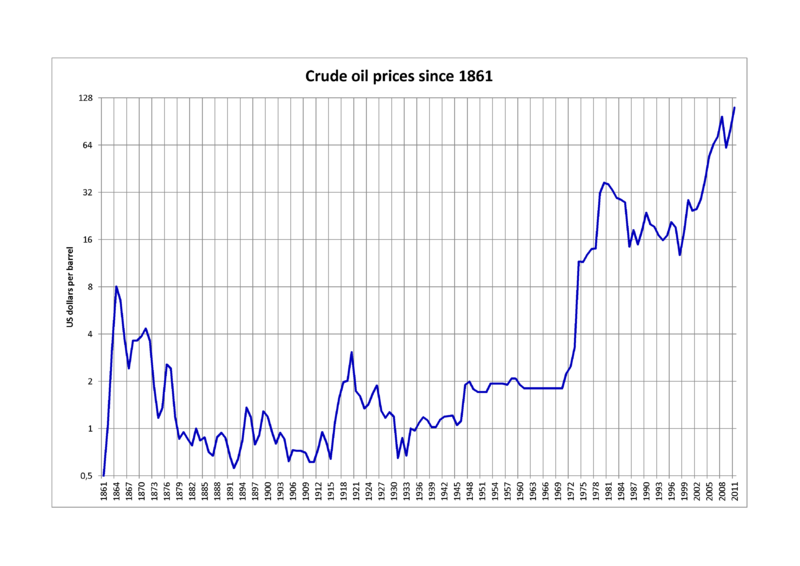
“For these types of reasons I will argue that there is no ‘optimal’ price  for oil in much the same way as there is no ‘optimal’ price for heroin.  This analogy between oil and heroin may appear like a polemical exaggeration, but I hope to show that it is, in fact, worryingly apt. When heroin is expensive, addicts cannot afford what they desperately need, or feel they need, and suffer accordingly. Expenditure on more worthwhile things is cut back in order to fund the increasingly expensive and debilitating addiction. But when heroin is cheap and readily available, the negative effects of addiction become even more pronounced through overconsumption, and the addiction only deepens as hopes of rehabilitation fade. Oil acts as industrial civilisation’s own form of heroin, and whether it is cheap or expensive, addicts today are in as much trouble as ever.”


From The Paradox of Oil: The Cheaper it is, the More it Costs
by Samuel Alexander, originally published by Simplicity Institute | Mar
5, 2015.  Via

Sheena Appointed to Ontario’s Climate Action Group

Today we are happy to announce Sheena Sharp, a principal at Coolearth was appointed a Special Advisor for Climate Change as part of the Ontario Ministry of the Environment and Climate Change, Climate Action Group.

The climate action group will advise the minister on effective climate change actions that will help Ontario meet its greenhouse gas reduction goals and transition to a prosperous, low-carbon economy. This advice will build on feedback received through the government’s public consultations on climate change. via

The Minister of the Environment and Climate Change, Glen R. Murray said of the announcement:

“The Honourable John Godfrey and members of the climate action group bring exceptional wisdom, experience and vision to help develop a forward-looking strategy and action plan that will help Ontario effectively fight climate change and foster a prosperous, low-carbon economy. Our fight against climate change will benefit from these leaders and their passion for helping build a better future for our planet and Ontario.”


via: http://www.news.ontario.ca/ene/en/2015/03/ontario-appoints-special-advisor-for-climate-change-creates-climate-action-group.html

Resilient Design

WEA Eastern Canada Storm 20131222


re·sil·ience/rəˈzilyəns/noun


1.) the ability of a substance or object to spring back into shape; elasticity.
2.) the capacity to recover quickly from difficulties; toughness.


Last weeks blog post (here) about the drought in Brazil, prompted us to look more into “Resilience” as a design principle.  If we can build cities, and change land-use patterns in a way that maintains their resiliency, then when unforeseen events like the Brazils Drought, or the Dust Bowl of the 1930’s occur, our designs will be able to respond and bounce-back.


Major disasters like Typhoon Haiyan, Hurricanes Katrina and Sandy, and earthquakes in Japan, Pakistan and Haiti are a wake up call to remind designers that we always need to keep the long-term picture in mind when we design, preparing buildings to withstand possible disasters as well as more mundane long-term wear and tear. (via)


Sustainability seeks to maintain and restore our relationship with the environment, while resiliency seeks to maintain  durability and integrity by designing today to accommodate for future changes.  The qualities that contribute to a resilient building include durability, flexibility, adaptability and redundancy.


PJT-Icestorm-19.jpg

 
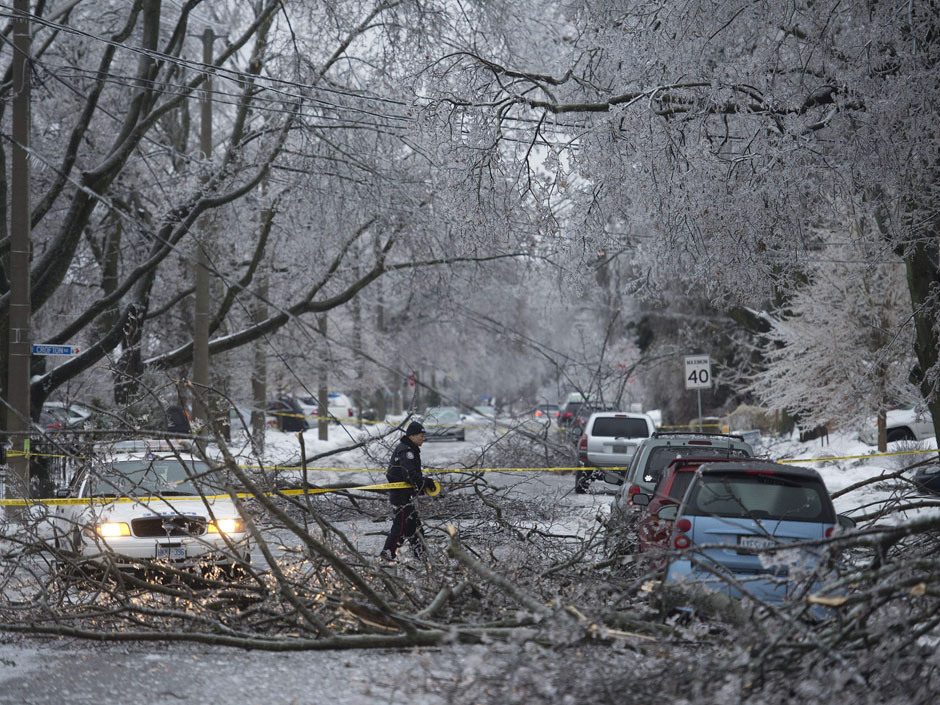
In Toronto, we experienced an ice storm in 2013 that knocked out the power in the middle of winter for many thousands of people.  Without power our buildings began to cool, and quite soon water pipes began bursting as the water froze, and basements began to flood.  This is clearly a very low level of resiliency.  If we were to lose power for more then a week, because of the way that we have built our buildings, and out city, we would quickly see our city disintegrating. Therefore “Resilience” as a design principle goes hand-in-hand with “Sustainability”, if we desire, which we do, to have the buildings we design and build be functional, comfortable, and efficient.
 
-gc


Land Use Planning & Sustainability

Drought in Sao Paolo


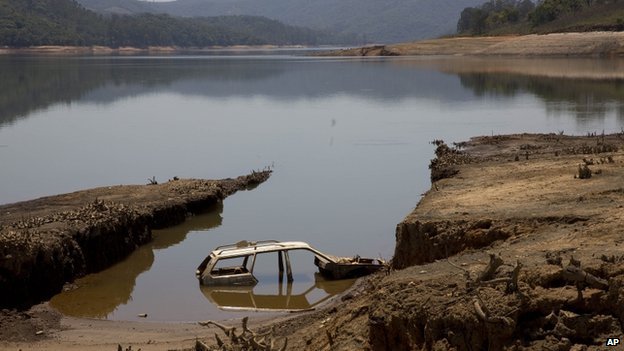
Recent and surprising news (at least from our perspective) from Brazil: a drought stretchs across their most populous province, Sao Paulo. Brazilian Environment Minister Izabella Teixeira has said the country’s three most populous states are experiencing their worst drought since 1930.


Expert consensus is building around deforestation as a major driver of this year’s drought and other serious dry periods in Brazil. In 2009, Antonio Nobre, a scientist at Brazil’s Center for Earth Systems Science – CCST/INPE, warned that Amazonian deforestation could interfere with the forest’s function as a giant water pump; it lifts vast amounts of moisture up into the air, which then circulate west and south, falling as rain to irrigate Brazil’s central and southern regions. Without these “flying rivers,” Nobre said, the area accounting for 70 percent of South America’s GNP could effectively become deserts via.

 
Brazil-Drought-Large


It is sobering to consider how the rapacious tearing down of the Brazilian Amazon in order to clear fields for livestock, and predominately ethanol for bio-fuels has already begun severely impacting the livelihoods of millions of Brazilians.  This adds a very hard to understand factor into land use planning: how land effects meterology.This speaks to the need for Land Use planning which is broad and circumspect (as far as our new knowledge allows) and takes into account not only the terrestrial changes but also the meterological which sudden and large shifts in land-use cause.


The dramatic impact of land-use change on our meterology is not new, and it is a shame that the lessons of past, what we might call “antrho-desertification”, either were not sufficiently studied, or the implications not well enough communuicated.  A good example of this anthro-desertification happened in the famous Dust Bowl of the North American Mid-west.  Here we saw a period of “severe dust storms that severly damaged the ecology and agriculture of the US and Canadian prairies during the 1930s; severe drought and a failure to apply dryland farming methods to prevent wind erosion caused the phenomenon:


With insufficient understanding of the ecology of the Plains, farmers had conducted extensive deep plowing of the virgin topsoil of the Great Plains during the previous decade; this had displaced the native, deep-rooted grasses that normally trapped soil and moisture even during periods of drought and high winds.”  via


As architects and planners we build buildings.  In aggregate we build cities and contribute at a “meta” scale to large changes of land-use.  It is important for us to understand the impact of these changes, and ensure that we are desinging in such a way as to mitigate, and if possible, work in harmony with the land we are changing to sure that there are not downstream effects from our decisions… such as massive droughts effecting millions of people.   While building more dense communities may limit the amount of land that is uprooted to make way for our ever-expanding cities, larger research and guidelines are required which take into effect the ACTUAL impact of land-use change.

-gc

Sheena invited to attend the Climate Summit of the Americas

Climate Summit of the Americas


We are proud to say that Sheena Sharp, a principal at Coolearth has been invited to attend the Climate Summit of the Americas in July this year.


“The summit will bring together Pan-American jurisdictions, as well as environmental groups and industry, to work towards common approaches to reducing greenhouse gas emissions through broader adoption of carbon pricing mechanisms.”


The goals of the summit is to:

– Provide an opportunity to build new partnerships among jurisdictions, with an emphasis on the role of subnational jurisdictions in the fight against climate change;
– Build on the great momentum across the Americas to establish and expand existing carbon pricing networks; and
– Develop and deliver a common statement on commitments by subnational jurisdictions to reduce GHG emissions.

We will post an update of the event itself in July. If you are also attending, let us know!