Appel De Candidature

Experts pour informer le développement du code national du bâtiment en égard à la conception de murs extérieurs innovants.


Avec l’innovation dans le monde de la conception de murs extérieurs, il est désormais nécessaire de revoir les fondements qui supportent le code du bâtiment ainsi que le design favorisant des basses émissions de carbone afin de refléter les pratiques actuelles. Dans le cadre d’un projet de recherche du CNRC, voici votre chance de contribuer en partageant vos connaissances afin d’influencer les futures versions du code du bâtiment.

En tant que spécialiste des détails, vous êtes invité à soumettre votre candidature pour être l’un des experts en bâtiment dans le cadre de cette recherche. Vous fournirez des informations de bases sur les pratiques courantes ainsi que des plans (anonymes) illustrant des détails typiques que vous jugez pertinents.

Pour participer, vous devez avoir accumulé au minimum 15 ans de pratique à titre d’architecte. Votre contribution est estimée à 3-5 heures et, puisque votre temps est précieux pour nous, il y aura une compensation de $500 pour les architectes retenus.

La sélection des candidats sera basée sur l’étendue de la pratique en termes de connaissances et/ou en contexte d’intervention (localisation). Les candidats retenus fourniront une variété d’expériences qui reflètera les constructions réalisées au Canada.

Si vous êtes intéressés, veuillez remplir le formulaire suivant et préparer un résumé de vos expériences architecturales. Veuillez acheminer les documents complétés à : clock@coolearth.ca

Le travail sera effectué pour la plupart en anglais mais nous avons la capacité pour écrire et lire en français ainsi qu’une capacité limitée pour la conversation. L’appel de candidature sera fermé une fois tous les critères remplis.

https://www.coolearth.ca/wp-content/uploads/2022/02/Voulu-des-architectes-experts.pdf

Call For Experienced Architects

Expert architects wanted to inform National Building Code development on future wall design

As innovation occurs in the field of wall design, research baselines supporting the Building Code and low carbon design require updating to reflect current practices. As part of a research project from the NRC, this is your chance to contribute your knowledge to inform research supporting future versions of the Building Code.

As masters of detailing, you are invited to apply to be one of the building experts in this study. You will provide base information on current practices as well as anonymized, typical detail drawings from your practice.  

To participate you must have completed a minimum of 15 years  as a practicing architect. Your contribution will take approximately 3-5 hours, and as your time is valuable to us, there will be a $500 honorarium for those selected.

Selection is based on range of practice, both in knowledge and location. Those selected will bring a variety of experiences to reflect building in Canada.

If interested, please fill out the following form and prepare a short resume of your architectural experience. Both may be sent to clock@coolearth.ca upon completion.

Selection will close when the criteria are filled.

Canadian Architect: Who should be our climate change Prime Minister?

Sheena wrote an article this month about the Canadian Election and Climate Change for Canadian Architect magazine. See this months Canadian Architect magazine, or check out the article online at “Who should be our climate change Prime Minister?”

“Our current Prime Minister is our COVID Prime Minister. The next Prime Minister will be our climate change prime minister. They will be the PM that meets the UN climate targets—or doesn’t. What should we be looking for in the party platforms, particularly with regards to existing buildings—which represent the biggest carbon emission problem, and the hardest one to solve?

“Over the past several years, Toronto 2030 District has embarked on a project to map the costs of getting buildings to zero operating emissions. The project uses a section of downtown Toronto comprising 300 million square feet of floor space as a testbed. This district includes most of the building types in Canada, albeit in different proportions to the country as a whole. Our group of 47 private and public sector partners looks at this issue from the point of view of the options and costs to individual building owners: we don’t think it’s an option to say “it’s too expensive,” but rather, we have embraced the goal of showing how we can pay for it.”

Read more at:https://www.canadianarchitect.com/who-should-be-our-climate-change-prime-minister/

Groundbreaking on the Coniston Seniors Housing apartment

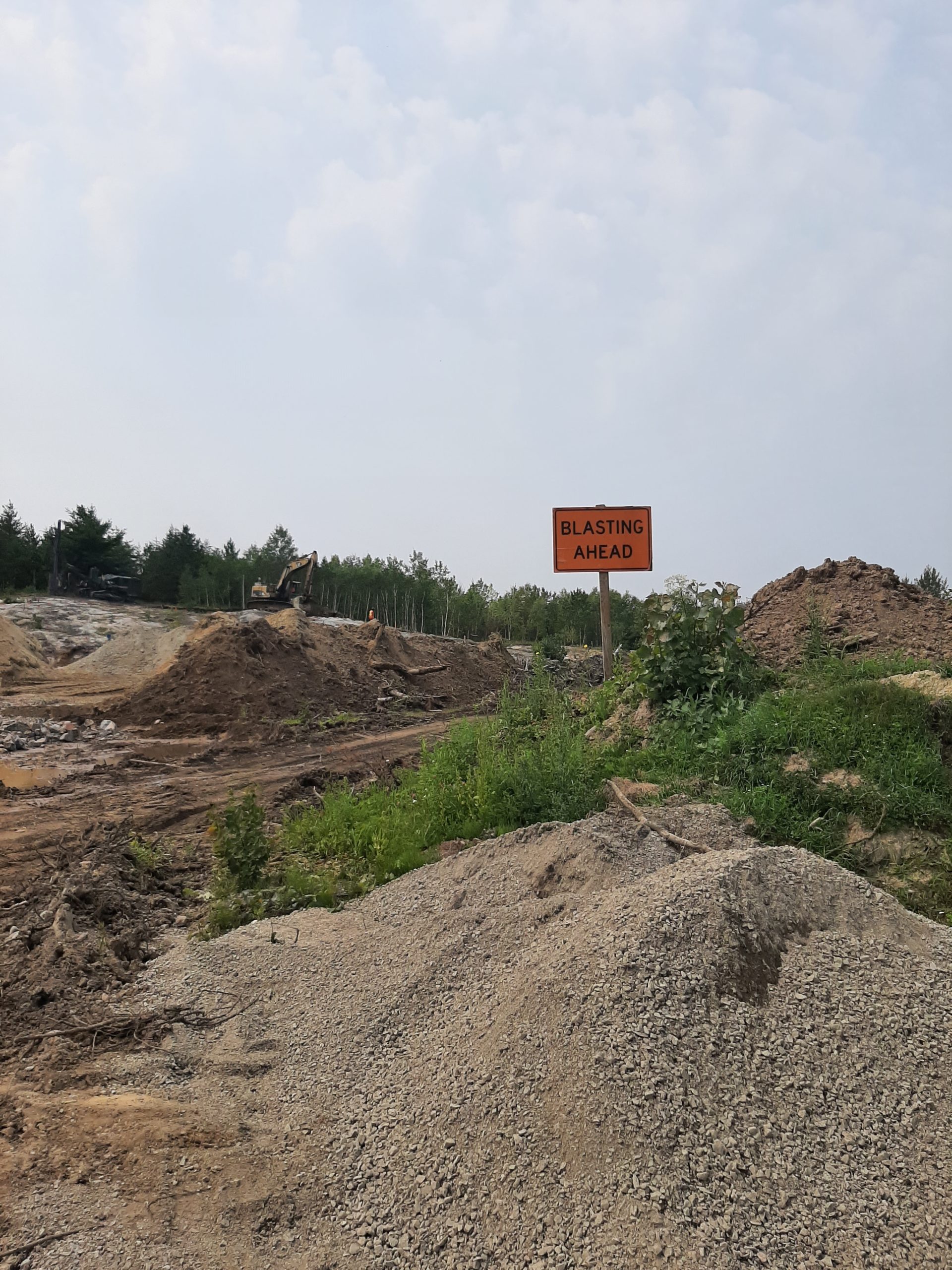
This past week Sheena was in Coniston to celebrate the Groundbreaking of the 55-unit Coniston Seniors Non-Profit Housing complex. Sheena was worked with the community since 2013 to see this project realized, so it was a very exciting moment!

We are happy to be working with the CMHC who provided $18 million in loan funding to realize the project as part of the CMHC’s Rental Construction Financing initiative and National Housing Strategy “to encourage a stable supply of rental housing for middle-class families in expensive housing markets.” You can learn more about the project here: https://www.thesudburystar.com/news/local-news/federal-government-loans-almost-18m-for-seniors-rental-housing-in-coniston

Image
Photo by Brian Bigger, Mayor of Sudbury: @BiggerSudbury

In the photo above, in addition to Sheena Sharp, you can see the Mayor of Sudbury, the MP Marc Serre, and Lesk Lisk CEO of Coniston Non-Profit Housing Corporation at the ribbon cutting. They celebrated this with some controlled and safe blasting! We will keep posting updates of the project as it progresses.

Mariposa Hospice – Photo Update

Having the choice of where to spend the last days of life is a valuable consideration for many of those in palliative care. Hospitals often lack the comfort of a patient’s own home and yet, homes lack the support and ready assistance that a hospital provides.

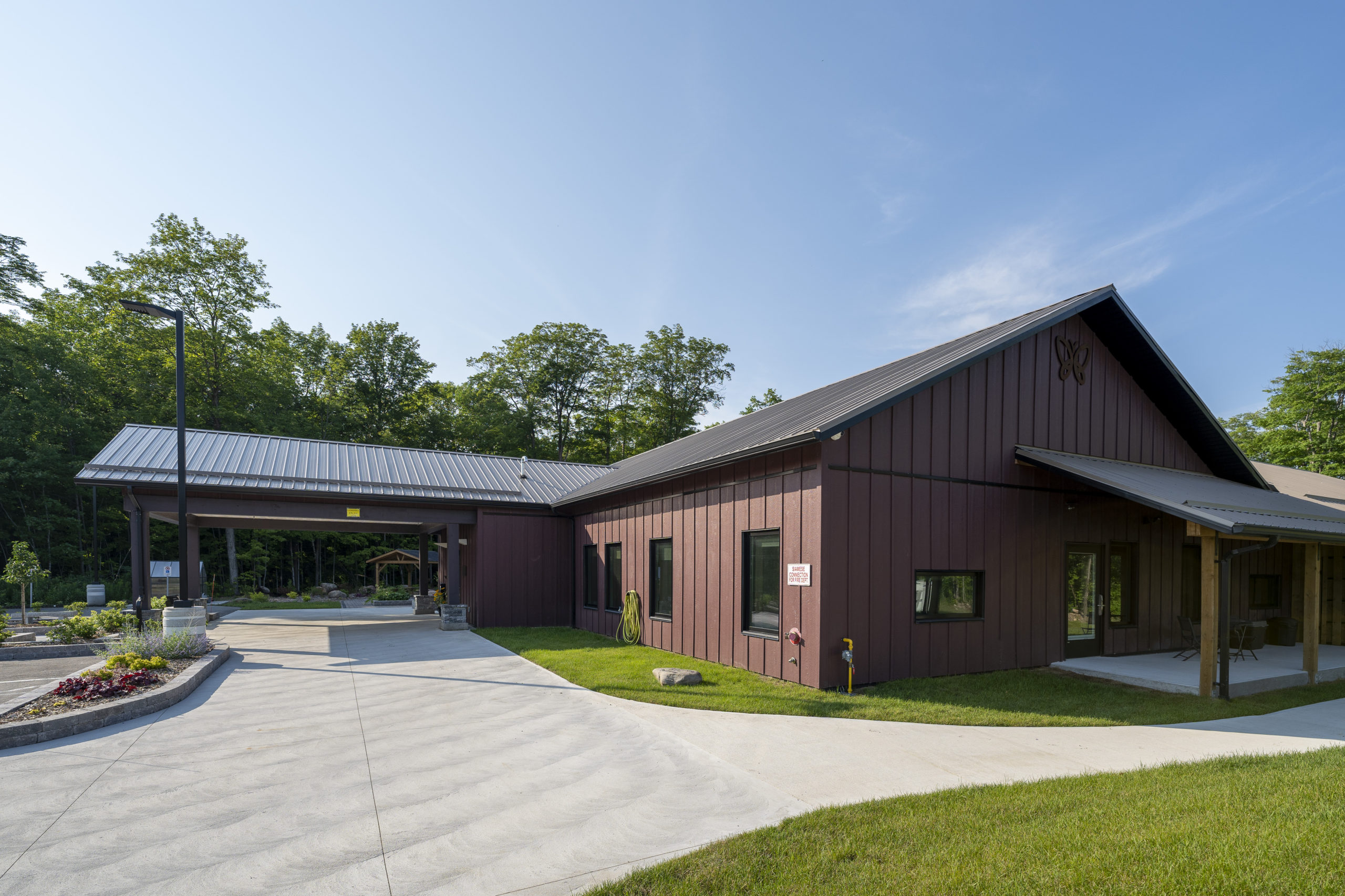
The Mariposa House Hospice offers 5 residential beds for its residents to receive assistance and support for their last days in a space that feels much like home. You can see the permaculture gardens beginning to take shape around the property! Even since these photos more trees and shrubs have been planted.

The photos are from a recent visit to the site by Mike Tenaglia.

The design was inspired by proportions and shape of traditional Ontario houses and cottages. The aim is to provide a feeling of comfort and evoke memories of past experiences and places. Features such as the “saltbox house” roofline, verandas, materials such as wood and stone, as well as careful massing, assist in evoking those memories. We sought to ensure the building fits within its surroundings while providing privacy to residents and visitors. The building itself is designed to be warm, comfortable, and inviting for residents, visitors, and staff using carefully designed building systems.

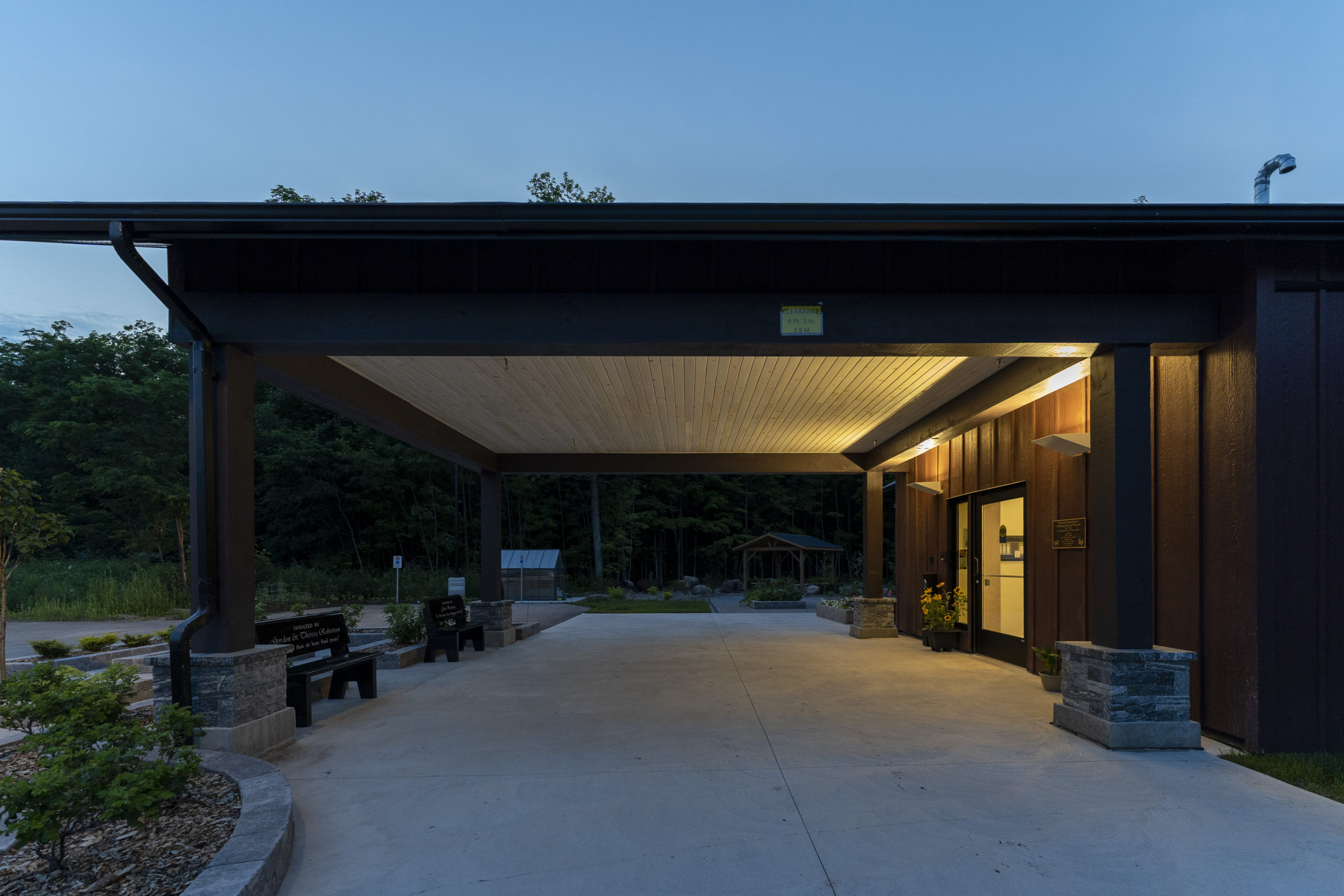
View of the main entrance to the Hospice, including with a covered entry-way for palliative care residents. We wanted the hospice to feel humble and simple, yet modern and pleasing to the eye of the patients, their families, and the hospice administrators.

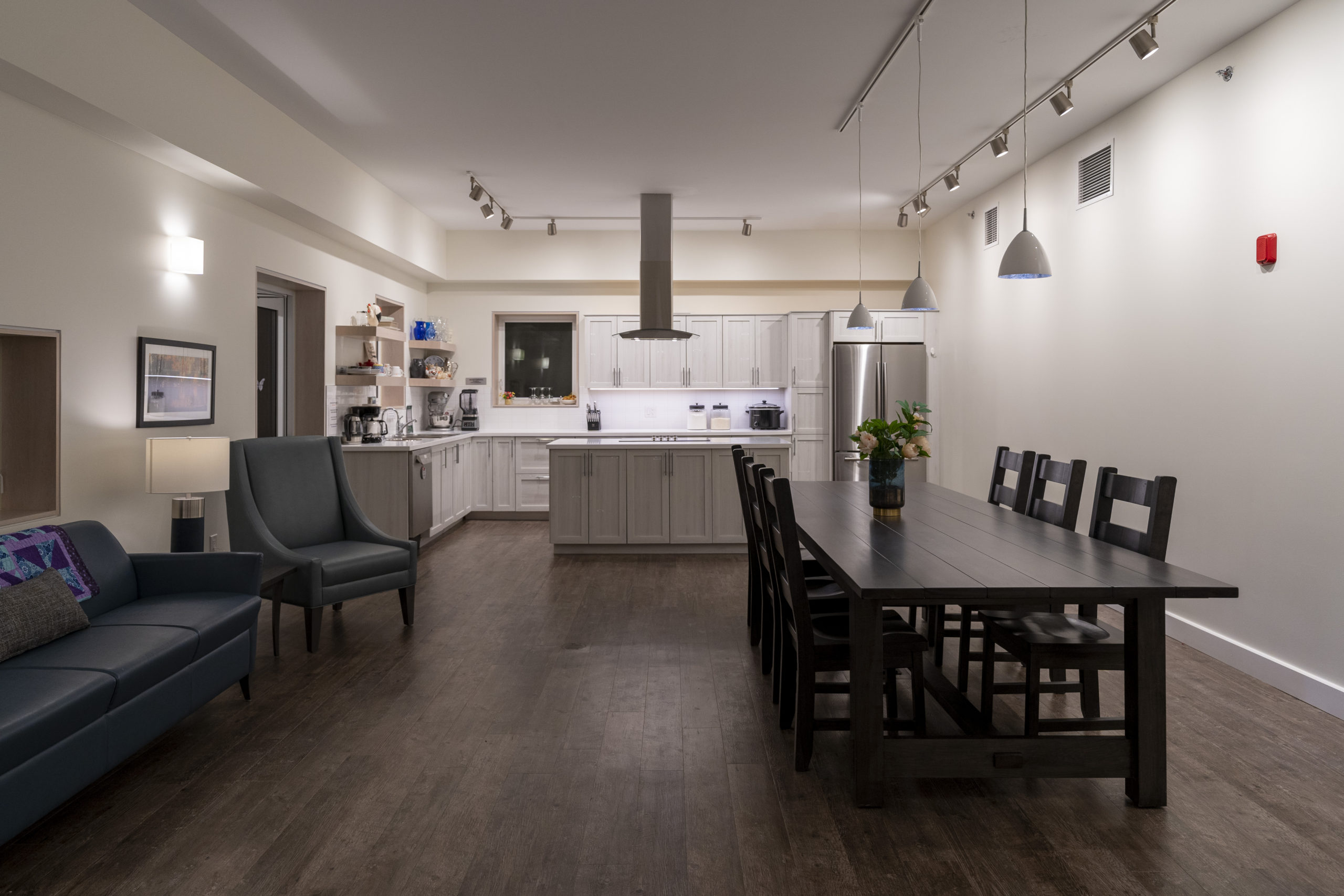
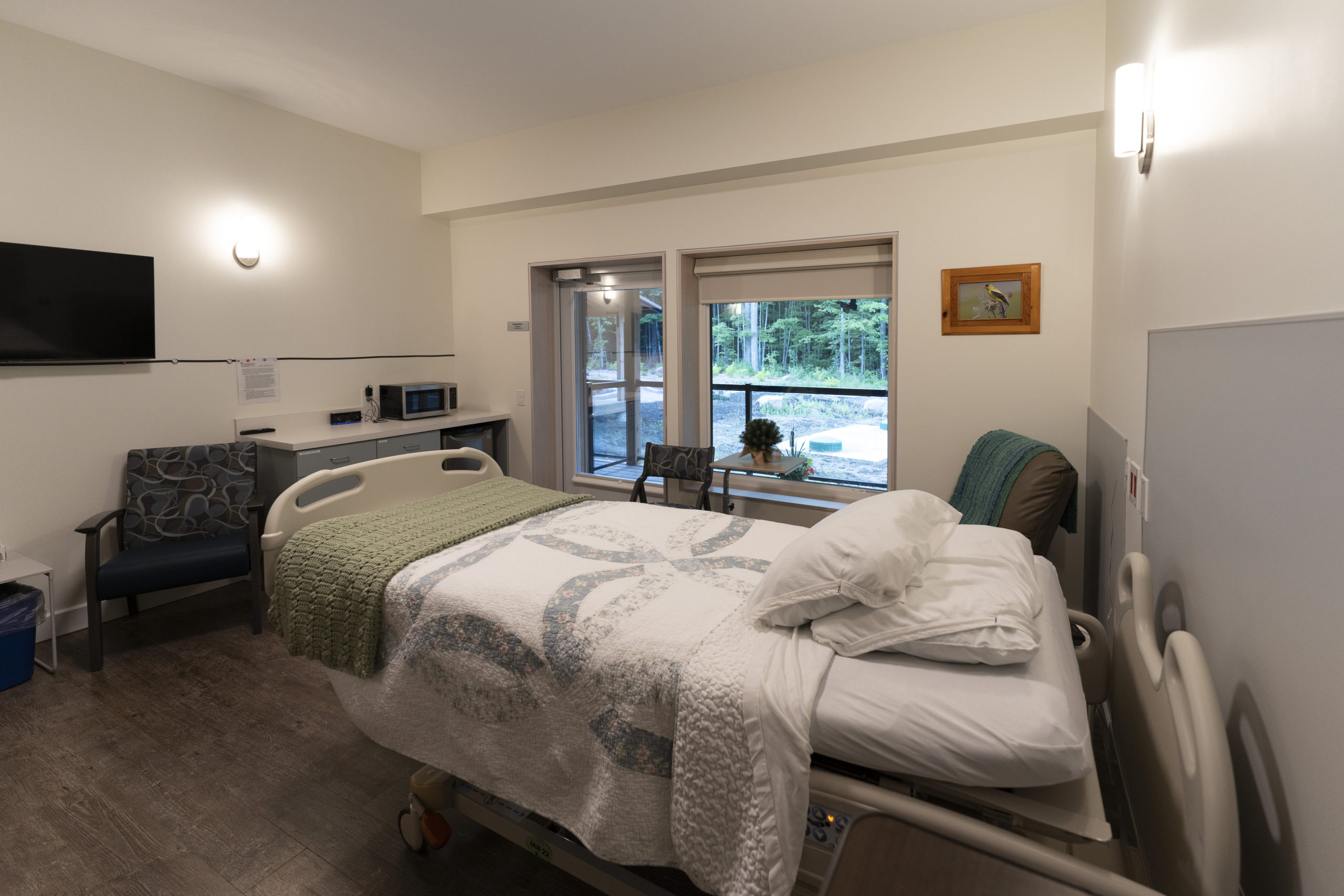
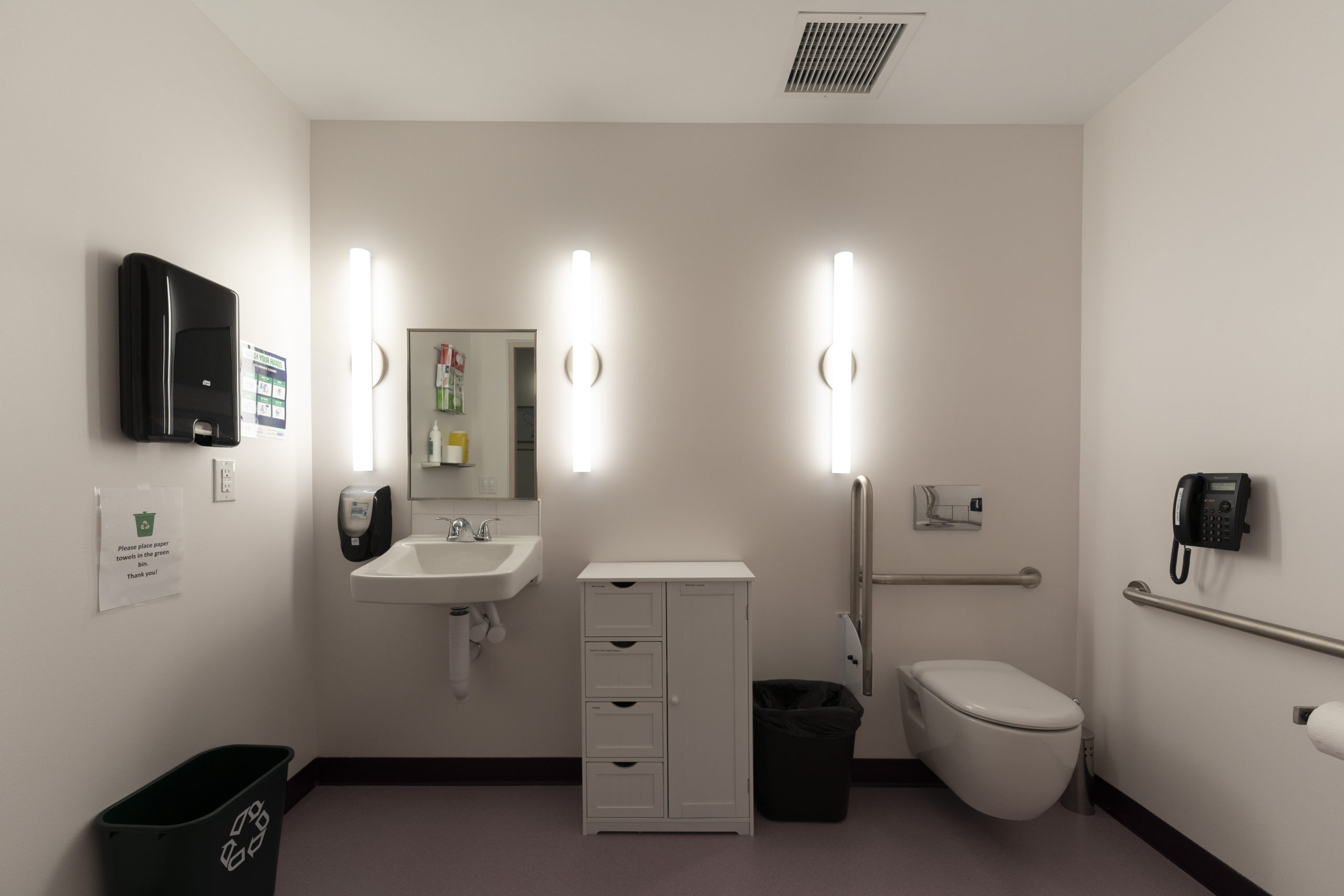
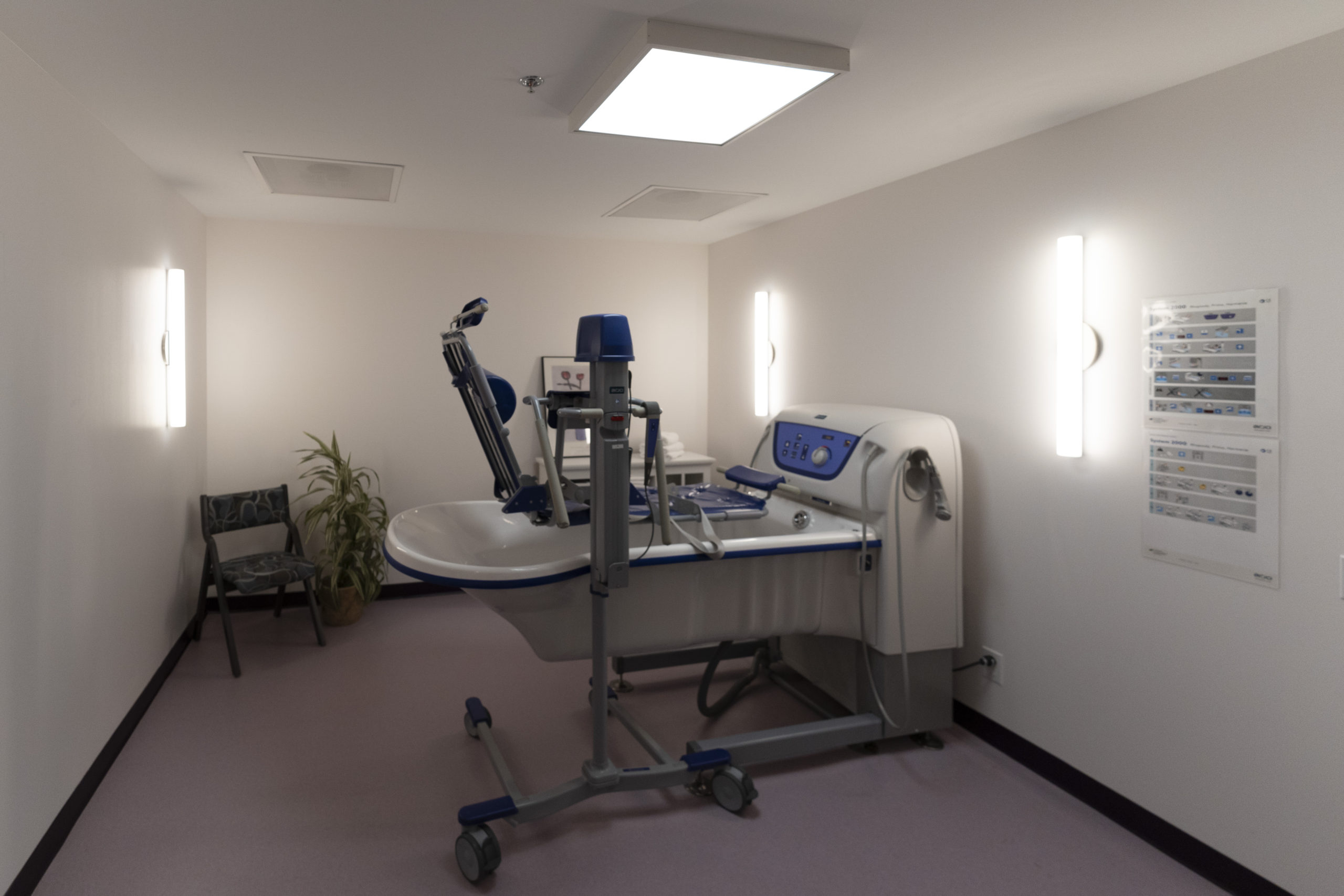
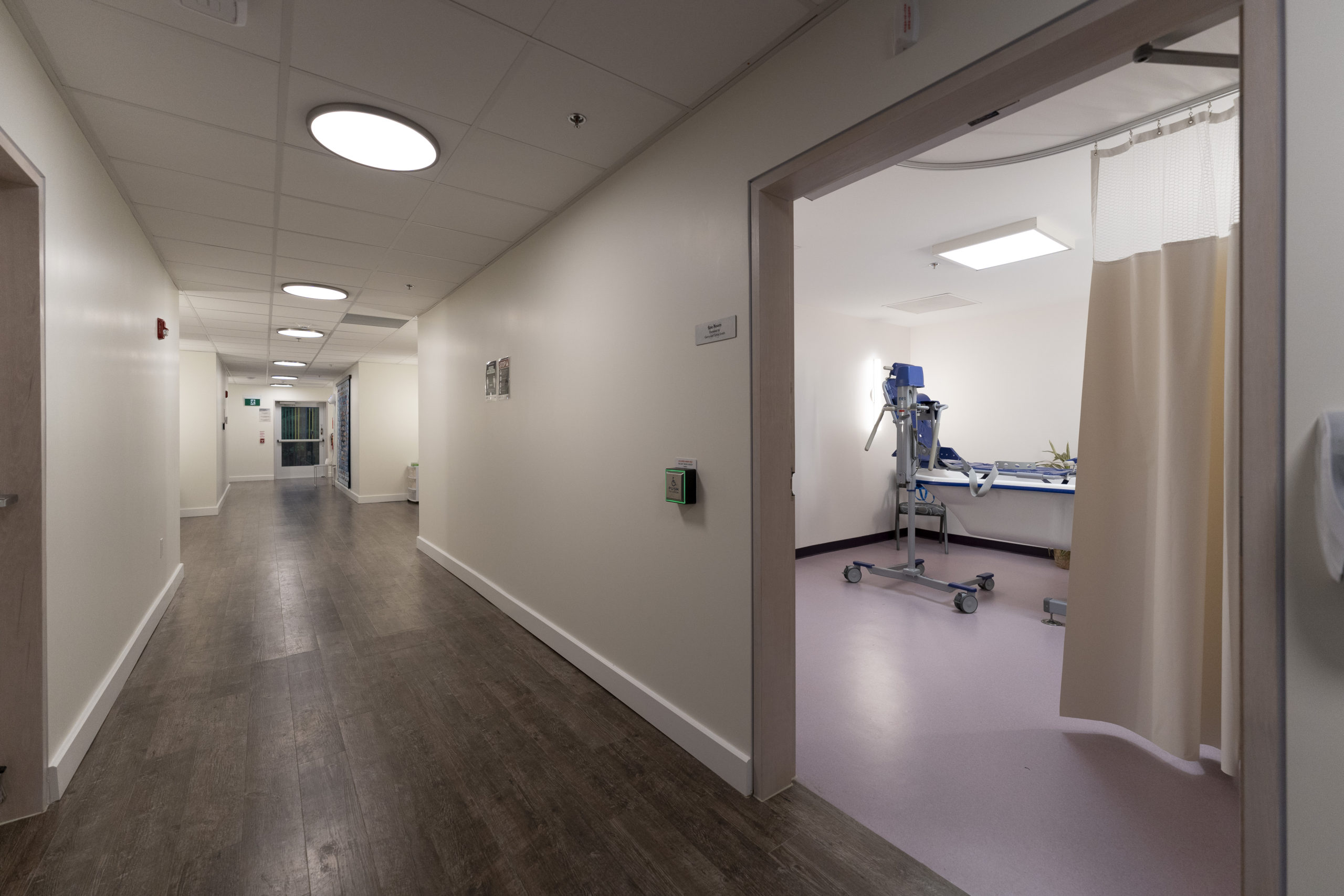
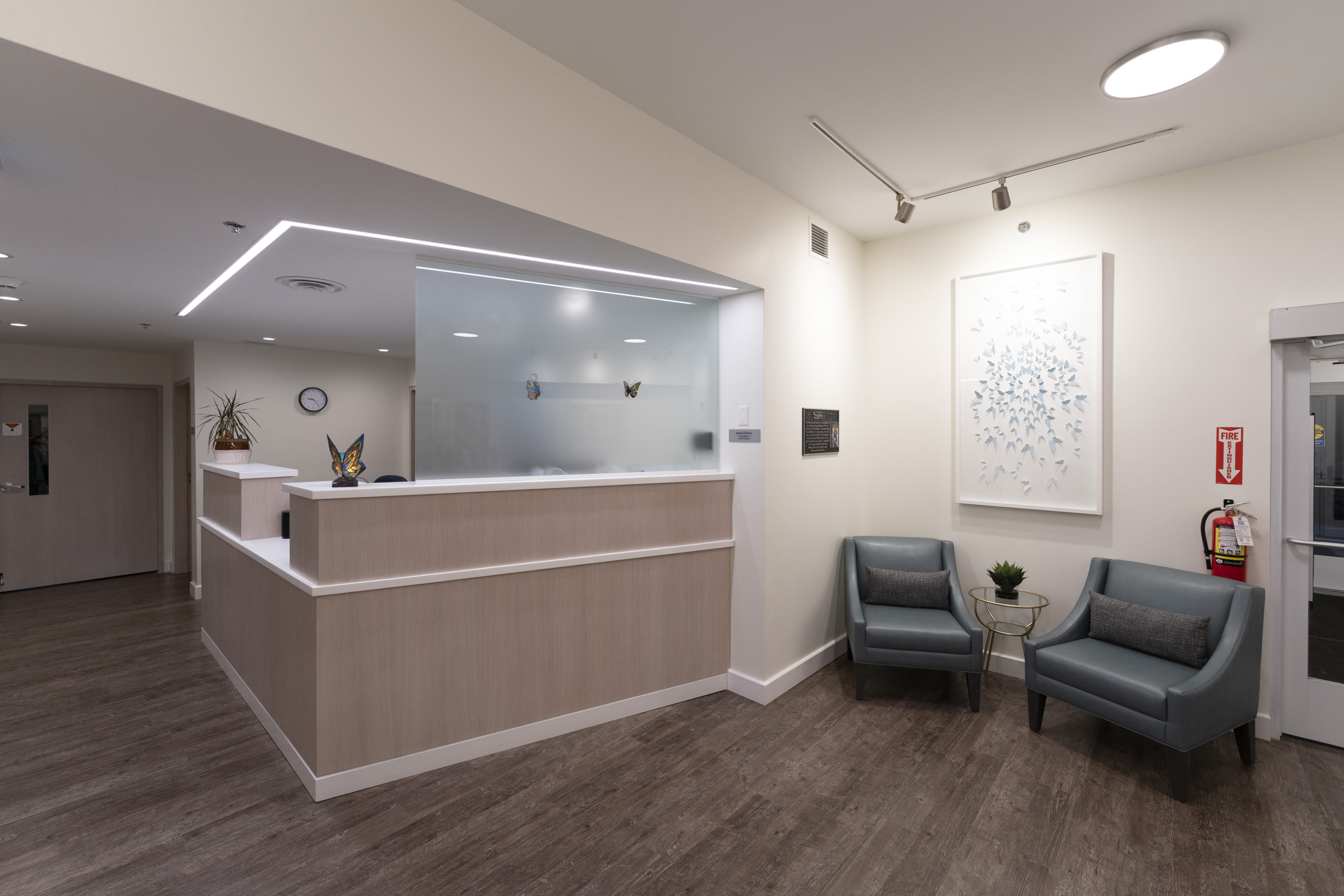
A selection of interior shots showing the patient rooms, including the common kitchen/dining and living area, the patient washrooms, the bath room, and the nursing station and entry foyer. All of the halls, rooms, and doors are sized to permit a mobile bed to moved easily.

View of the front covered entry with memorial garden and benches. In a few years the shrubs and trees will grow up and create an enclosed and shaded entry area for the hospice.

Visitors and Residents are first welcomed to the Hospice from the parking area by a Memorial Garden with benches and seating before passing into the covered entry area. Once inside, they are greeted in the foyer by a reception and gallery space. To their left is the combined Living, Family, Dining, and Kitchen area which includes movable partitions to create more private spaces as required.

If you are interested in more pictures or information please feel free to contact us.

You can also see

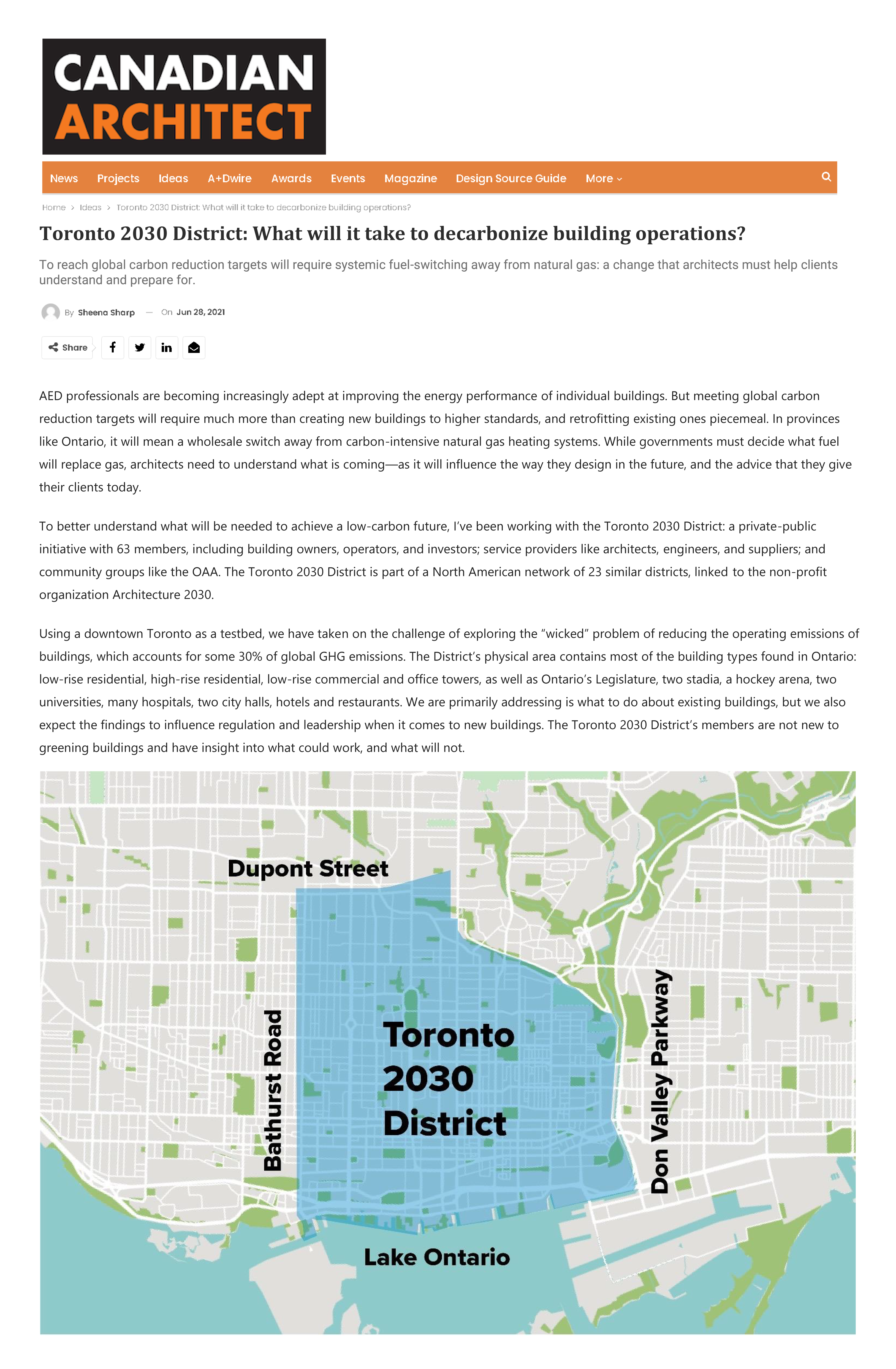
New Article In Canadian Architect Magazine: Toronto 2030 District: What will it take to decarbonize building operations?

Canadian Architect Magazine has published a new article, written by Coolearth’s Principle Sheena Sharp, discussing her work with Toronto 2030 District on 2050 goal-making for decarbonizing building operations. At the forefront of solutions Sheena addresses, “the era of burning cheap natural gas in buildings must end”.

Sheena has been working on the Toronto 2030 District Advisory Board since 2014, where their work on analyzing the District’s existing building operations and developing alternative visions, are laying out a realistic direction for a low-carbon future. The Toronto 2030 District is a public-private initiative which operates within the North American network of 23 other districts linked to the Architecture 2030 non-profit.

Check out the full Canadian Architect Article here.

Be sure to also visit the Toronto 2030 Districts Project Portal here