Understanding Green Building Certifications in Practice
Energy-efficient, durable, and climate-responsive buildings are increasingly shaping how we design and evaluate the built environment. Rising energy costs, evolving municipal standards, and growing awareness of operational carbon have shifted high-performance design from a niche specialty toward a broader professional expectation.
Several popular certification systems help structure this work. Each has a different emphasis — some focus on carbon, others on holistic sustainability, others on energy use, others on building physics and measured performance. Understanding these distinctions is essential.
This post outlines several leading standards in Canada and highlights projects by Coolearth Architecture that have achieved — or are actively pursuing — these certifications.
Canada Green Building Council (CAGBC)
Founded in 2002, the Canada Green Building Council advances sustainable building through advocacy, research, and third-party certification programs. Among its best-known green building certifications are Leadership in Energy and Environmental Design (LEED) and the Zero Carbon Building (ZCB) Standard.
CAGBC has helped formalize sustainability metrics in Canada, moving conversations beyond good intentions toward measurable outcomes.
Zero Carbon Building (ZCB) Standards:
Buildings are a significant source of greenhouse gas emissions. The ZCB Standard was developed to directly address operational carbon and embodied emissions in buildings.
According to CAGBC:
“A zero-carbon building is highly energy-efficient and minimizes greenhouse gas emissions from building materials and operations. Until all emissions can be eliminated, high-quality carbon offsets can be used as a counterbalance.”
To accommodate different building types and stages of a project, ZCB offers two certification pathways:
- Performance Standard – Focused on the operational carbon performance of existing buildings.
- Design Standard – Applied to new construction and major retrofits to ensure zero-carbon outcomes from the outset.
Coolearth has completed projects that have achieved ZCB Certification, including:
- St. Catharines Fire Station
- Mount Dennis Early Learning & Childcare Centre
These projects required coordination between envelope performance, mechanical systems, and operational planning to meet carbon performance targets.
Leadership in Energy and Environmental Design (LEED)
Leadership in Energy and Environmental Design (LEED) is one of the most internationally recognized green building certification systems.
LEED evaluates projects across multiple categories, including:
- Energy performance
- Water efficiency
- Materials and resources
- Indoor environmental quality
- Site and transportation
Points are accumulated across these categories to determine certification levels: Certified, Silver, Gold, or Platinum.
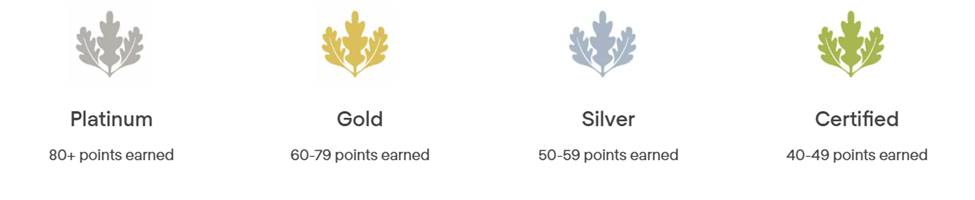
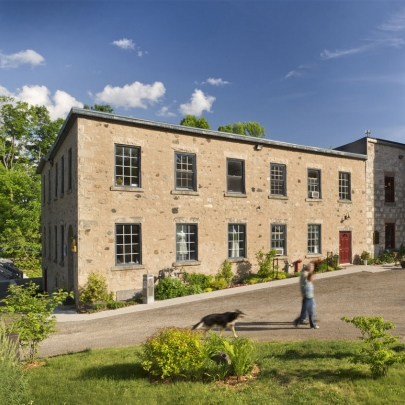
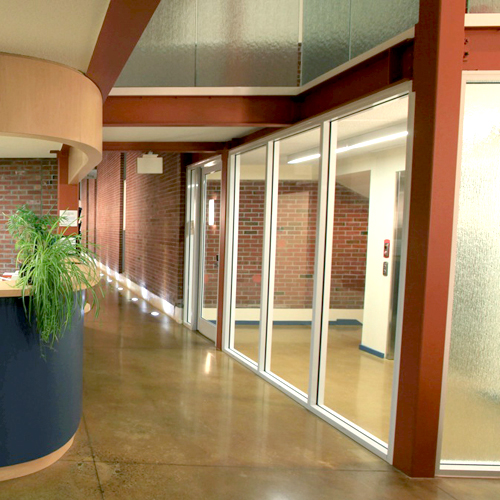
Coolearth Architecture received LEED Silver Certification for the Parry Sound District Social Services Administration Board (DSSAB) renovation and addition — a 19,000 sq ft project housing 50 full-time staff. At the time (2010) relatively few firms in the region were prioritizing high-performance standards, and the project represented a strong commitment by both the client and design team to sustainable building practices.
Toronto Green Standard (TGS)
The City of Toronto developed the Toronto Green Standard (TGS) to guide sustainable development within the city. TGS integrates environmental performance directly into the municipal planning and approvals process.
The framework is organized into tiers:
- Tier 1 – Mandatory baseline requirements
- Tiers 2–4 – Voluntary, progressively higher performance levels
TGS addresses:
- Energy efficiency and greenhouse gas reduction
- Air quality
- Climate resilience
- Water conservation
- Urban ecology
- Solid waste management
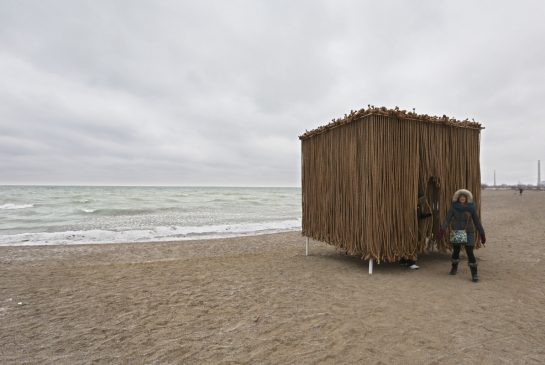
The Mount Dennis Early Learning & Childcare Centre achieved TGS Version 3 Tier 1, with a post-construction evaluation targeting Tier 3.
Municipal standards such as TGS play an important role in raising the baseline performance of everyday development.
Passive House
The Passive House Institute certification system focuses primarily on reducing heating and cooling demand through envelope performance and building physics, but it also includes measures to quantify renewable energies and cost-benefit-analyses.
Passive House design aims to create buildings that require very little energy to maintain comfortable interior conditions. The approach emphasizes:
- High-performance windows – Triple-glazed in cold climates; double-glazed in warm climates.
- Thermal insulation – Continuous insulation to retain heat in winter and limit heat gain in summer.
- Airtightness – A continuous air barrier verified through blower door testing to prevent uncontrolled air leakage.
- Minimized thermal bridges – Careful detailing to eliminate weak points in the building envelope.
- Balanced ventilation with heat recovery – Continuous fresh air supply with minimal energy loss.
One critique sometimes directed at certain green certifications is that they verify projected performance at the design stage without long-term operational accountability. Passive House addresses part of this concern by requiring rigorous energy modelling and on-site performance testing, including airtightness verification, and constructoin documentation. Any Passive House Certified building has been reviewed by third parties to ensure compliance with the standard.
Passive House Certification Types
The Passive House Institute offers multiple certification pathways:
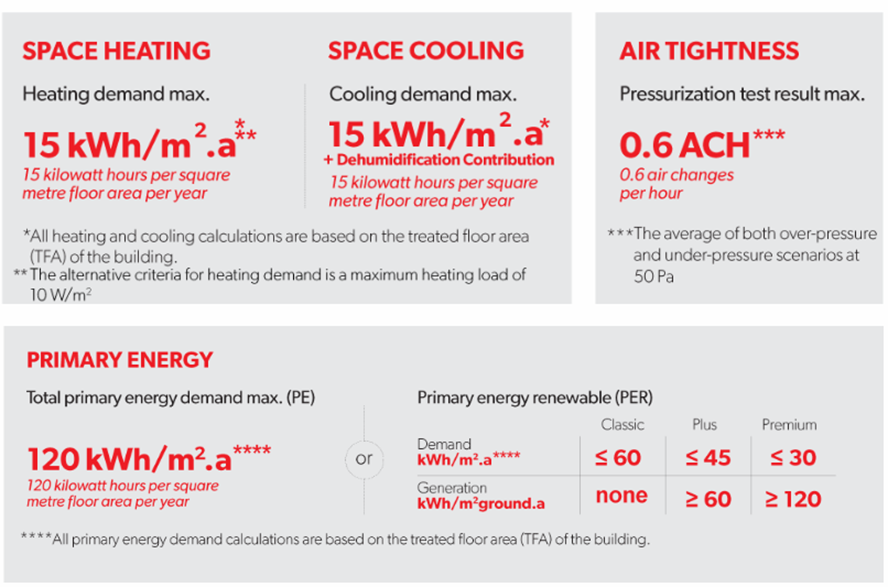
- Passive House Classic – Full certification for new buildings meeting strict performance targets.
- EnerPHit – Retrofit-focused certification recognizing the constraints of existing buildings, particularly unavoidable thermal bridges. See Why Consider EnerPHit Retrofit for your next Home? for more information.
- Low Energy Building – For projects that do not meet full Passive House thresholds but achieve substantial energy performance improvements.
Coolearth projects include:
- Multiple Multi-Unit Residential Buildings – Passive House Building Certifications are being targeted for multiple MURB buildings in Ontario. Stay tuned for updates as these become public!
- Sammon House – EnerPHit Certification (2022), recognized as Toronto’s first certified Passive House retrofit
These projects demonstrate how high-performance standards can be applied to both new construction and complex retrofit conditions.
Summary
Green building certifications are structured frameworks that help align design intent with measurable environmental outcomes. Each standard emphasizes different aspects of performance — carbon, energy demand, materials, or holistic sustainability — but all aim to improve building quality, durability, and environmental responsibility.
At Coolearth, certifications are not pursued as marketing labels but as tools that strengthen design decisions and accountability. From fire stations and childcare centres to residential retrofits, these standards help guide projects toward long-term resilience and occupant well-being.
The goal is not the plaque. The goal is performance.