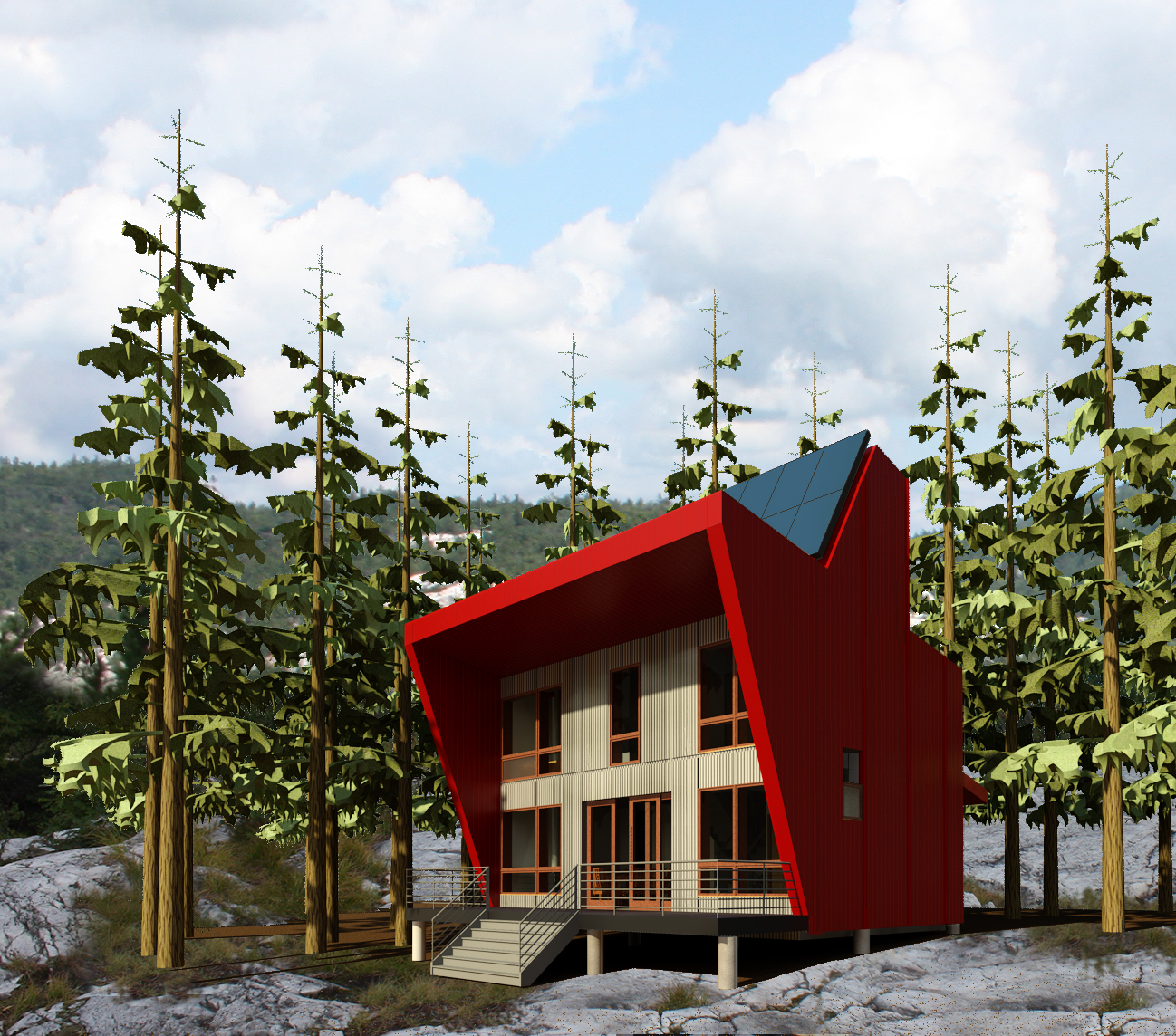
Meadow House – Preliminary ACH of 0.32 for Air Tightness Testing
Meadow House Achieves Exceptional Preliminary Airtightness Result
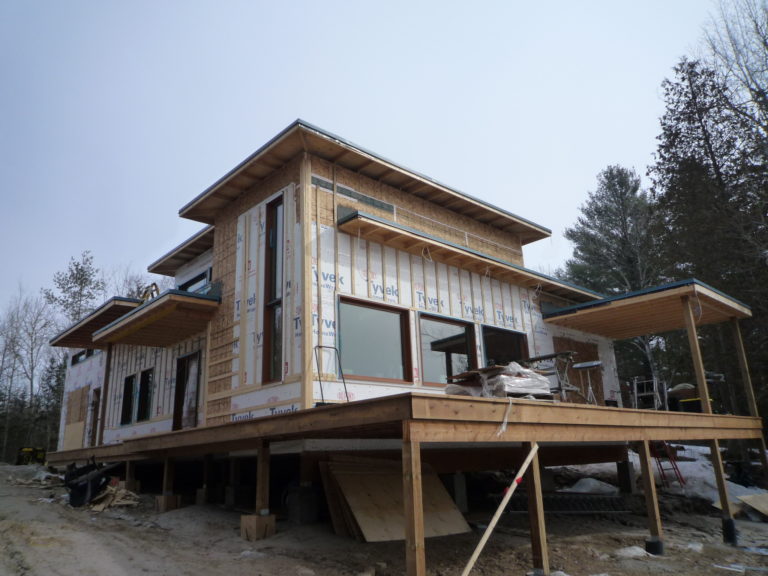
In early May, our Meadow House project underwent a preliminary airtightness test, and the results were extremely positive and gratifying for the entire team, who had been meticulous in maintaining the continuity of the air barrier.
The house achieved an average result of 0.32 air changes per hour at 50 Pascals (ACH₅₀), with an equivalent leakage area of only 14.8 square inches. This is nearly twice as airtight as the maximum of 0.6 ACH₅₀ required for Passive House Classic certification. Three separate blower door tests were completed because the correlation coefficient from the initial testing was slightly below 99%, but all confirmed the value.
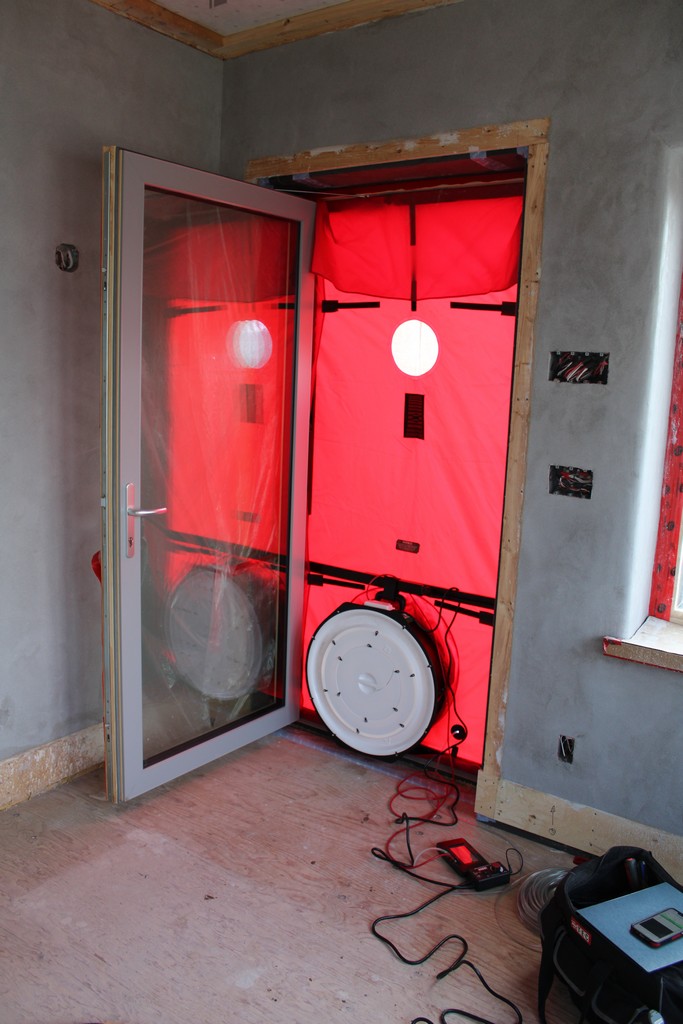
At Meadow House, the interior plaster forms the primary air barrier across the straw-bale walls. Vapour-permeable air-barrier “tags” were carefully installed behind the floor joists and at other transitions where the plaster could not remain continuous, ensuring that the interior air barrier wraps continuously around the building.
We also installed Tyvek housewrap between the exterior mineral-wool insulation and the plastered straw wall. This provides a secondary airbarrier and acts as a weather-resistive barrier and was continuously sealed to the foundation wall below, around all windows/doors and onto the roof.
Following the test the Registered Energy Advisor with GreenUP, described the result as “a pleasant surprise” and noted that the team’s work and attention to detail were exceptional. During the walk-around inspection, he found it challenging to locate air leaks.
A group of University of Toronto architecture students also visited Meadow House for a field trip and were present during the blower door test. Even with many people searching carefully around the building envelope, very few air leaks could be found.
During the testing debrief, however, we realized that the gravity-drain sump pit had not yet been sealed. Since it remained open during the testing, it may have contributed to the measured leakage. Some areas around the windows also could not yet be fully examined because they were covered for protection during the ongoing construction work.
We are therefore hopeful that the completed house may perform even better.
GreenUP will return once the house is finished to determine its final air-change rate. We will share the results when the final airtightness test is complete.