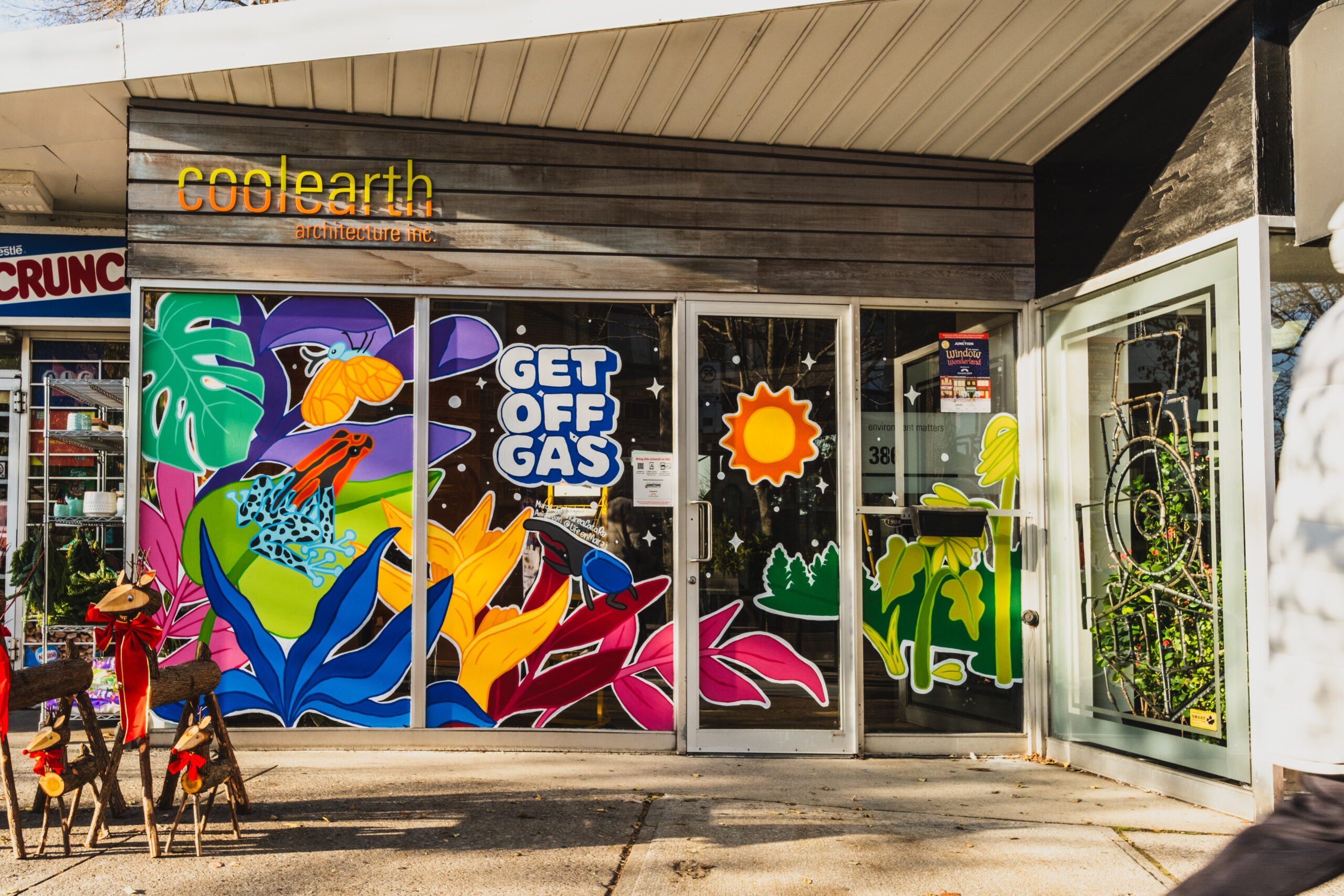
Toronto’s award-winning winter exhibit, Window Wonderland, has returned to the Junction for its fourth consecutive year, running until January 31, 2024. Throughout this event, the Junction was transformed into a lively and immersive outdoor art gallery featuring twenty augmented reality window installations and five murals, all designed by local and international artists.
Window Wonderland is presented in collaboration with the augmented reality app Artivive. This app adds a layer of augmented reality to traditional art, creating new and immersive experiences that people can explore when interacting with art. Visitors at Window Wonderland can download the Artivive app, point their smartphones at the windows and wall murals, and watch the artwork come to life.
Jae Yang Photography (@silentjae)
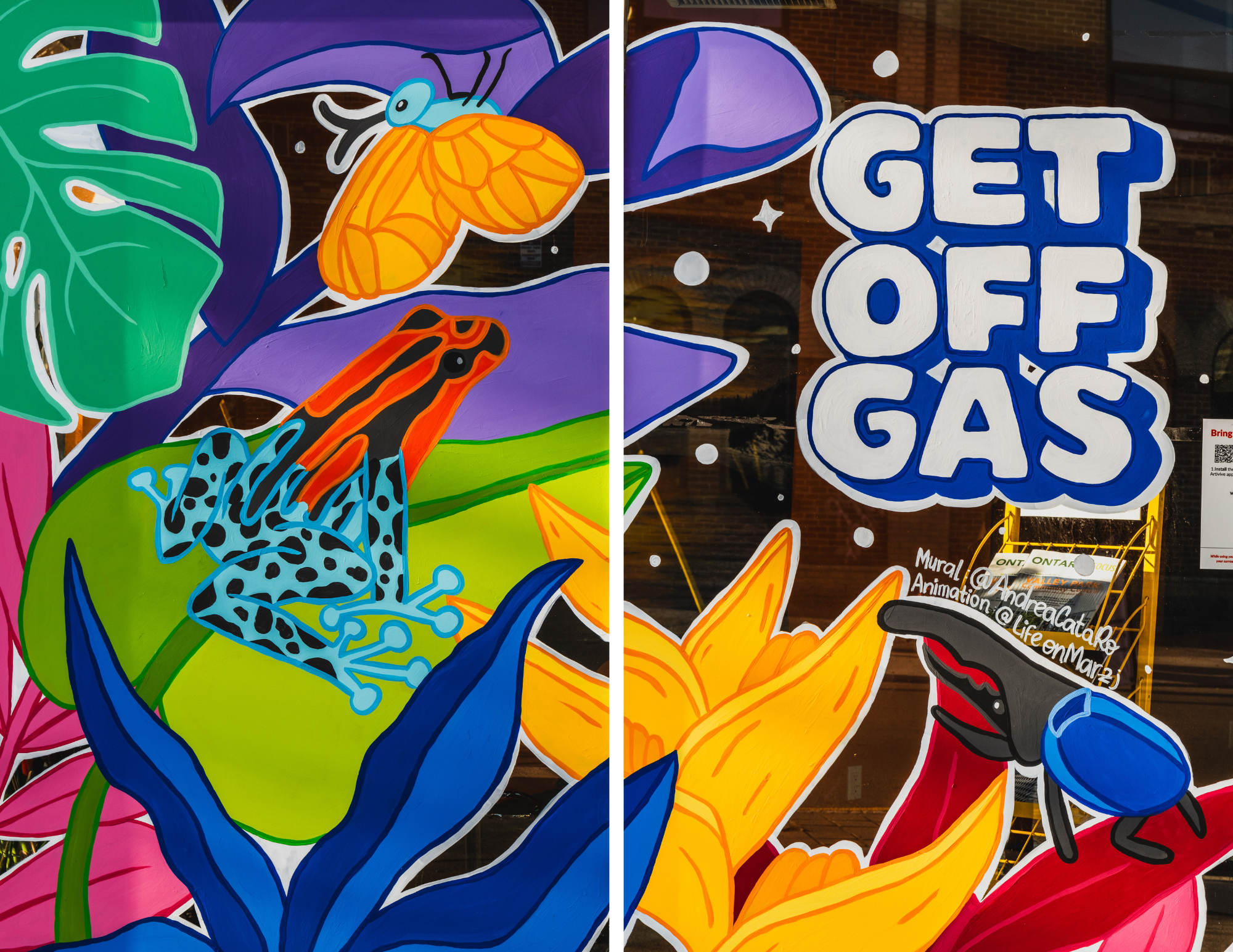
Our office window-gallery was transformed with a beautiful mural painted by artist Andrea Rodriguez (@andreacataro) and animated by Maartje Simons (@lifeonmarzj). The beauty of nature is captured through expressive colors and lines, creating a vibrant and illustrative statement to encourage the reduction of greenhouse gas emissions.
Jae Yang Photography (@silentjae)
We hope everyone had a lovely holiday and New Year! We are excited to leap into 2024 with the initiation of new projects as well as the completion of some existing projects!
We are excited to announce that in October, Geoff Christou passed the Passive House Institutes exam to become a Certified Passive House Designer. This achievement means that, in addition to Krupa Patel, Coolearth now has two Certified Passive House Designers on staff. With this result, Coolearth continues to demonstrate a commitment to providing data-backed sustainable, low-carbon building design. We take pride in utilizing energy models and data to ensure that our clients receive buildings that perform optimally, minimize resource usage, and are both easy to construct and durable.
Ultimately, our commitment to using data in design decisions reflects our unwavering dedication to creating environmentally conscious, high-performing, and innovative architectural solutions for our clients.
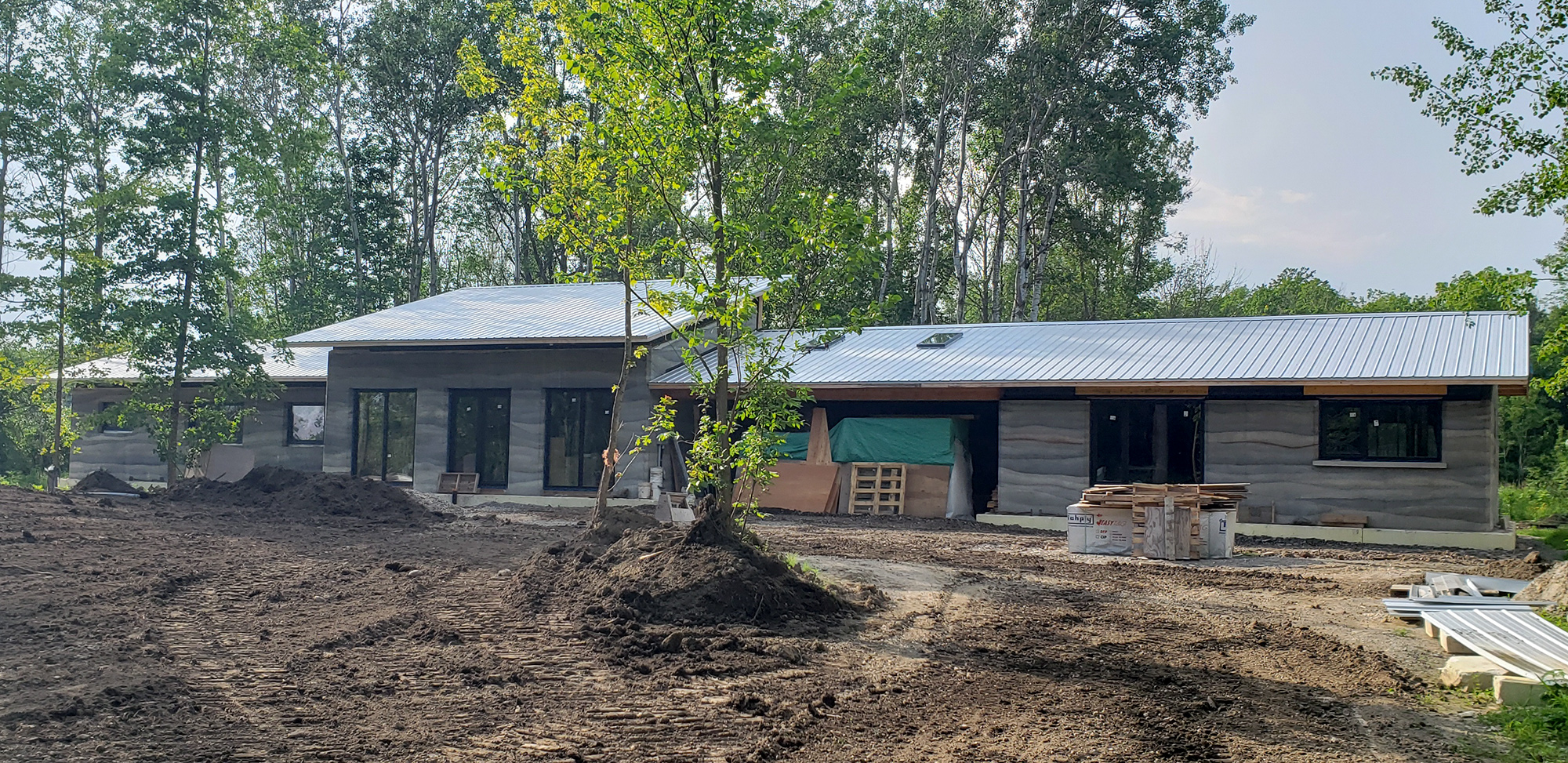
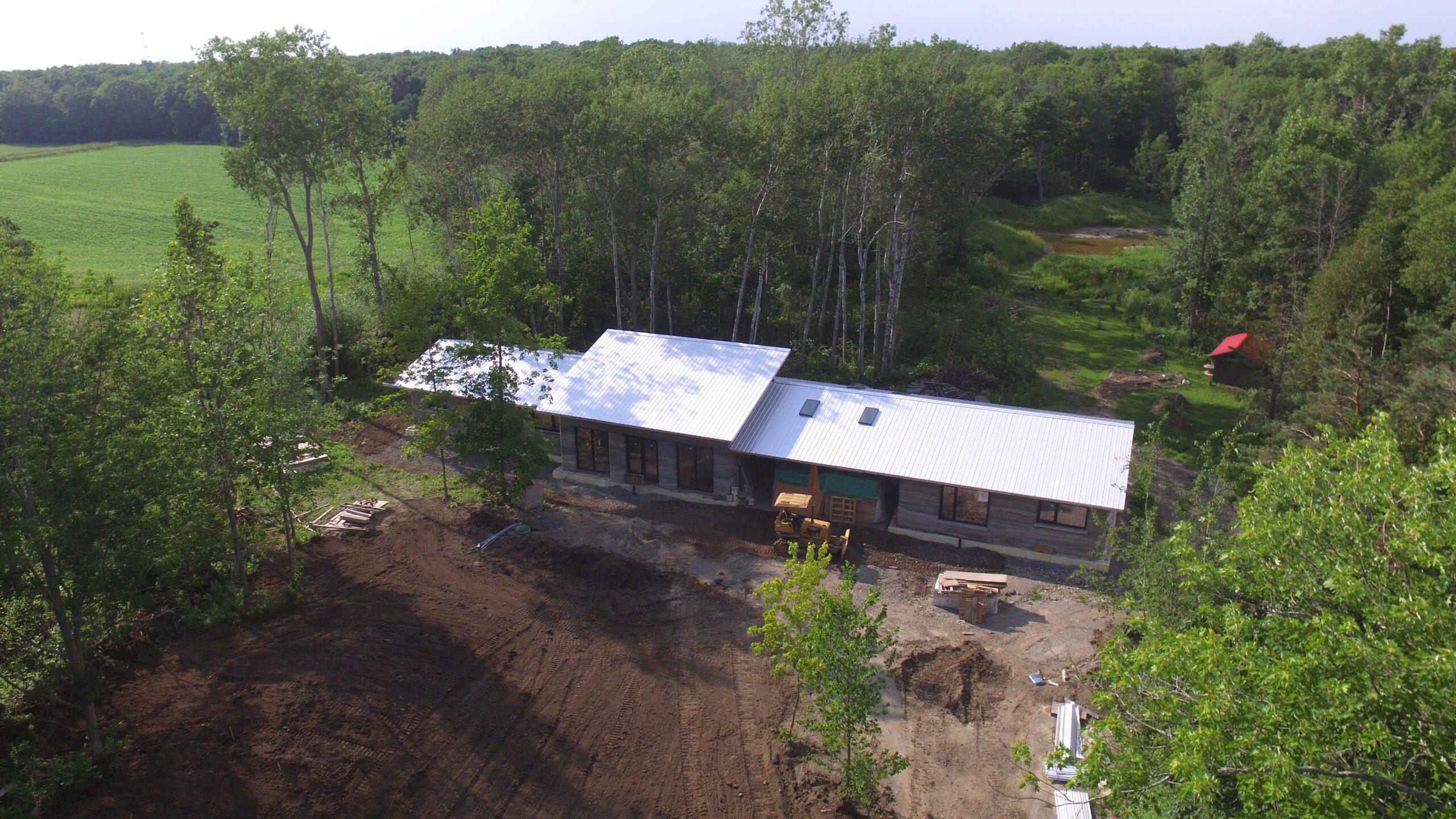
We’re excited to share the latest developments on the rammed earth home project in Prince Edward County, Ontario. This post includes photos from our site visit in July, as well as a few pictures from later in the summer showcasing the finishing details on the roof.
When we visited in July the construction of the home and guesthouse, designed for efficiency and modern minimalist living, had made significant strides, with the majority of the exterior work completed except for the window trimming, landscaping, and finishing touches. The interior electrical, mechanical, floor, and wall/ceiling finishes are also progressing well (we will do a separate post on the interiors shortly!)
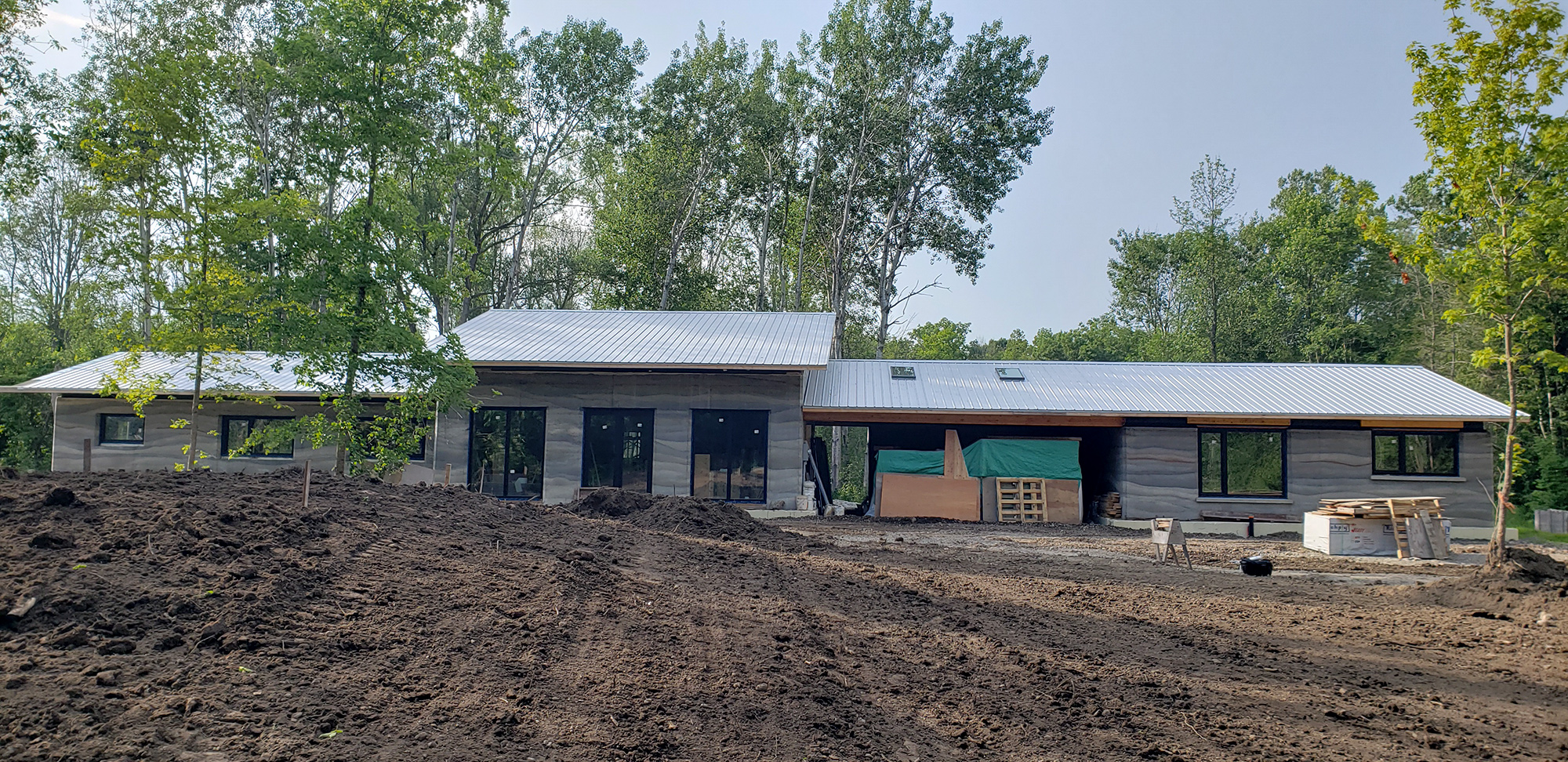
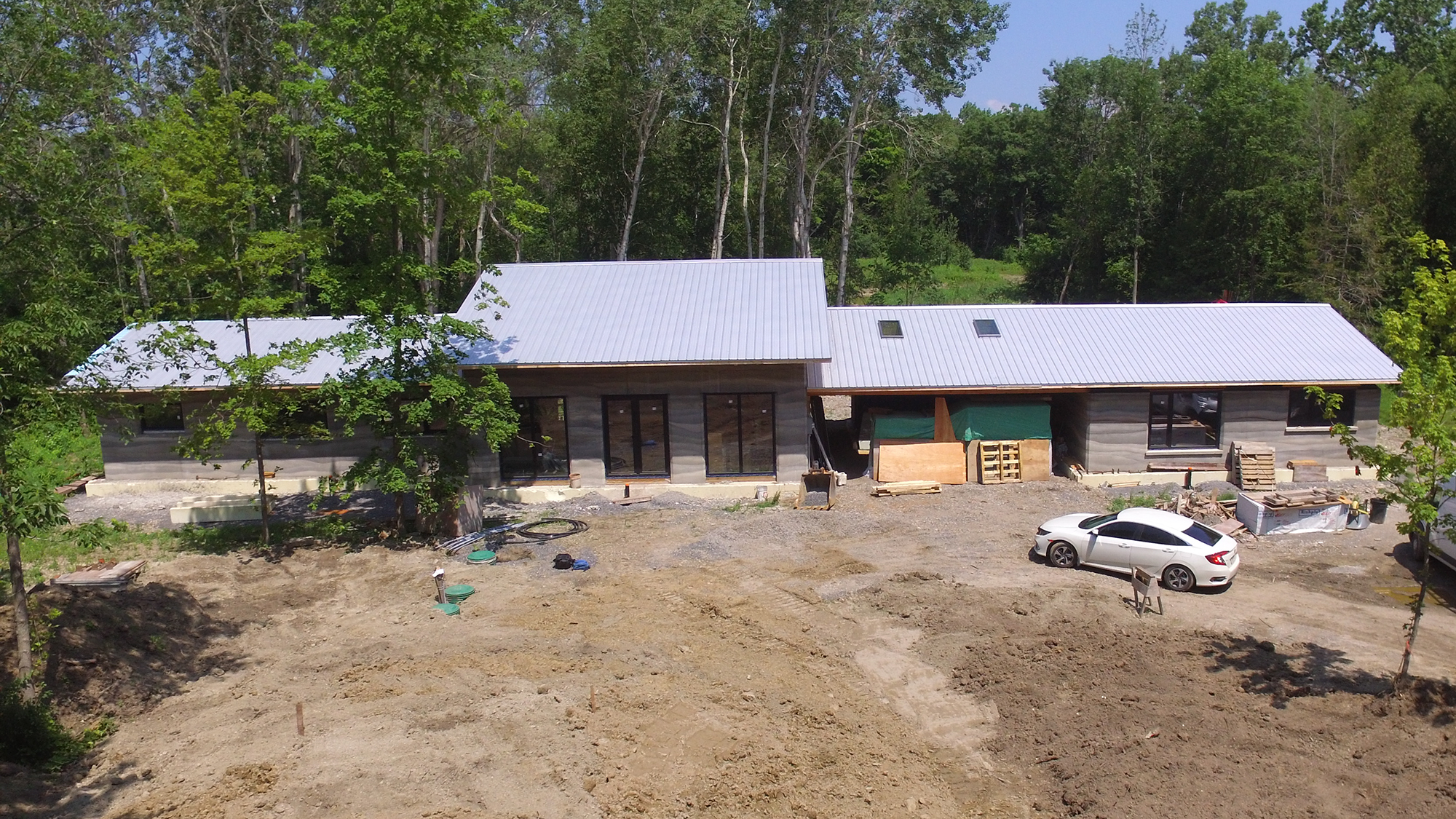
In the photo below, looking at the south facade, you can see the overall massing and proportions of the home. By utilizing passive solar heating and shading, well-insulated walls, ceilings, and floors with minimal thermal bridges, and high-performance windows, this home will be energy-efficient and comfortable during all seasons, while also being durable and beautiful. Harnessing the natural thermal mass properties of rammed earth, these buildings will maintain a very consistent internal temperature, reducing the need for excessive heating or cooling. Large overhangs on the south side will keep the sun out of the rooms in the summer, while allowing more sunlight to enter in the winter for passive heating benefits.
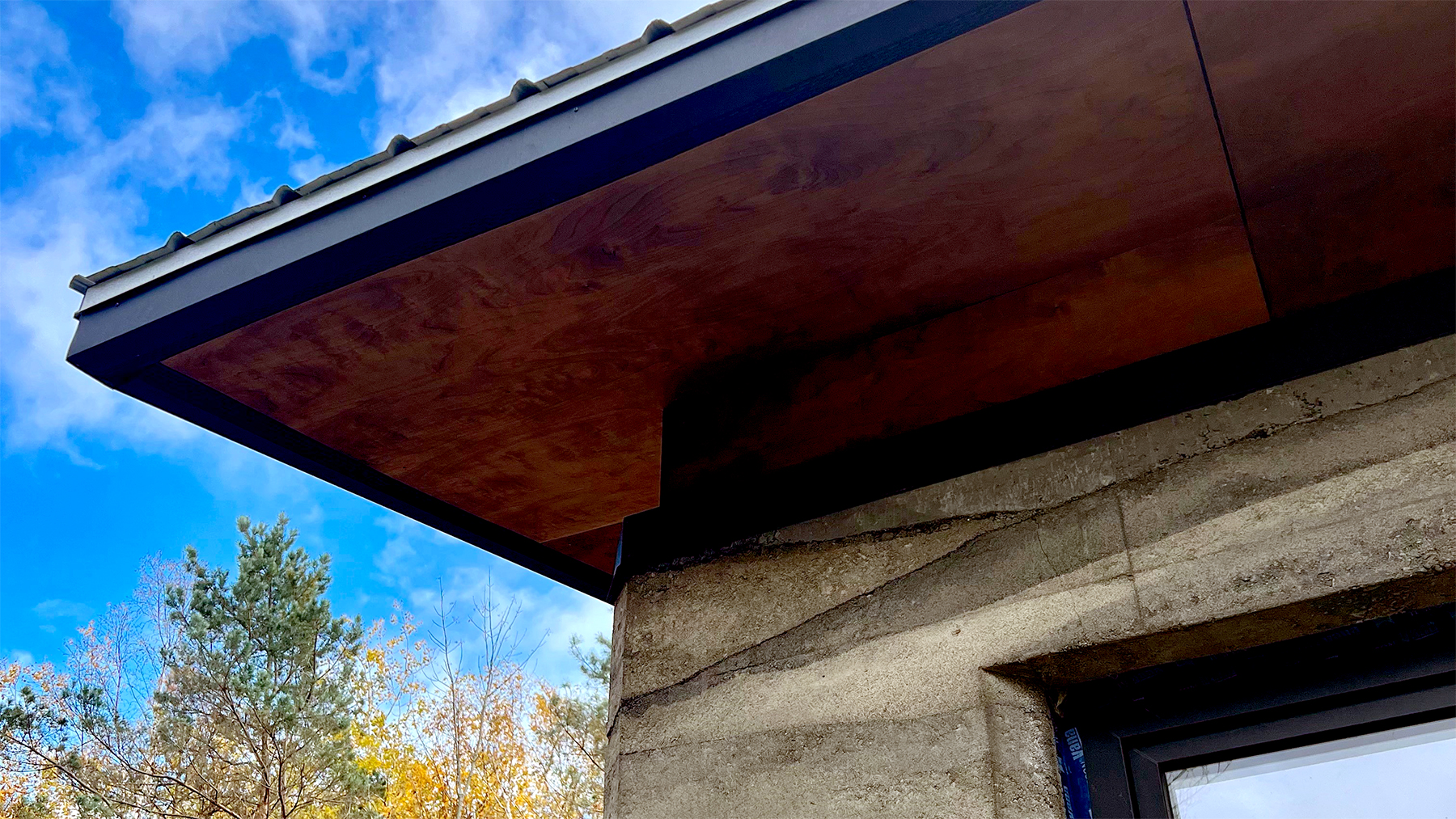
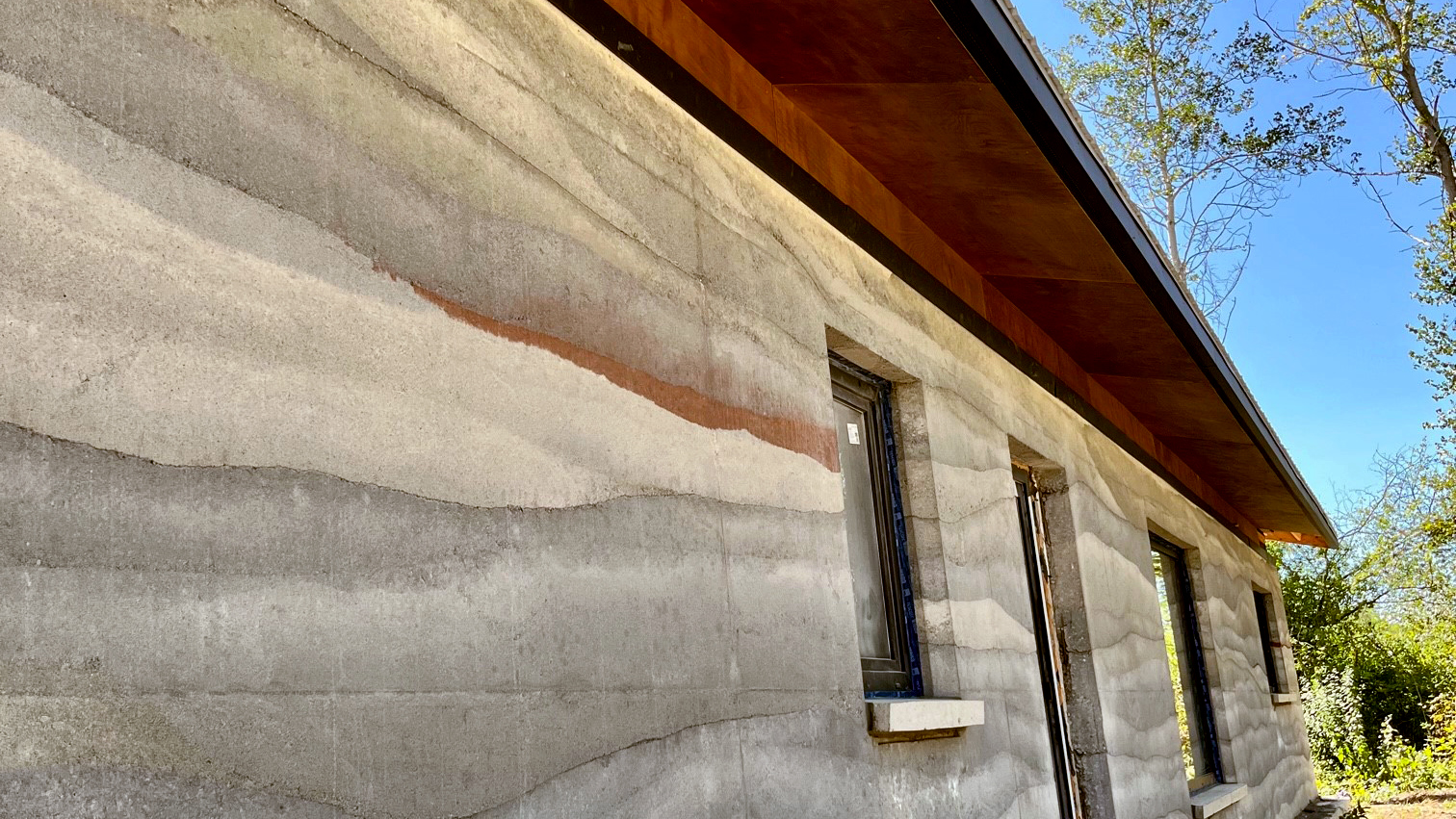
In our design, we contrast the solidity of the walls with an intentional “lightness” and “richness” in the roof. We accentuate how the roof is sitting on top of the walls, bringing to the fore the weight and massiveness of the walls. To bring out a richness in the roof, the roof soffit is clad in stained plywood, while black flashing ties it in with the black window frames. The roof itself is clad in galvanized metal, which reflects heat away from the building in the summer, while constantly changing colour with the shifting seasons and sky. With these design features, we want the beauty and craftsmanship of the walls to be evident in the design, both up close and from a distance.
Unlike traditional rammed earth techniques, stabilized rammed earth involves blending the earth mixture with stabilizers like cement or lime (in our case, cement). This integration enhances the material’s durability, making it resistant to spalling (winter freeze-thaw related damage) and ensures the longevity of the rammed earth finish on the outside. Aerecura, the contractor and craftspeople behind this project, also made rammed earth window sills (visible above) to match the color and texture of the walls.
The project team went with a pre-fabricated roof system with low embodied carbon that was built off-site and craned into place. This roofing solution minimizes the project’s environmental impact with very low-carbon insulation materials (cellulose and wood) while ensuring structural integrity, durability, and ease of construction. It was remarkable to see how quickly the pre-fabricated roof was installed.
Another innovative, low-carbon approach we used on this project is a “concrete-free” floating plywood slab floor. This concrete-free slab achieves the structural and performance requirements of a traditional slab-on-grade system by using two layers of 3/4″ tongue and groove plywood to form a rigid wooden slab that sits on top of 10″ of sub-slab insulation, an air/gas barrier, and a fine sand bedding.
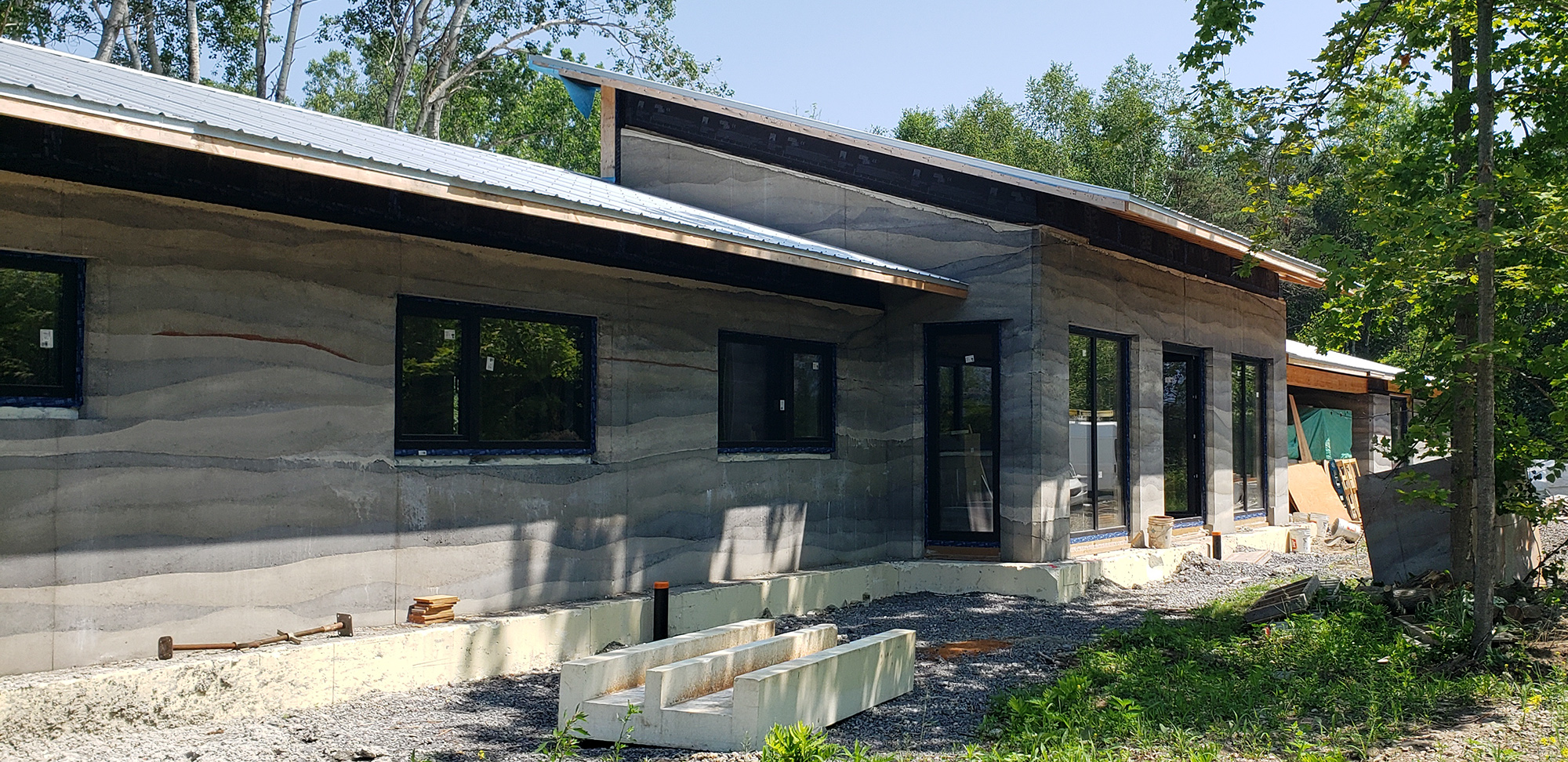
In the photos below, you can see the innovative foundation footing system that Aerecura has developed for the rammed earth walls, ensuring there are no thermal bridges. You can also see how the main living area is accentuated in the design and how the overhangs offer plenty of shading to the home in the hot July months.
You can view our previous Construction Updates on the rammed earth home and guesthouse here, here, and here. We will be posting another update shortly.
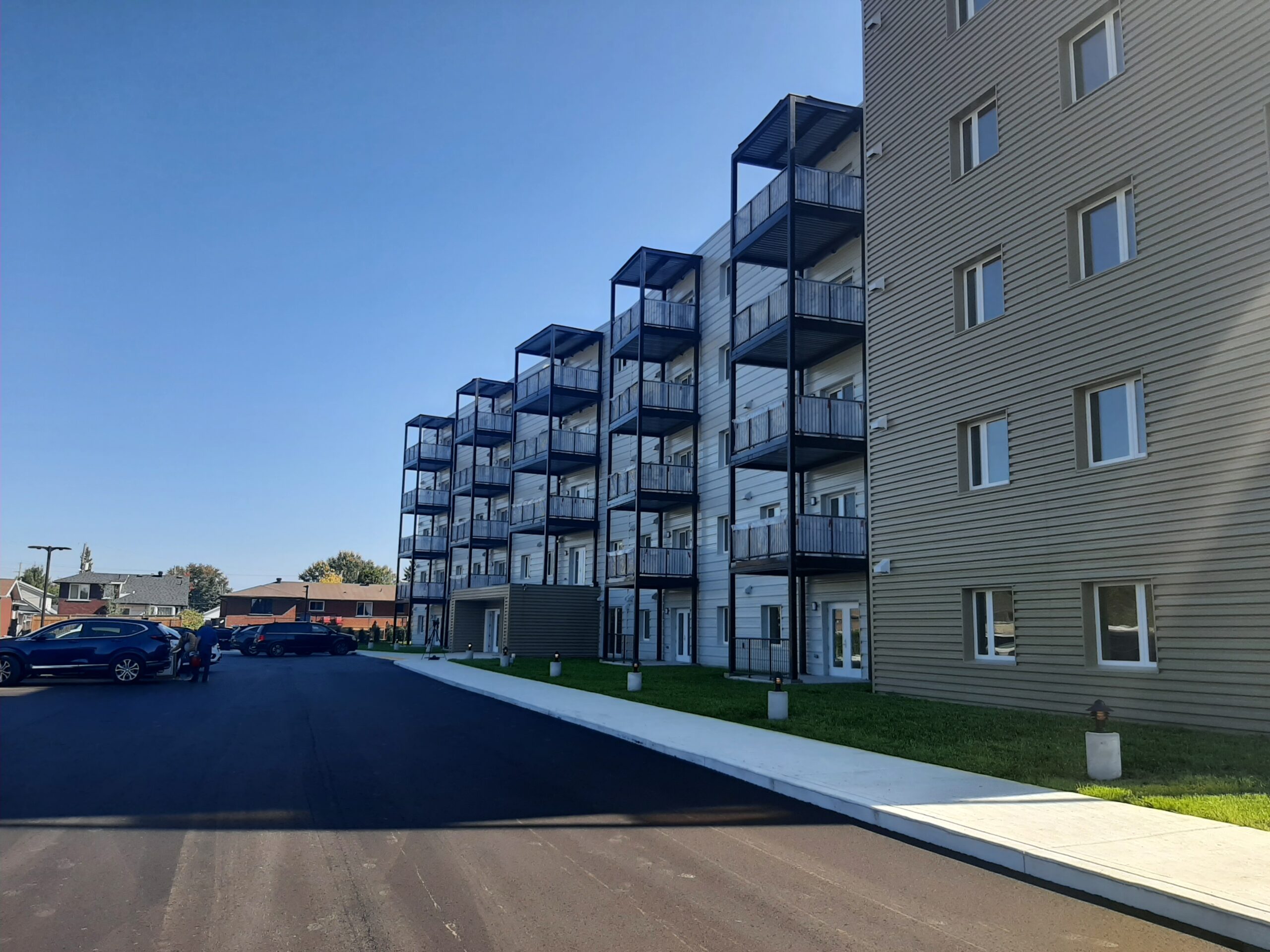
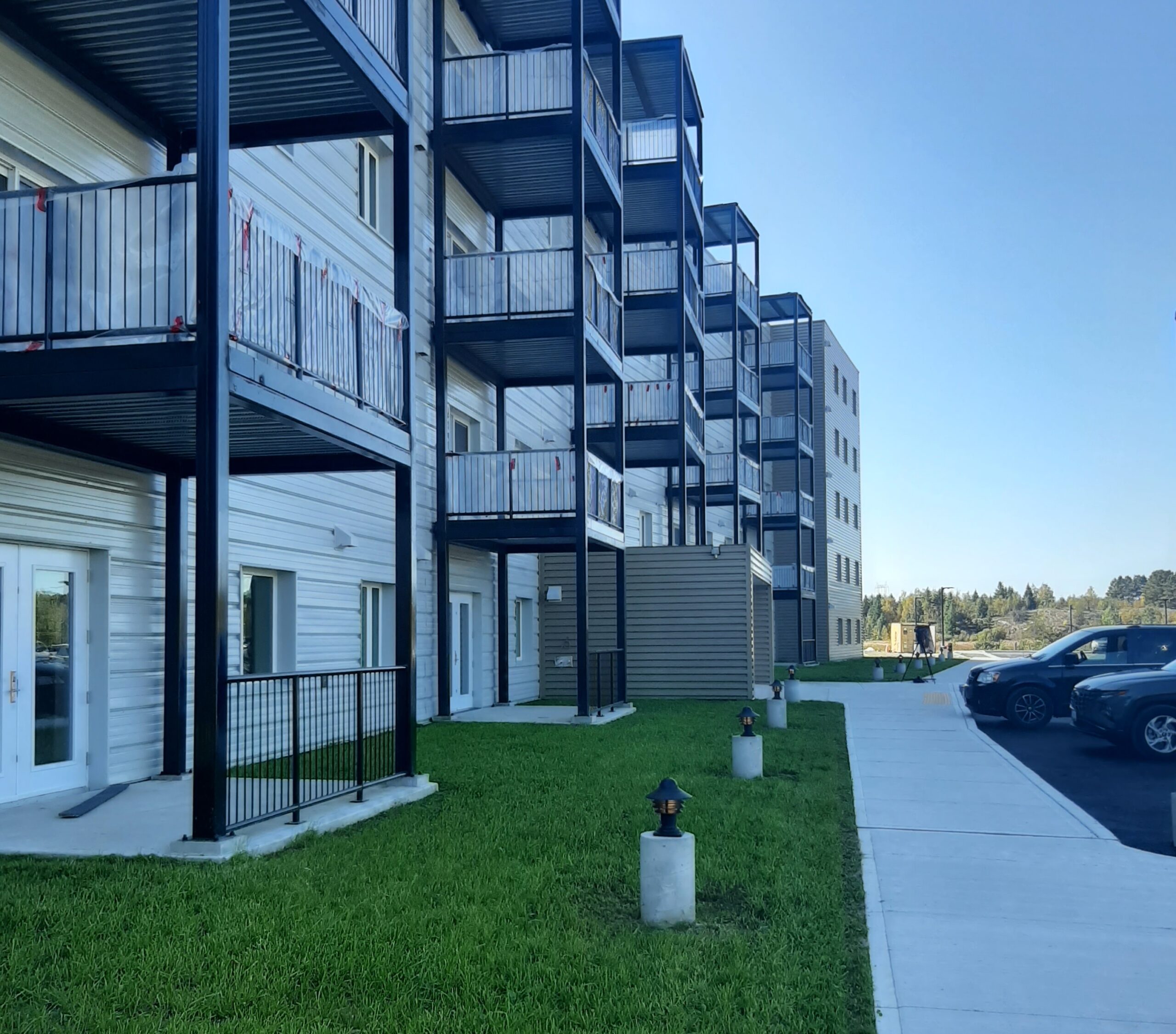
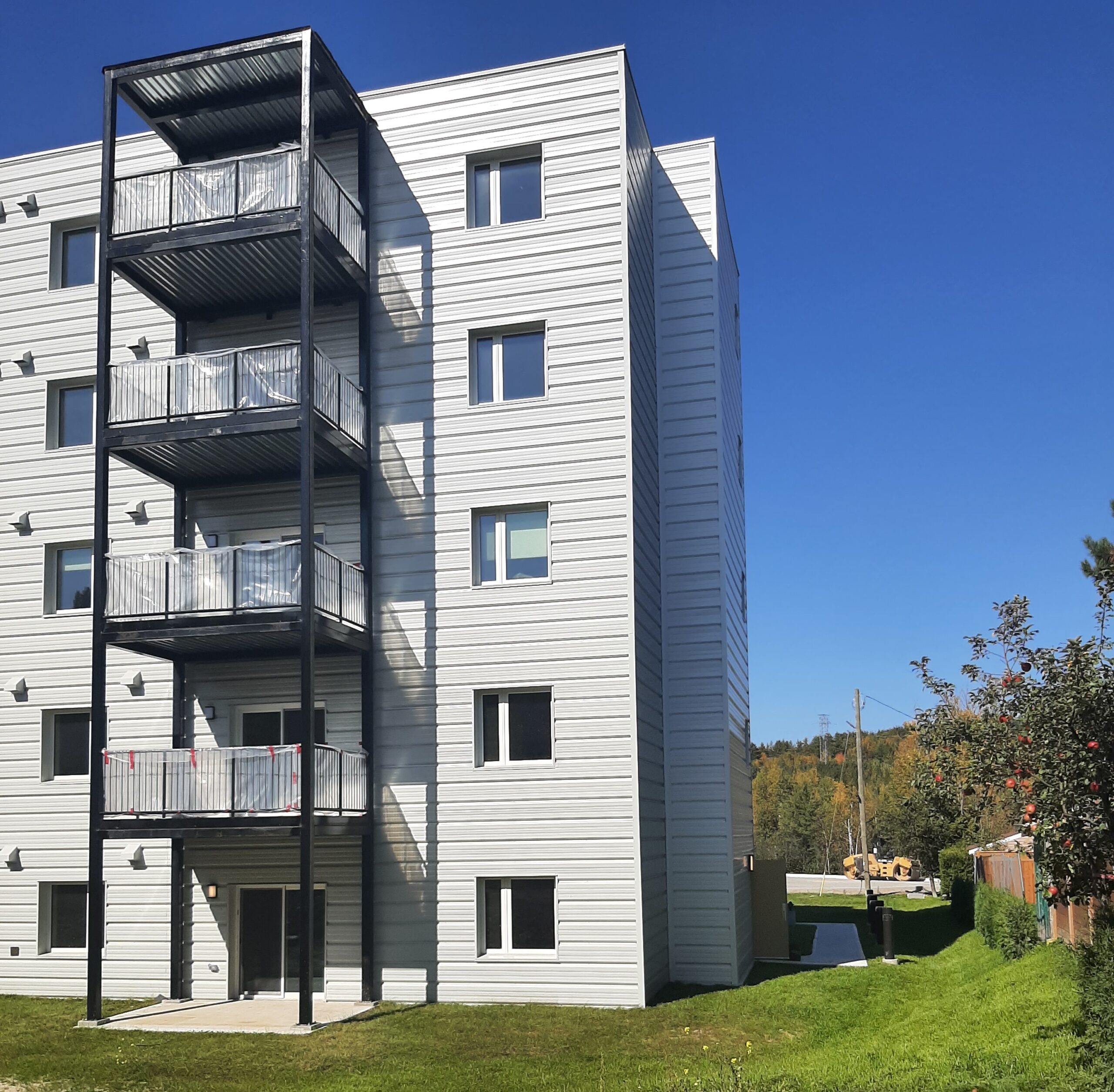
Coolearth was excited last Friday to be celebrating the opening of the Coniston Non-Profit Seniors Housing “Elmwood” building with the board, local politicians and stakeholders! The Grand Opening of the 55-unit high performance seniors housing project was on Friday September 29th, 2023.
The Sudbury Times quotes local MP Marc Serre who attended the Coniston Elmwood residences opening as saying: “The completion of the Elmwood is an amazing milestone for Nickel Belt… The Coniston Non-Profit Seniors Housing Corporation has done a tremendous job of responding to community needs with a sustainable housing solution. I look forward to working with them again, and with other community groups, to advance affordable housing accessibility in Nickel Belt.”
They are still finishing painting the self-supporting balcony’s (avoiding the thermal bridges of a cantilevered balcony), but as you can see the building is getting ready for it’s first residents! We’re very excited to share more pictures in the coming months.
Coolearth is looking to hire an Intermedia Intern Architect! If you’re interested in sustainability, are an Intern Architect in Ontario, and want to join the team, reach out to us!
We are a small progressive full-service architecture firm with a focus on Low-Carbon and Passive House design. We work primarily in Toronto, but also all over Ontario. Our Mission is to design for human prosperity within a flourishing planet.
We are seeking an Intermediate Intern Architect with 3-4 years of experience in the Ontario IAP (Internship in Architecture Program) to join our team and participate in all aspects of the firm including: assisting on construction drawings, project design, proposals, marketing materials, renderings, office administration, and more.
As a small office we offer a wide breadth of opportunities for our employees and provide a supportive environment for Interns seeking registration. Some of our current projects include a Net-Zero multi-unit Seniors Housing project, a Net-zero Energy Childcare, multiple Energy Retrofits, sustainability consulting, new homes, and much more. You can take a look at our website at: https://www.coolearth.ca
Position Details:
The position is for a 1 year contract. For the first six months of the contract, the successful applicant will be expected to work full-time in our office in the Junction. Afterwards we are open to hybrid or remote. We feel it is very important for new employees to being working in the office for building office culture, and mentorship. The Contract will start in the first week of September and go until September 2024. Job Posting closes August 14th 9am. We pay hourly, and work 37.5 hours per week.
Applicants can expect a minimum salary of $29.5/hr which translates to around $55,300/year, however the salary will be commensurate with applicants experience, and competitive with local firms.
Only candidates selected for an interview will be contacted.
Please submit a cover letter, resume, and portfolio to ‘careers @ coolearth dot ca’ If you would like to apply but require accommodations, please let us know and we will make the necessary arrangements.
Note: All Applicants must include the number of hours they have completed in the IAP program at the end of the Subject Line of the email when responding to this Job Posting. Applicants who do not include this information may not be considered
Required Skills:
– Technical education in architecture (B. Arch or M. Arch) – 3-4 years of logged experience in the IAP program (Internship in Architecture Program in Ontario). – Demonstrated Interest in Passive House Design, Net-Zero Energy, and Building Science. – Please include examples in your cover letter of how this interest has been demonstrated. – PHPP or LEED Experience is an asset. – Experience with Ontario Building Code and regional Construction practices. – Skill in the coordination and production of working drawings. – Full fluency in REVIT and BIM360 is a must. – Experience in Sharepoint, Outlook, Statslog Five, and Enscape is an asset.
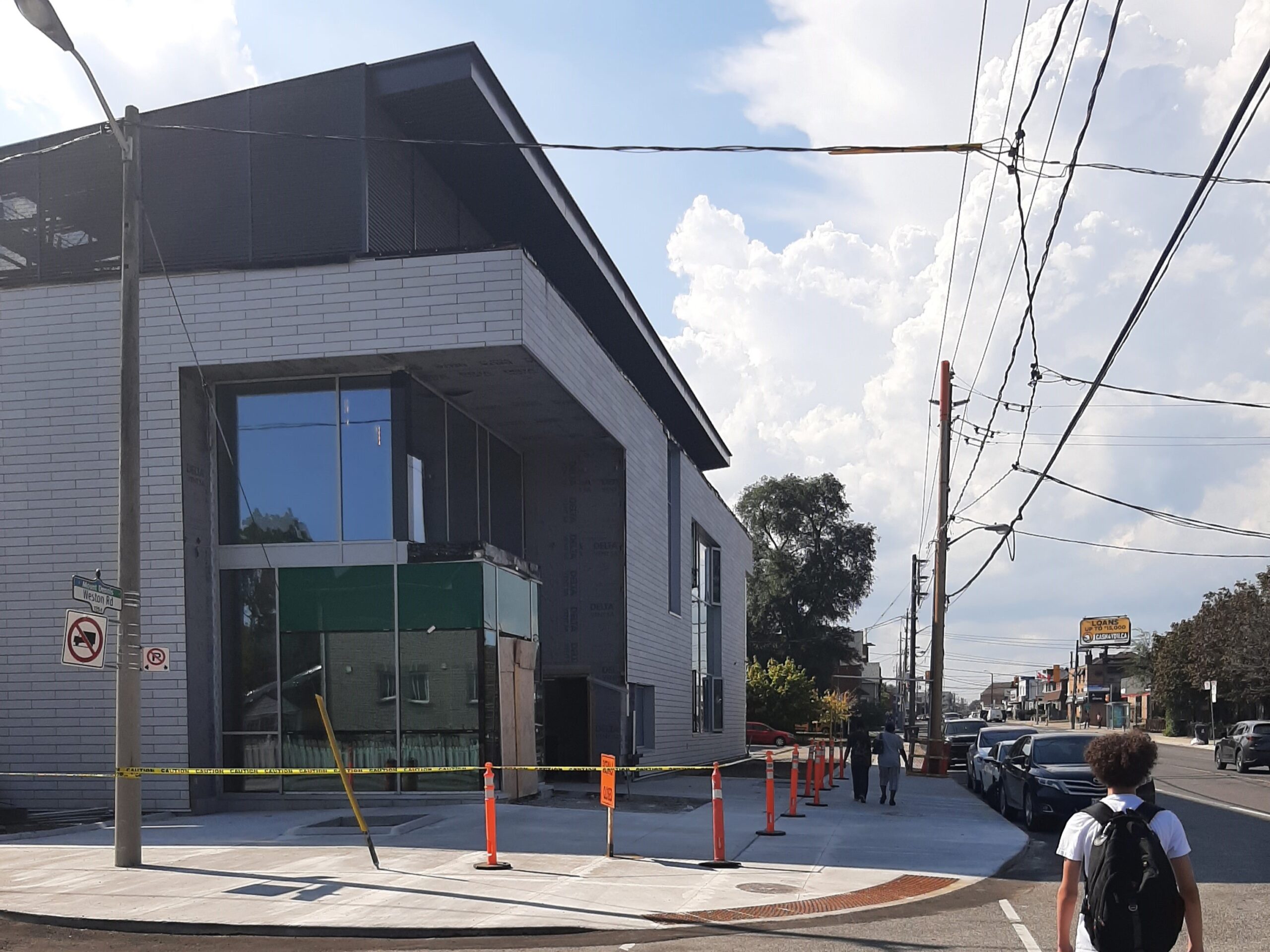
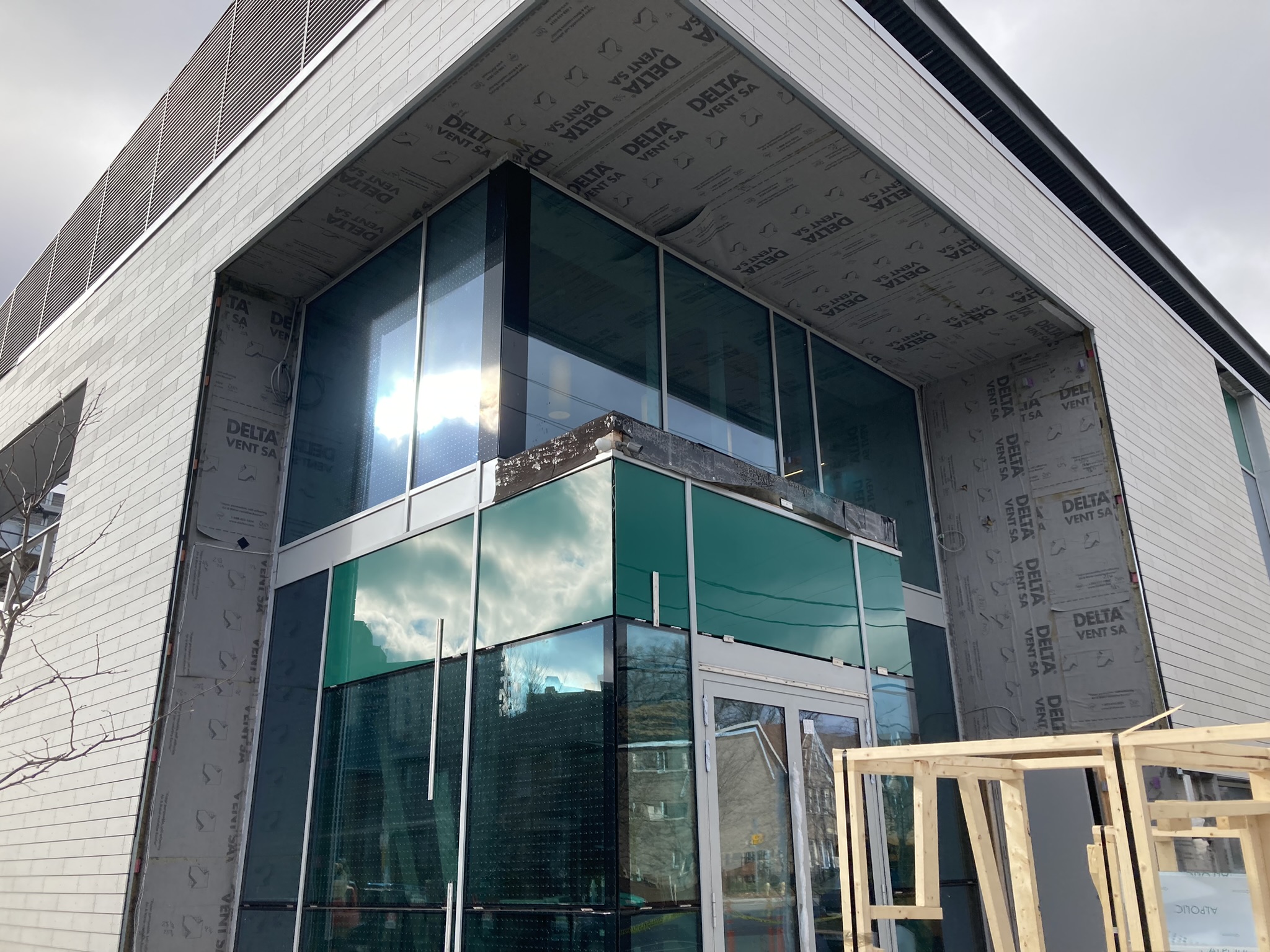
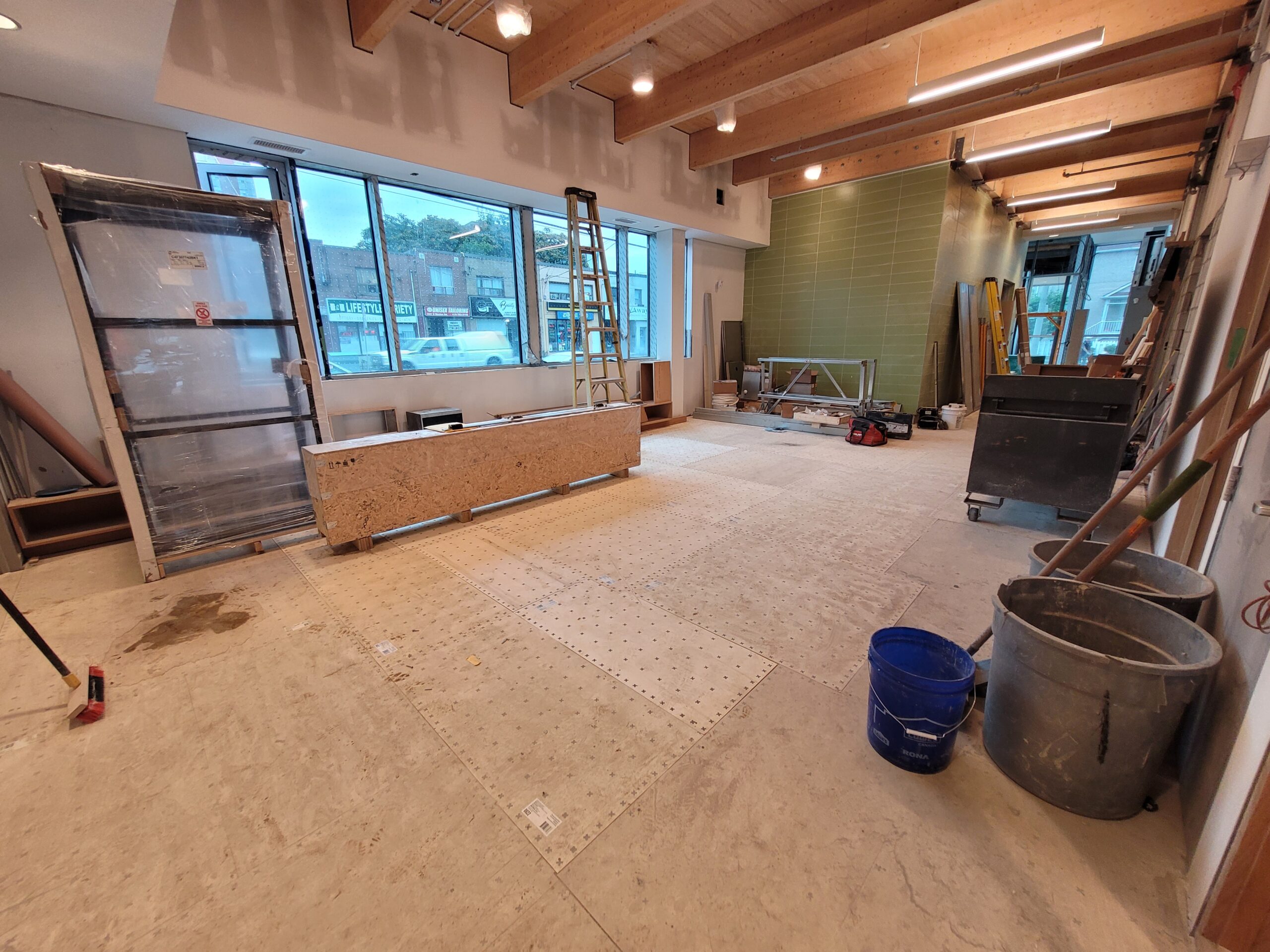
We’re excited to share the latest developments on the Mount Dennis Childcare Centre for the City of Toronto. This post includes photos from multiple site visits from September 2023 to January 2024.
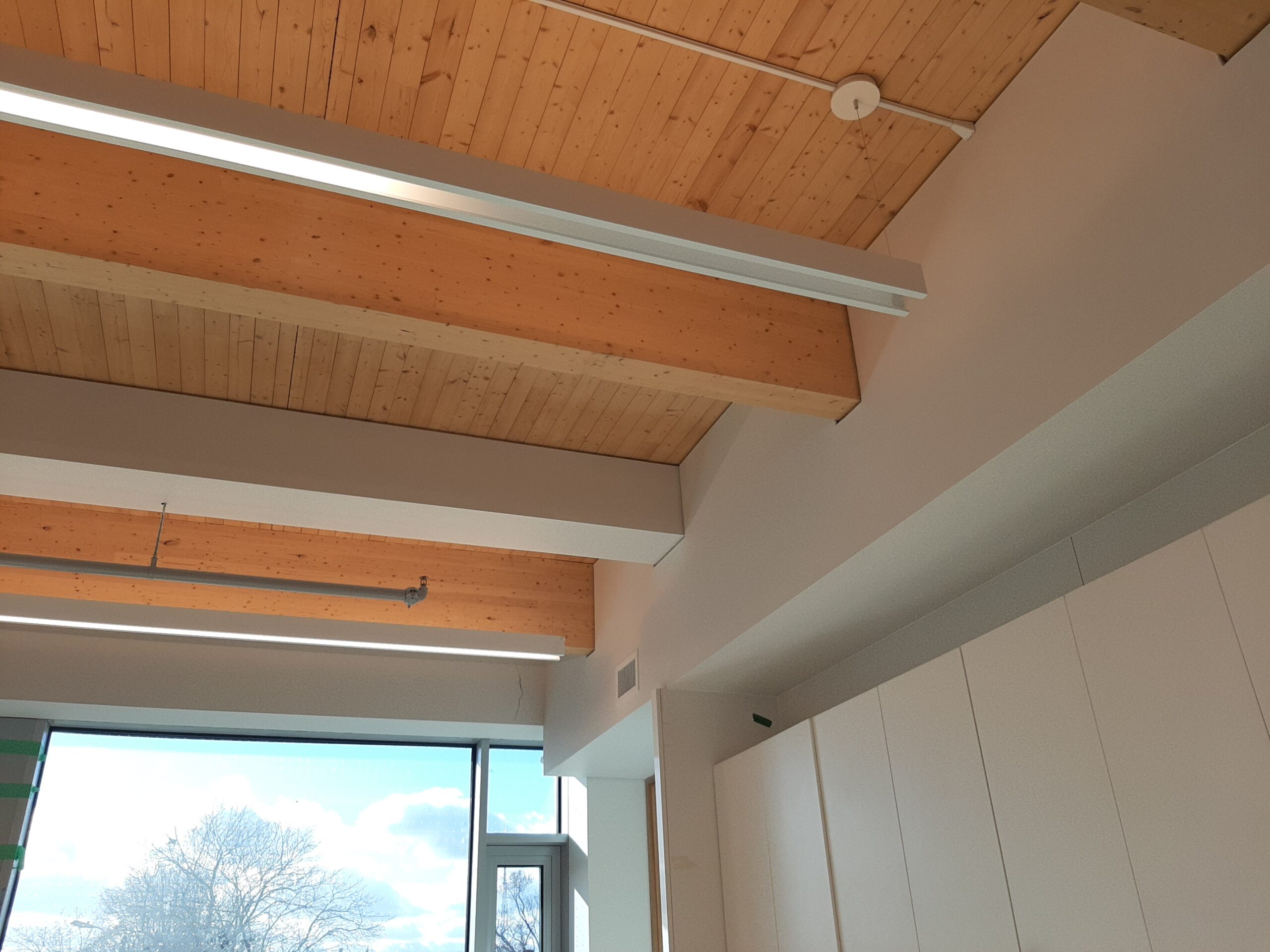
The Mount Dennis Childcare Centre is dedicated to supporting childcare initiatives and programs within the community and providing a high quality day nursery. The facility strives to reduce greenhouse gas emissions through the use of low-embodied carbon materials such as CLT (cross-laminated timber) and minimal use of carbon-intensive materials (such as concrete and steel), as well as via a high performance envelope that will reduce the ongoing operating energy.
This dynamic community facility is located at a prominent intersection and will serve as a space for fostering social integration, collaborative activities, and nurturing growth for children of varying ages in the Mount Dennis Community. Through the incorporation of common areas, flexible classrooms, and play spaces, children will have many light filled, high quality, and comfortable spaces to enrich their development.
The building is the first Net Zero Energy project commissioned by the City of Toronto, serving as an unprecedented case study for future initiatives in the city. The childcare centre will be Net Zero Energy, and by March 2031 it is estimated it will have resulted in the reduction of 457 tonnes of greenhouse gases. Strategies for reducing emissions include implementing energy-efficient systems such as mechanical systems, airtight high performance envelopes, geothermal, and photovoltaic panel systems.
The architectural design of Mount Dennis emphasizes maximizing natural light and open spaces, featuring south-facing classrooms and play areas. The layout and window design result in changing light patterns throughout the day. Corridor spaces serve as playful transitions between classrooms and communal areas, while cubbies and storage units provide ample space for children’s belongings. The color palette draws inspiration from the Reggio Emilia philosophical and pedagogical approach, centered on self-directed and experiential learning through exploration, discovery, and play.
Here is a view of the resource area space. It serves as the central atrium, connecting all the classrooms and service spaces together while providing opportunities for interaction and collaboration among children of varying ages, their caregivers, and the staff members.
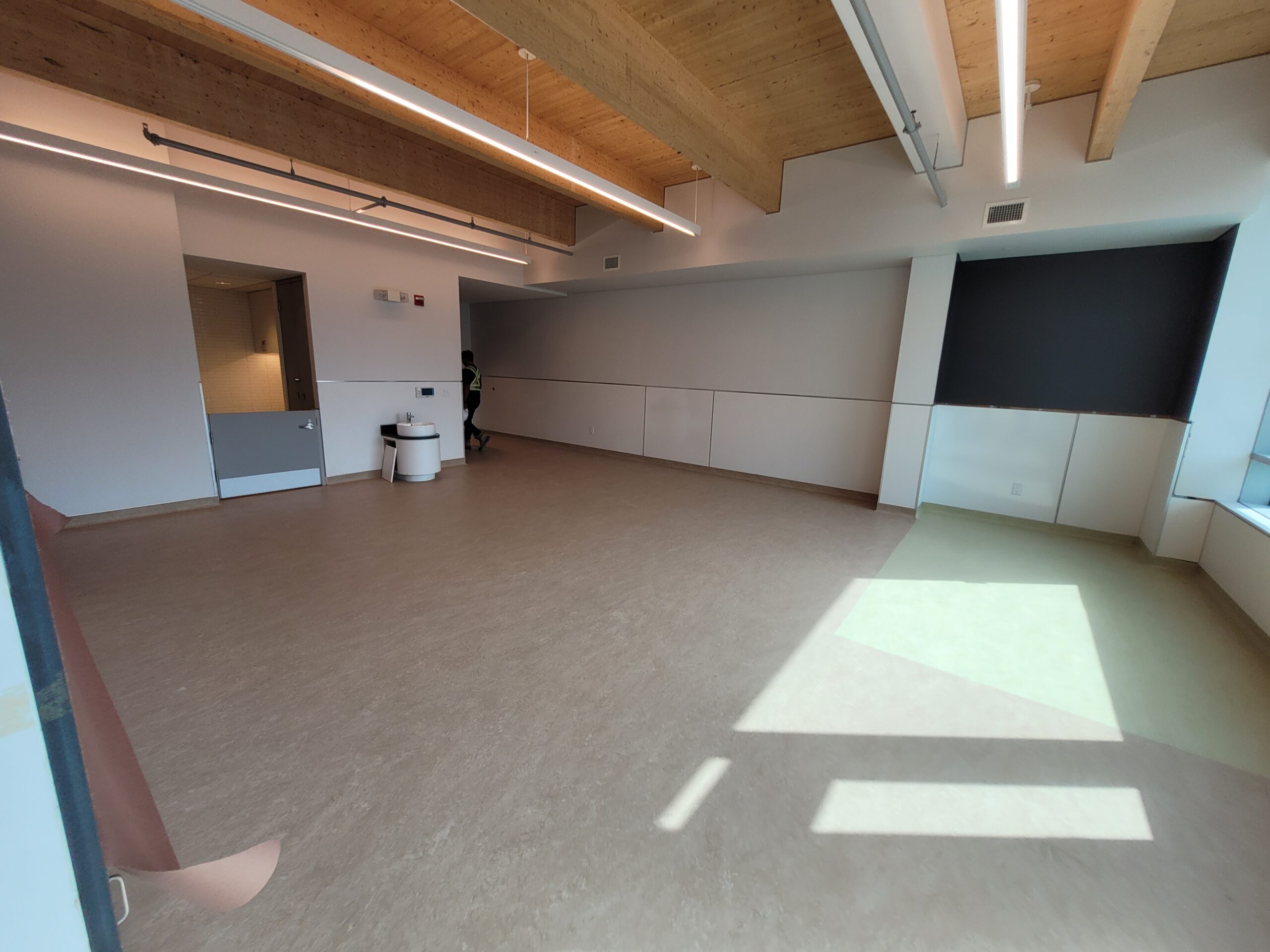
Here is a view of one of the children’s classrooms. The classrooms and play areas offer flexible open space for a variety of activities, including learning, playing, and resting. Natural light is maximized with full-height, high-performance windows.
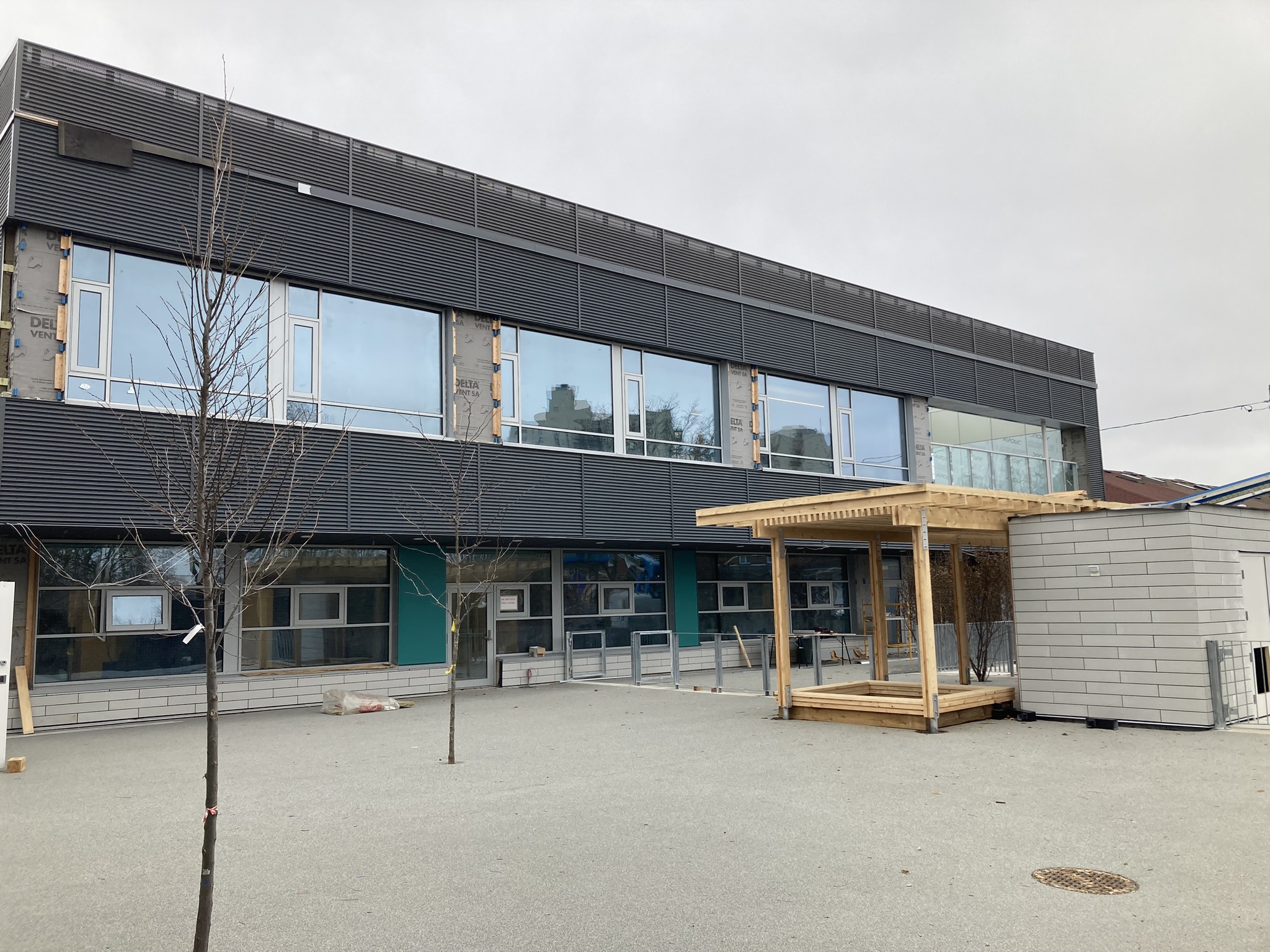
Here is a view of the the outdoor play area (in progress!). The space will feature a sandbox with a trellis, a cedar wood playhouse, and various other playground structures. A storage shed for both toddlers and infants provide space to store seasonal toys and equipment. Various trees and planters create natural shading during warmer months.
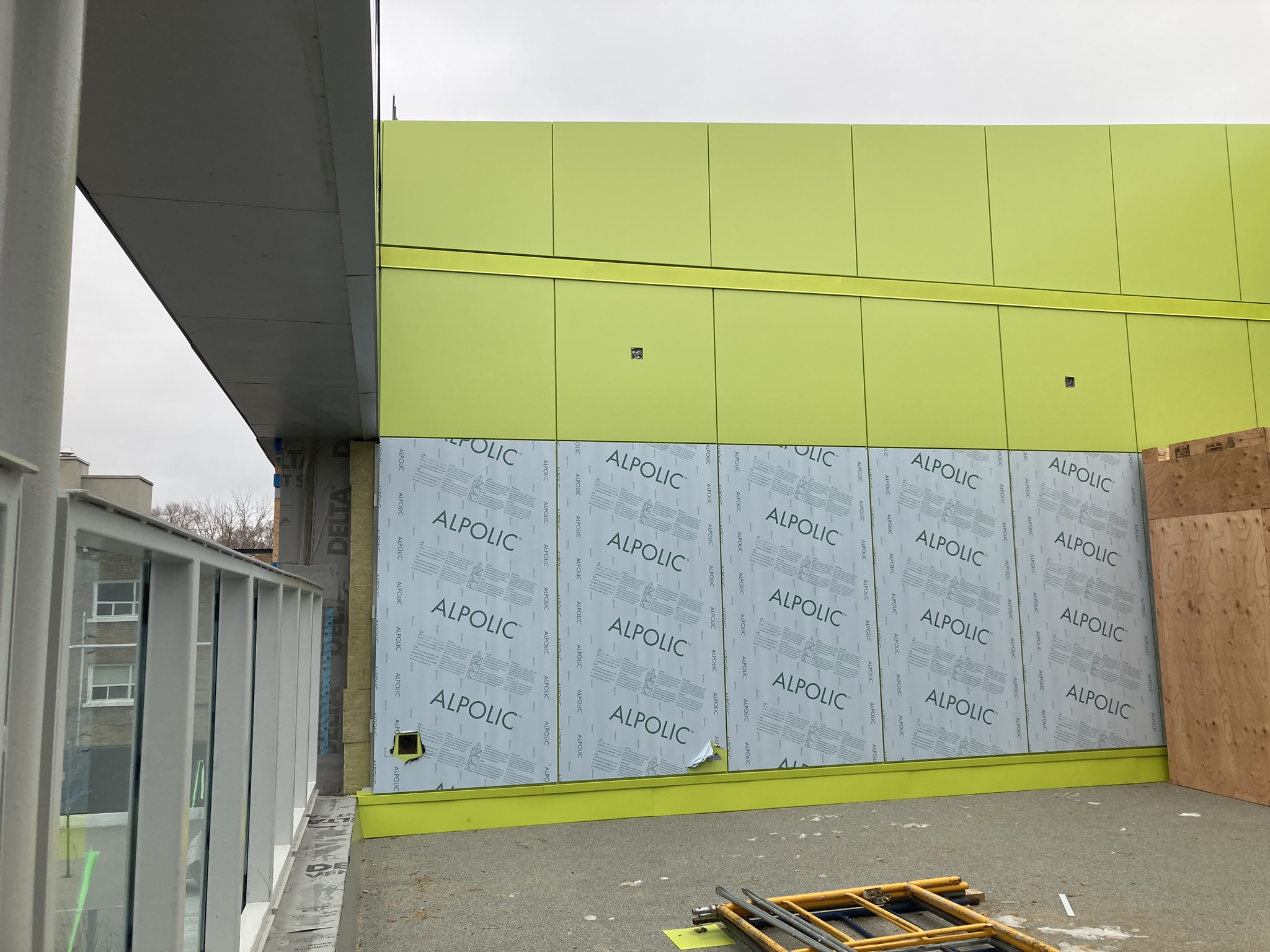
Here is a view of the second floor outdoor play area.
Besides millwork, landscaping for the playground, and a few finishing touches, we are excited to announce that the construction phase is nearly complete.
The Mount Dennis Childcare Centre ultimately aims to showcase the positive impact that Net Zero design can have on nurturing young children, and to serve as a leading precedent for future Net Zero projects in the City of Toronto.
Check out our previous post on the Mount Dennis Childcare Centre here for more information. We will be posting another update when construction is complete.