Green Energy Doors Open 2017: Net-zero Energy Retrofit – Tour

We are currently completing the energy retrofit of existing semi-detached home in Toronto, so that it will be Net-zero.  This house will act as a case study and demonstration that it is possible to retrofit existing homes (single-family homes are a major contributor to Ontario’s Greenhouse Gas Emissions) in our climate.


We invite you to come take a look at the house to see the progress to date, and the strategies we are using to make it Net-zero.  There will be tours on the hour (1pm, and 3:30pm during Saturday and Sunday on September 22 and 23).  To learn more about the net-zero energy retrofit visit: https://www.coolearth.ca/net-zero-energy-retrofit/


To get tickets (free) for the event visit: https://www.eventbrite.ca/e/net-zero-energy-retrofit-tour-tickets-36280233154


Overview:

Ontario’s climate action plan seeks to improve the energy efficiency and performance of buildings in order to reduce Greenhouse Gas Emissions. The province has identified that we need to take all buildings to Net-Zero or near Net-Zero Energy Use. This means upgrading the leaky, badly insulated homes which pre-dominate much of Toronto and were built after World War 2.  To learn more visit a recent blog post: https://www.coolearth.ca/2017/03/17/blower-door-testing-on-net-zero-toronto-semi-detached-retrofit/


We have made this home Net-Zero energy by adding external insulation, making the home air tight, replacing the original single-pane windows with new high performance triple-pane windows and doors, installing efficient heating and ventilation equipment, and mounting solar panels on the roof. These upgrades will make the home more comfortable, improve the appearance of the home, reduce energy consumption and therefore lower Greenhouse Gas Emissions.
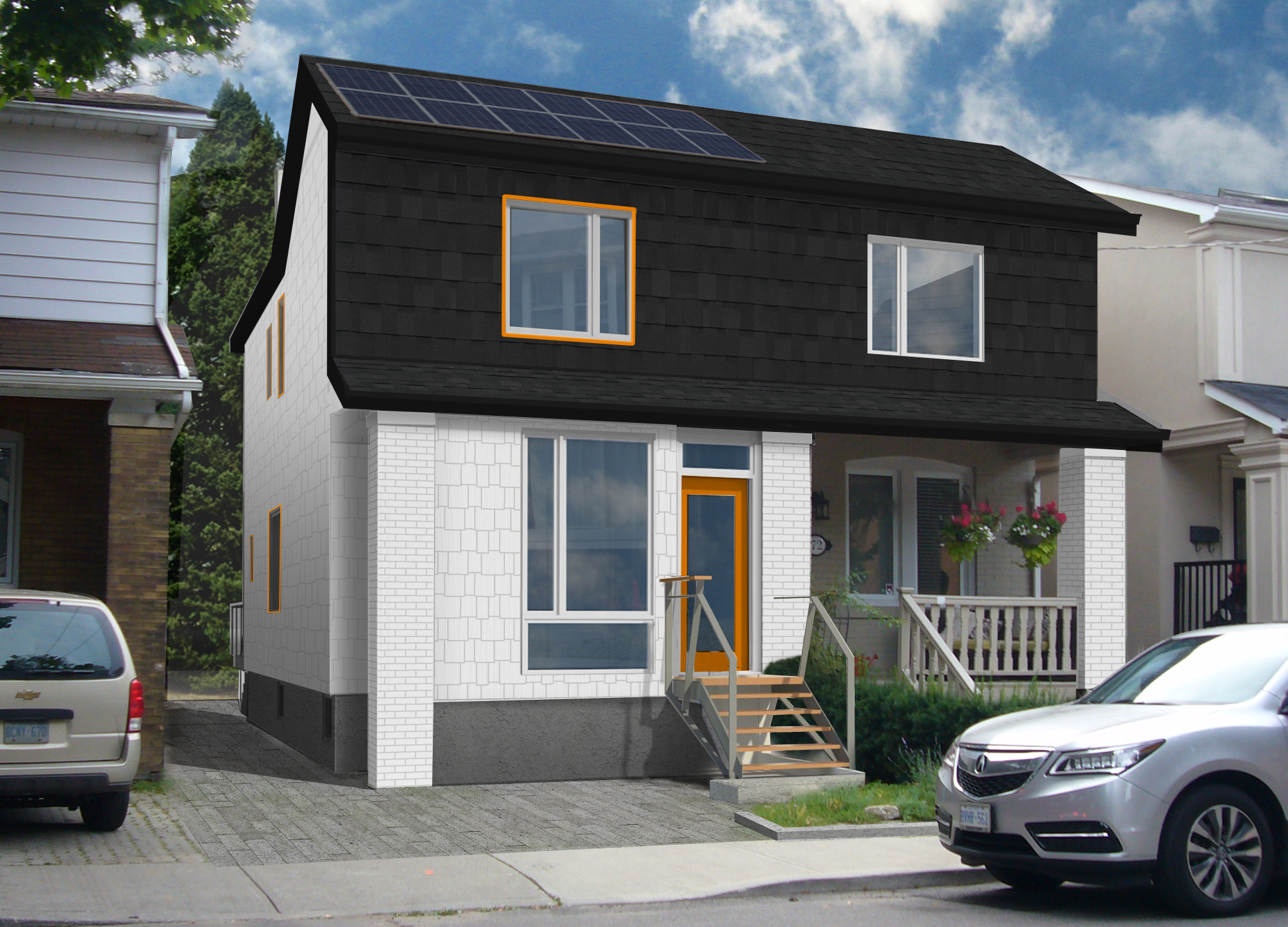
net-zero-upgrade-to-toronto-semi


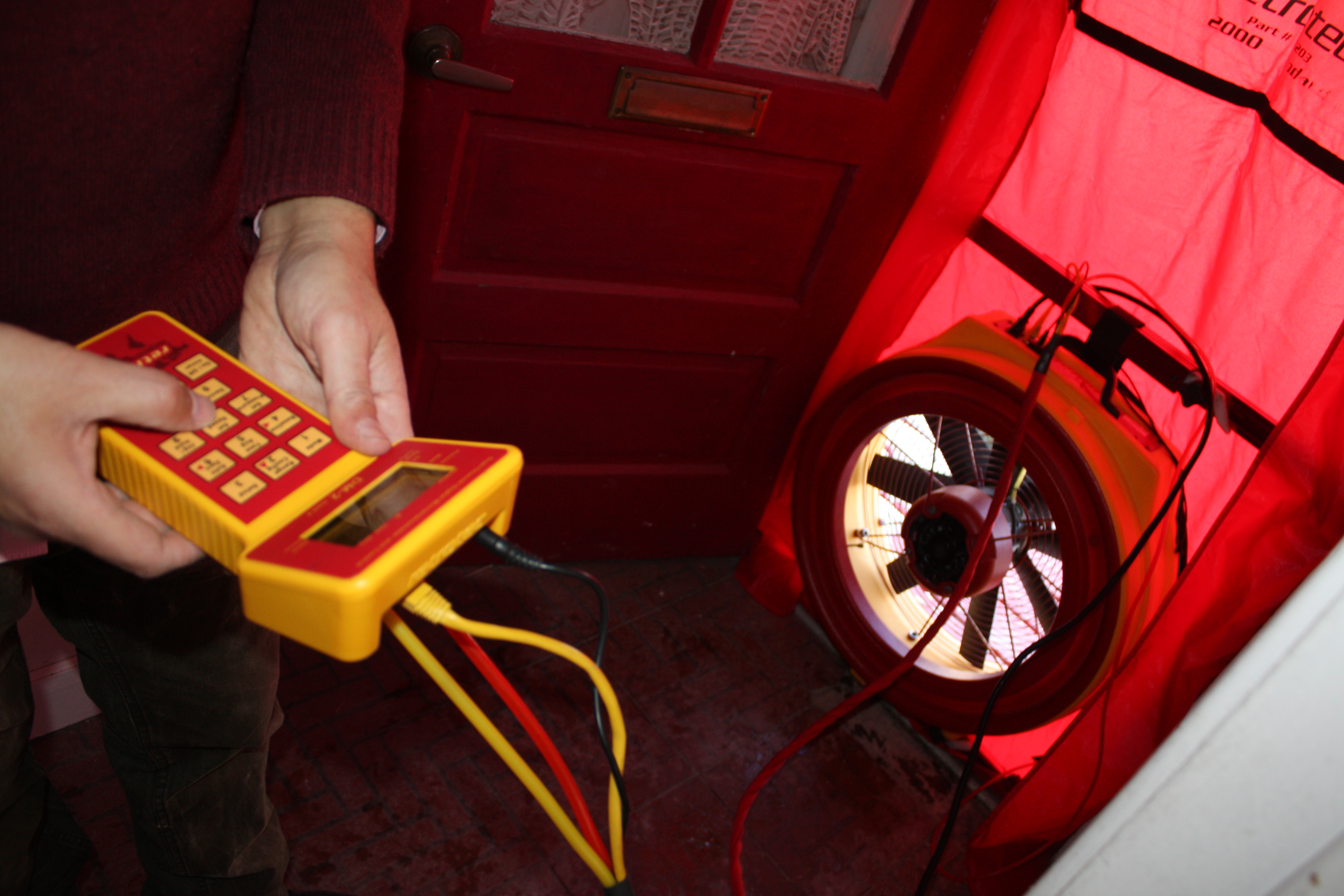
The image above shows the rendering of finished project.  The photo below shows us conducting an initial blower door test.


Sheena, a principal at Coolearth, was interviewed by Adriana, an organizer for Green Energy Doors Open 2017 : 


Here is an excerpt:

What is a net zero building, and how realistic is it for the average homeowner to own a net-zero home?

Net zero means net zero carbon. We are concerned about greenhouse gases (GHGs), and carbon is the biggest GHG that buildings are responsible for onsite and offsite.

It is absolutely realistic to get there and would be good for the economy, however, construction companies are all behind gas because they are inclined politically – but we actually pay more for gas. We can do it – and we have to do it. It isn’t really a question at this point. The UN says if it’s not too late already, we are at 1.4 degrees now, we have to stay under 1.5 preferably. In Ontario, we have reduced our GHGs by 66%, most was done by losing industry. In the next 30 years, we have to go down to at least a 70% reduction.


You can see the whole article here: gedoon.ca/2017/08/22/principal-architect-sheena-sharp-on-net-zero-homes/)


Please give us a call at 416-868-9774 to learn more!

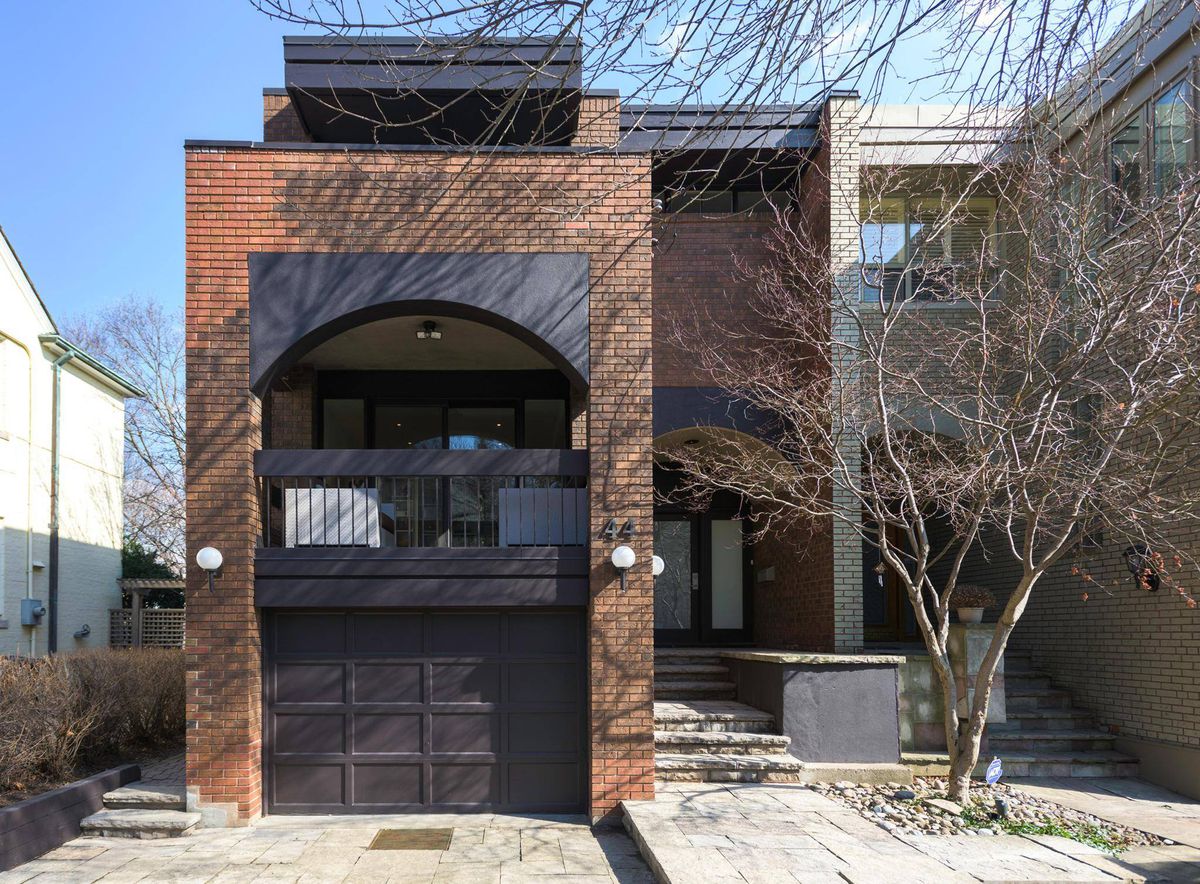
Buyers vie for Mid-century home by Coolearth Architecture Partner

Coolearth Architecture Partner Martin Poizner’s work was recently the focus of a Globe and Mail article (see here) about a bidding war on a unique modern home in Rosedale.

The Globe and Mail Article had this to say:

“In the late 1960s, Sotak & Poizner Architects earned a Canadian Housing Design award for the design of this 2,560-square-foot residence with multiple outdoor spaces.

The living and great rooms have balconies, while the central dining area features double-height ceilings with five skylights. Off to the side is a kitchen updated with granite counters and stainless-steel appliances.

Balconies are accessible from all but one of the four bedrooms on the second floor. The master also contains a walk-in closet and one of four bathrooms.

The patio is situated off a recreation room in the 990-square-foot basement. It’s rounded out with a bedroom and access to the garage.”

High Park Reno – Modifying standard practices to reduce thermal bridging


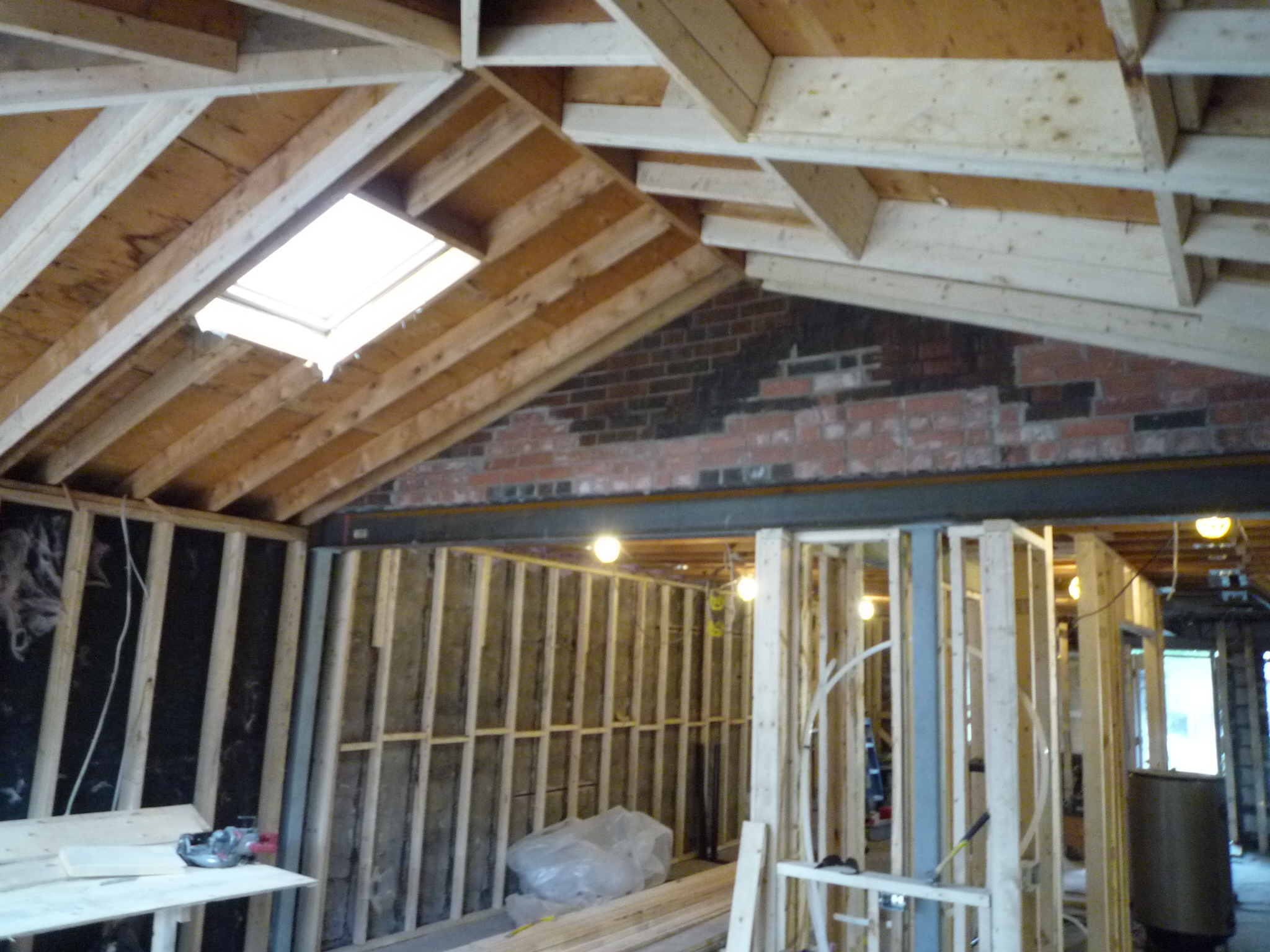
The High Park renovation is fully underway, and we had pushed the contractor to modify some of his standard practices to reduce thermal bridging. The original house had no insulation and was built with hollow clay bricks. We are adding a stud wall to allocate Closed Cell Spray Foam insulation (ccSPF) by offsetting it from the wall, but we also asked the contractor to separate the top plate from the upper floor joist to reduce further the thermal bridging from the existing joists. Corners are also an important area that is usually not considered, but in this case, the studs leave space for the spray foam insulation.


The structural reinforcement is completed and the roof will become an unvented roof with dramatic cathedral ceiling and 2 new skylights across the existing one. The kitchen will be super bright.


The skylights are in and they look great! Tons of light in the kitchen and breakfast area will make the back of the house a fantastic space to hang out and enjoy.


And the powder room at the front will get a frosted fixed window, and we can already see the new opening and the relocation of the main door. We loved the masonry work.


High-Performance House in Parry Sound almost complete

The High-Performance house is almost complete, only counter tops, vanities and final details are missing. The electrical and mechanical systems are fully functioning and we are just waiting for the final inspection from the township to get the occupancy. Some landscaping has already started to happen. Here are some pictures of the empty house:


Breezeway Passive House in Richmond Hill – Passive House, Net Zero and Permaculture


We are working on a very exciting custom home project in Richmond Hill targeting Passive House Certification. The 3300-sqft multi-generational house is designed to be durable, energy efficient, comfortable, bright, and regenerative.  The house is a bungalow, with easy access to the house and yards via ramps, making it possible for residents of all ages to use the building with ease and elegance.  Because it is Passive House we will be able to achieve Net Zero energy use with only 13 Photovoltaic Panels (PV) on the roof and we are also looking to install a Tesla Powerwall as a backup energy storage in case of power outages. The clients are a family who wants a space which is high performance and has a strong connection with the environment and nature. They want their home to integrate with the site, and promote biodiversity and abundance.


We have just completed the Schematic Design stage.  It was a fun and enlightening experience where we explored multiple options. Each variation in the design has a direct impact on the architectural quality as well as on the energy performance. We worked with the clients to iterate the design which met their needs and was evocative and beautiful.


At the first meeting, our clients mentioned that they wanted a breezeway between the garage and the house, but through the design process, we decided to integrate the breezeway into the heart of the house! The Breezeway allows light, fresh air, and a feeling of the outdoors in centre of the home, and even during the winter, and will contain plants and herbs throughout the year.


The design has a constant physical and visual interaction between the user and nature.   Opening the back sliding doors and the front skylight will provide an enjoyable cross ventilation in the warmer months, while lounging and socializing on the south-facing patio, beneath the grape covered trellis will create functional, comfortable summer space, even beneath the hot mid-summer sun. In winter, the thick insulation, triple-pane windows, and the high-efficiency energy recovery ventilator will keep the indoors comfortable and fresh.  By moderating and modulating the micro-climate around the home, we are moving from a binary “inside” vs “outside” to spaces they can use throughout the year.  It is an integrated design incorporating permaculture principles throughout the project.


Throughout the design process, we use the Passive House Planning Package to do energy modeling even from the very first schematic design iteration to verify we are on-track to meet our Passive House objectives.  Our current heating energy use es estimated to be 1.1kWh/SF.yr or 12 kWk/M2 per year and 0.46kWh/SF.yr or 5 kWk/M2 for cooling. Further design detailing is required, but with these preliminary numbers, we will be able to achieve Passive House certification.  Achieving Passive House certification will provide an easy route to the Net Zero goal as our calculations predict that the house will need only 13 PV panels.

The preliminary results engaged and invigorated our clients even more, and resulted in an integrated design that considers the programming options within the energy performance enhancing the quality of the interior.

Are you planning to build a house? Give us a call 416-868-9774 or send us an email to info@coolearth.ca

Expert Witness Architect

Increasingly we find ourselves called upon to act in disputes that arise on work executed by others, either to help explain the issues to the Court in a litigation support role, or to mediate in finding ways to resolve differences, and avoid costly litigation.

An Expert Witness Architect is an Architect that can provide their expert opinion in tribunals, inquests, court cases, tort liability cases, professional misconduct, and arbitration between other architects and clients. They act as instruments for the courts and parties involved in arbitration to communicate and explain the details of a building’s design, drawing, and representation.

Key elements of an expert witness in architecture are:

  • – Experience in building and detailing of buildings of the same occupancy type (i.e residential, commercial, institutional, industrial) as the case at-hand.
  • Ability to read drawings and measure appropriate “duty of care” of professional architectural standards and design, against as-built conditions.
  • – Knowledge of the Profession and the Ontario Architects Act as well as the Ontario Association of Architects disciplinary processes.
  • – Honesty and Integrity, and a proven track record of good character and high professional regard.
  • – Balanced and fair approach that considers evidence and data in order to arrive at expert testimony.
  • – Ability to communicate verbally and in written form clearly, as well to hold up under cross-examination and technical inquiry.

An expert witness Architect can provide testimony in:

  • – Public Tribunals
  • – Judicial Inquests
  • – Arbitration between other Architects and Clients
  • – The courts of Law (Small claims court, Superior Court of Justice, or Provincial Court

The Principal of Coolearth, Sheena Sharp, has experience acting as an Expert Architect in jurisdictions across Ontario, including recently in Toronto, and Parry Sound.  She has detailed professional architectural experience on commercial, industrial, manufacturing, institutional, residential and multi-unit residential buildings.

Learn more about Expert Witness Architects, get in touch via email, or give us a call at 416-868-9774 to see how we can help you.