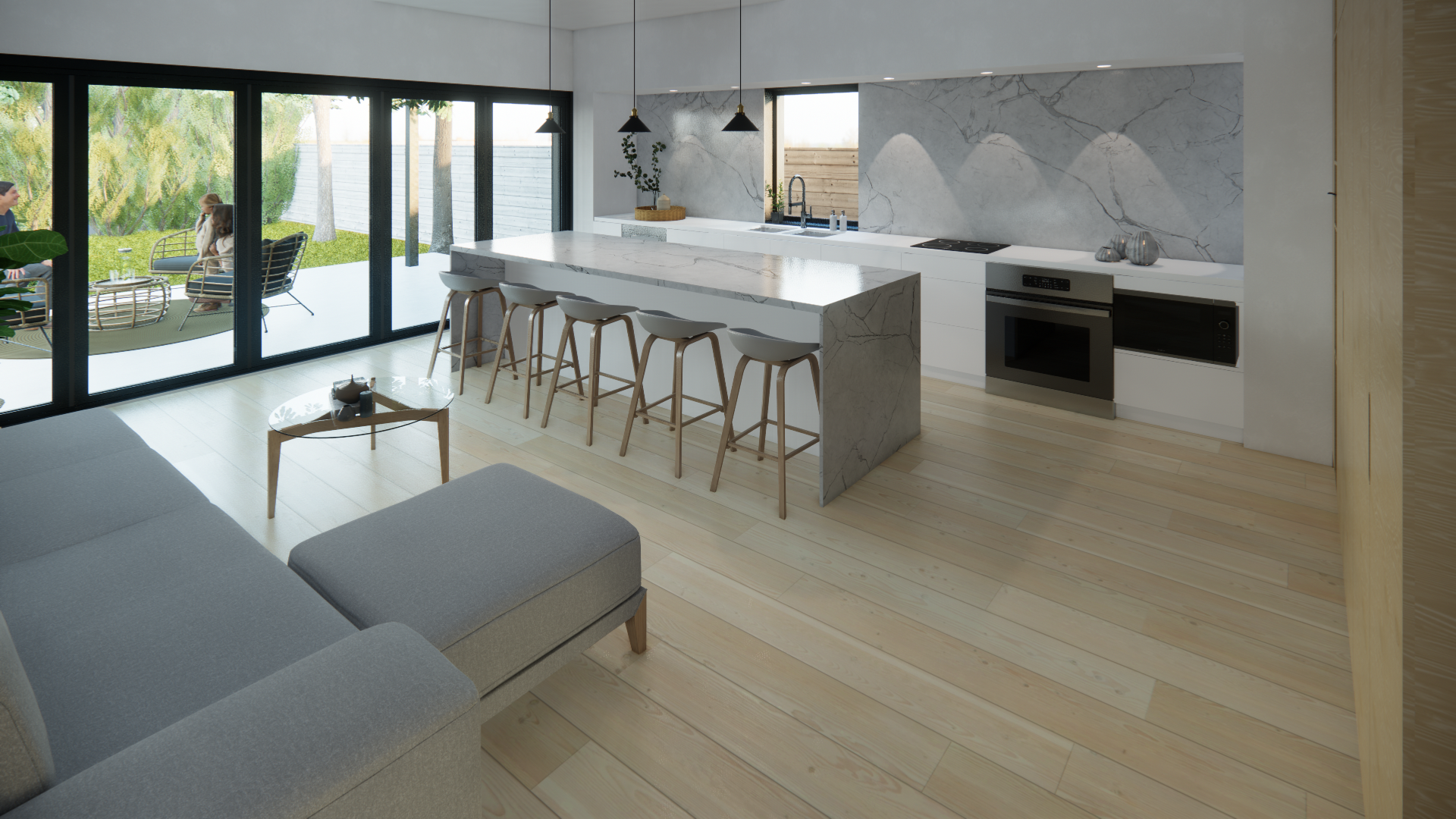
First 3D views of minimalist Custom High Performance Home in Toronto

We are excited to share with you the first 3D views of a custom high performance Toronto family home that is getting ready to begin construction. The custom home is both energy efficient and minimalist: uniting the client’s twin goals of building a finely-tuned and efficient home for their family and lifestyle, as well as a beautiful simple expression of their aesthetic values.

The COVID pandemic has changed how people use their homes. Instead of a single den/study, or even more simply, a desk in the bedroom, many of our clients are now asking for at least two dedicated offices, as well as additional bedrooms for their growing families. Unfortunately the single story home on the site could not meet these needs. Our client has owned the site for a number of years, but finally decided to build their dream home and retained us to make it a reality.

The rendering above shows the main kitchen and living area. You can see the full-width triple-pane retractable glass wall that opens up to the backyard patio. The operable glass wall and outdoor patio pairs with an external louvered pergola w/retractable screens to extend the living space outdoors and create an additional three-season room.
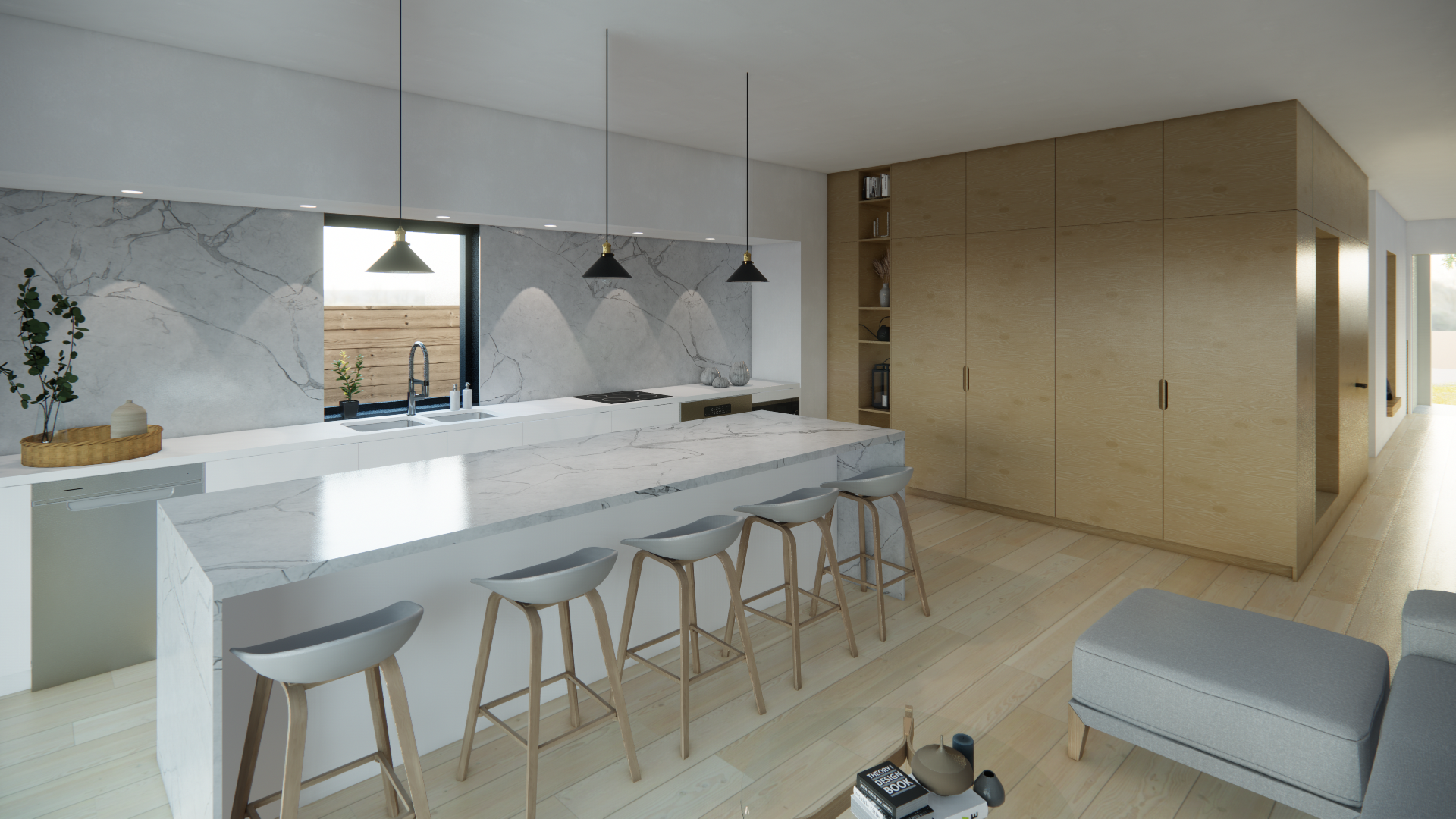
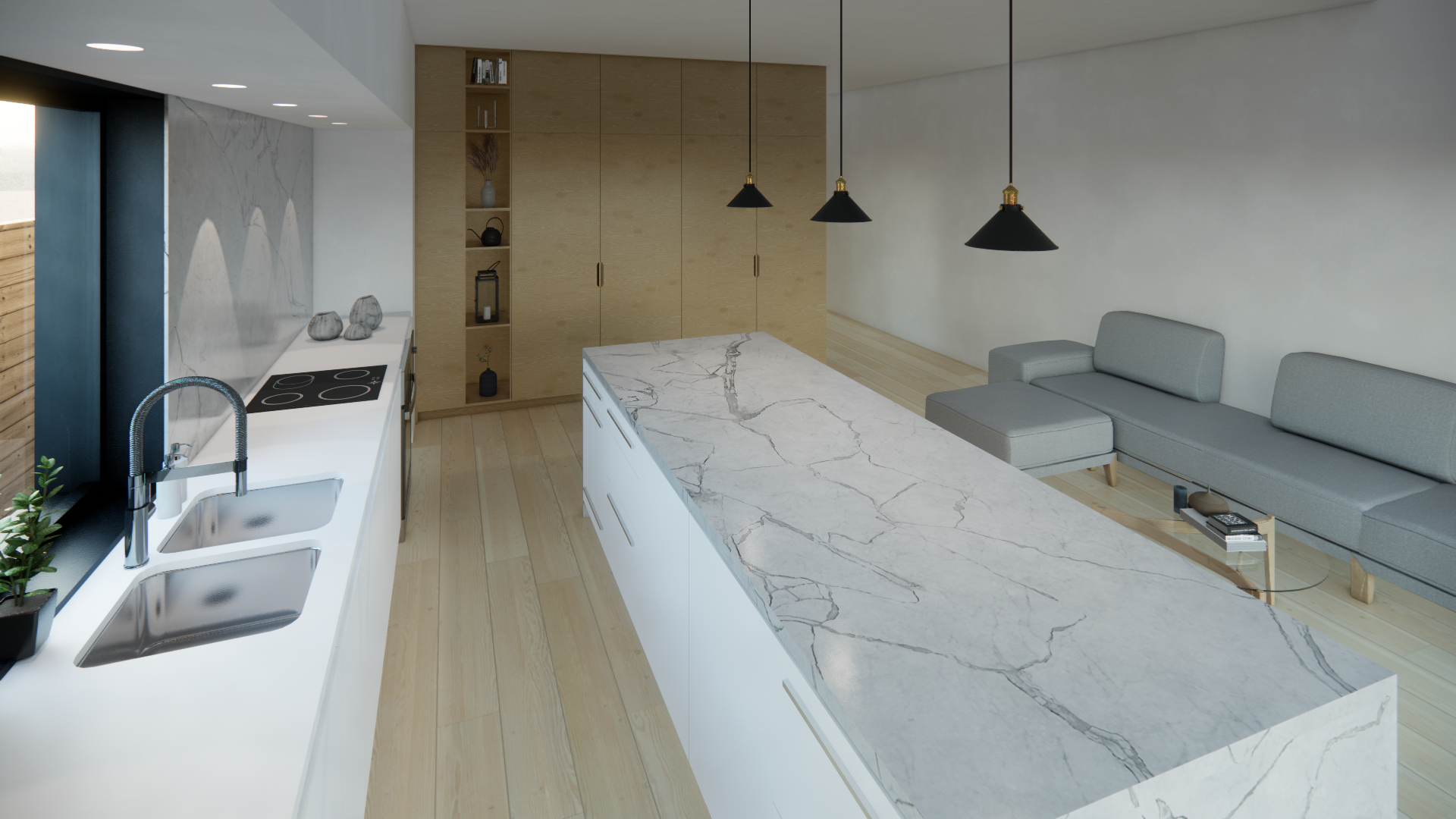
We worked with the structural and mechanical engineers to ensure the building was durable, while also very open and bright. A 1hr-rated fire shutter on the exterior of the kitchen window means that even though the setback to the property line for the sidewall of the house is such that a window is not normally permitted, we were able to include one. You can see above and below that this window brings plenty of light into the space.

The home is organized around a central “core” element that rises from the basement, through the first floor, and into the second floor. This core unites the three levels and also divides the space on each level. This core integrates the mechanical and service shafts, the fridge and pantry (on the ground floor), as well as the stairwell.
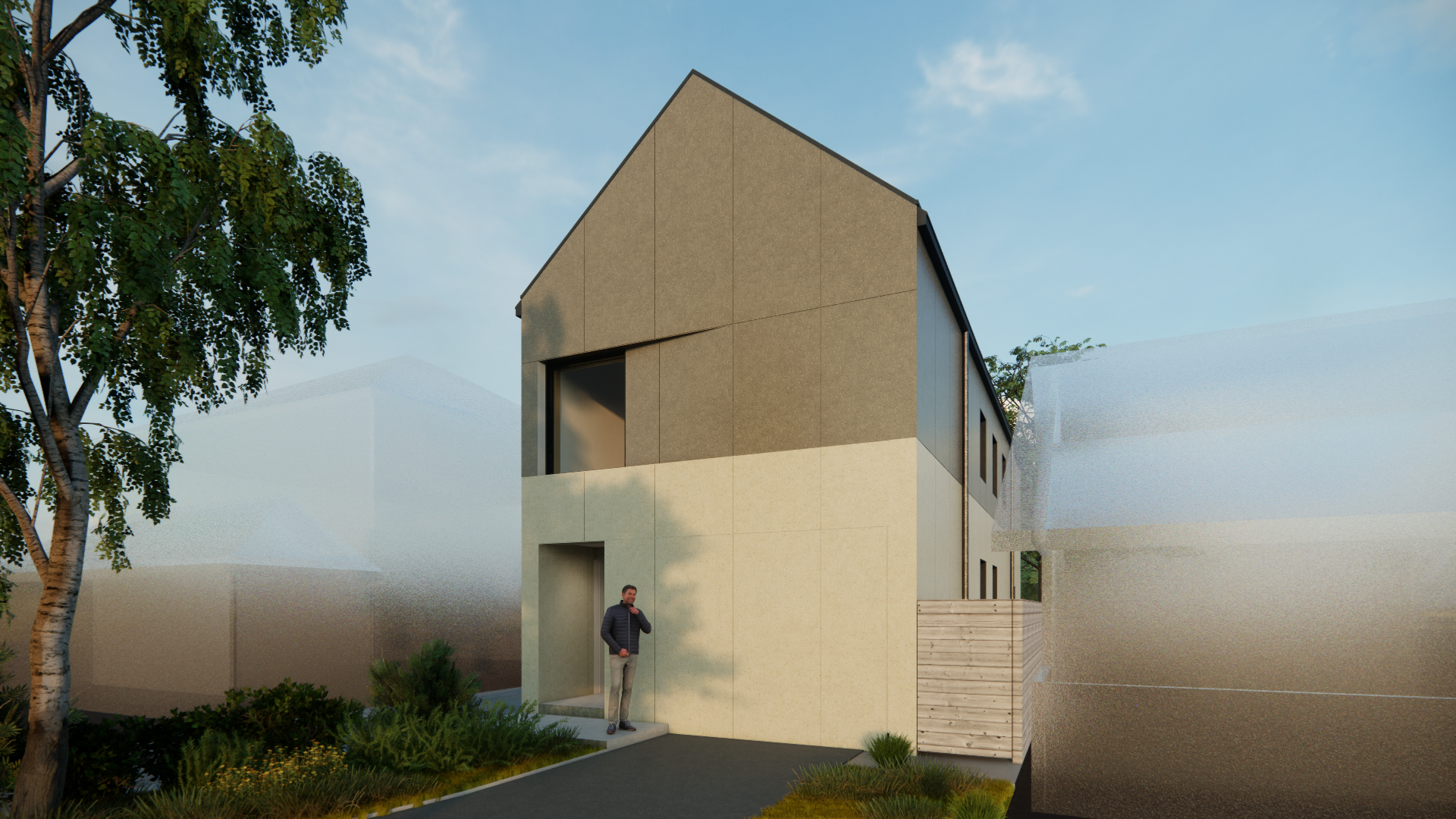
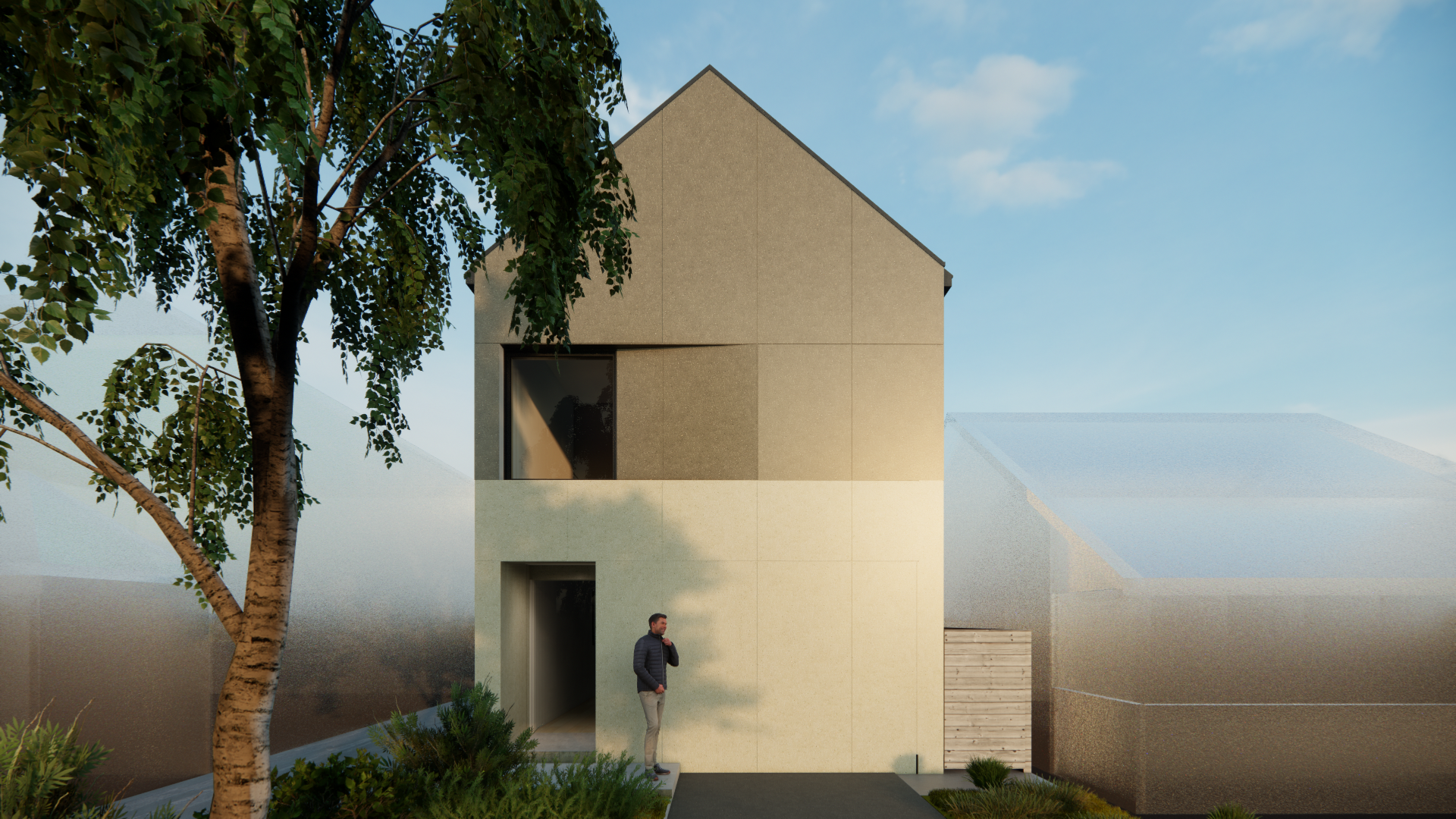
On the exterior, a flush garage door that is clad in the same material as the walls means that the garage blends seamlessly into the walls of the house. We are using very large fibre-cement panels with minimal joints and have closely coordinated the sizing of the panels to ensure they fit within the overall pattern of the buildings exterior.

As you can see below, our landscaping for the project is inspired by natural “wild” gardens with a fast-growing and sculptural birch tree and many flowering herbs and perennial plants. This results in a low-maintenance and pollinator friendly yard that will also help shade the house and driveway in the summer.

We innovated on this project by using dual Minotair energy recovery ventilators which are a combination Heat Pump and Energy Recovery Ventilator that is designed and manufactured in Canada. The Minotair provides the ventilation, cooling, and heating, and dehumidication all in one indoor package. We have used the Minotair on a few of our projects, and like the simplicity and elegance of the approach — there are no noisy ugly exterior mechanical condensing units.

We had a lot of fun working closely with the client to create something which seems very very simple only because of how well and carefully thought out all the elements are.

Below you can see the front of the house, with the flush-concealed garage door and subtle second floor window detailing.
We will keep you posted once construction begins!

Prince Edward County Rammed Earth House – Construction Update – February 2023

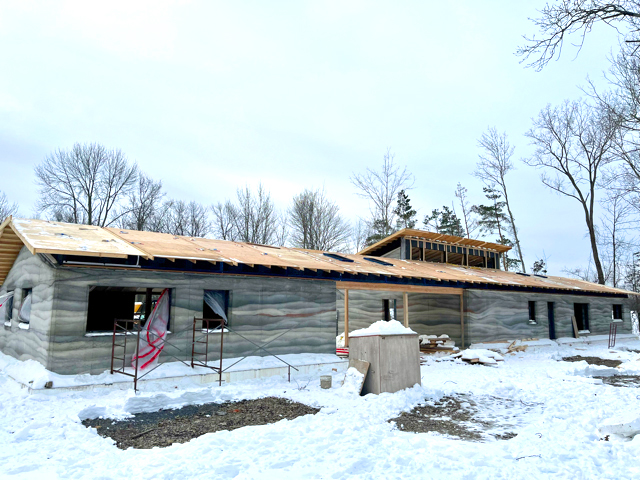
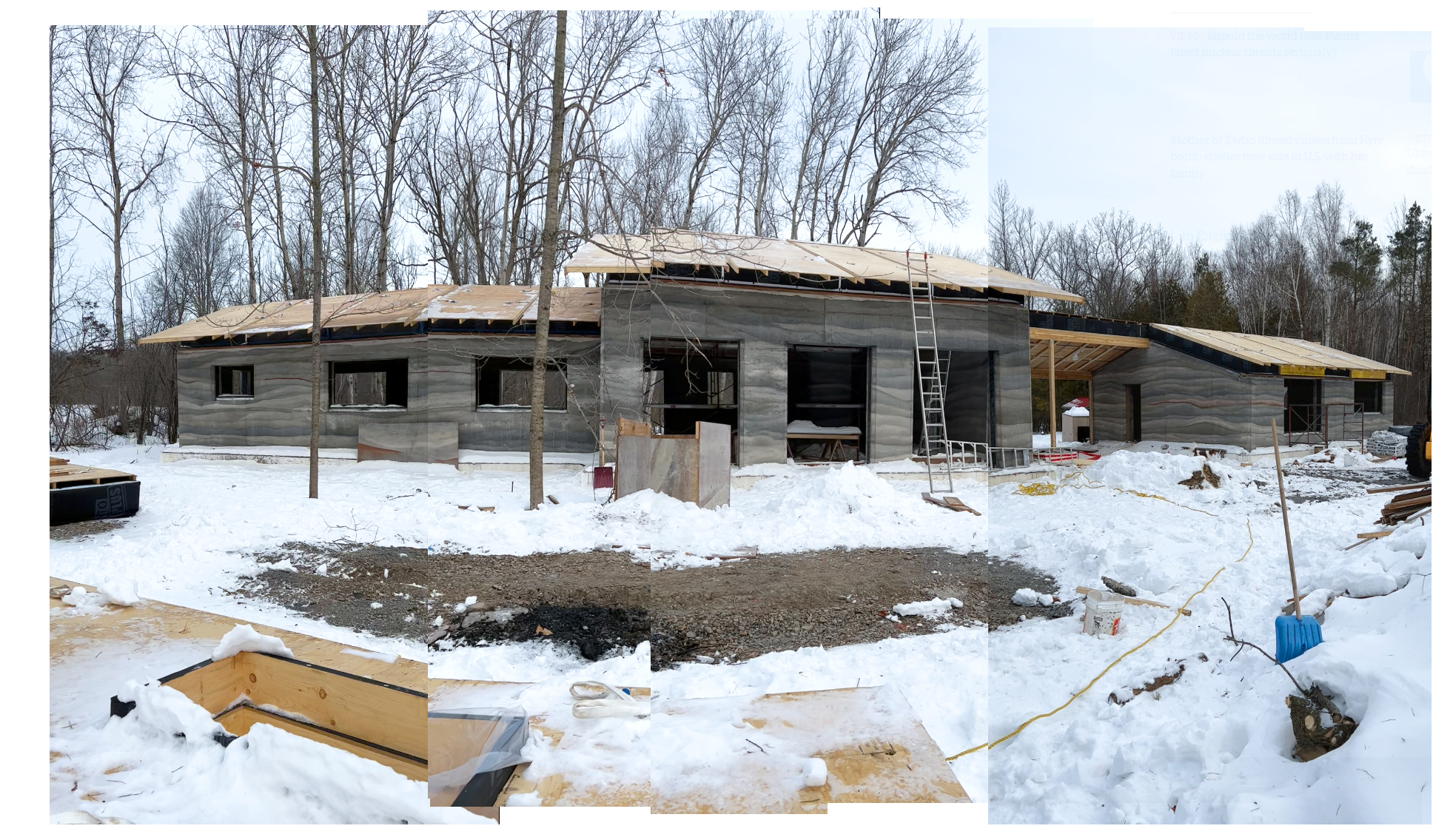
In the first week of February the pre-fabricated roof was installed on the Prince Edward Country custom high performance rammed earth house. Considering that construction began in September, the walls were completed in December, and the roof has been installed in the first week of February, construction is moving along very nicely!

The roof was pre-fabricated by Simple Life Homes and craned into place. The clients sent us the following construction photos. You can take a look at the previous construction update for more pictures of the process.

In the above photo montage you can see the south-facing façade of the main home. The three large openings in the middle are the central hall with the living, dining, and kitchen. The design of the large openings for the central space was inspired by traditional monolithic architecture of The Gateway of the Sun by the Tiwanaku culture some 1500 years ago (which some scholars propose was actually created via a form of rammed earth, as opposed to carved). In the design of that space we wanted to capture the massive-ness and gravity of the material via the thick columns and lintels and repeating simple geometry, while the side walls rise 14 feet plus into the clerestory above. The chamfers around the openings in the central hall create additional depth and give volume to the space. We contrasted the massiveness of the rammed earth with the “lightness” of the roof, and so detailed the roof to appear to float with horizontal revels and thin projecting overhangs above the rammed earth. The large overhangs on the south façade will ensure that the sun will be kept out of the interior during the Summer Solstice, and even the Equinoxes. The private bedrooms and studies are to the left of the main space, set back. The Guesthouse, in the right of the montage, is separated by a carport (roof not yet installed) and an outdoor screened porch and breezeway.

The roof is composed of 16″ TJI joists filled w/dense pack cellulose, an internal vapour permeable membrane, an external weather resistive barrier, purlins for ventilation space and to create the overhangs, and roof sheathing.

Above you can see a picture from the North-side of the house. The Guesthouse is on the left, and the main house is on the right. You can see the covered breezeway and outdoor porch connecting the two buildings: this will have glass and and bugscreen installed later and be used for hosting dinner parties. On the main house you can the clerestory windows above the main roof line which will be operable to allow cross-ventilation and bring natural light into the large central hall. There is a door from the kitchen to the rear gardens, and past the door you can see the large picture window which will have bench seating for the library.

With sadness we share the passing of Martin Poizner

Coolearth’s long-time partner and mentor, Martin Poizner passed away peacefully on January 28th. We offer our sincerest condolences to Helen, Tracy, Rob, Martin, Murray, and Miriam.

Martin and Sheena met while advocating for small firms at the Ontario Association of Architects and formed a long-term bond, and together with Lou Ampas founded Coolearth in 2008. Since then Martin has worked on many projects at the firm, offering his experience, insight, wit, positive, and pragmatic approach through the years.

In 2007 Martin was awarded the Order of Davinci by the OAA. This award was presented in honour of his “significant and meaningful contribution to the profession of architecture”.

For those interested the service is today at 2pm. You can watch the service online here: https://www.benjaminsparkmemorialchapel.ca/ServiceDetails.aspx?snum=139071&fg=0

Prince Edward County Rammed Earth House – Construction Update – December 2022

Rapid progress is being made on the custom high performance stabilized rammed earth home that Coolearth designed in Prince Edward County, Ontario. At Coolearth we are so excited about this project: the clients have been fun to work with, the Builder is talented and committed, and we have all kept the project on it’s accelerated schedule and within budget. We really love projects that have accelerated schedules because having all the stakeholders actively invested in the process and timeline results in projects that are built and really shine: carpe diem!!

Construction of the home began in September and the video and photos below are from our site visit at the end of December 2022.

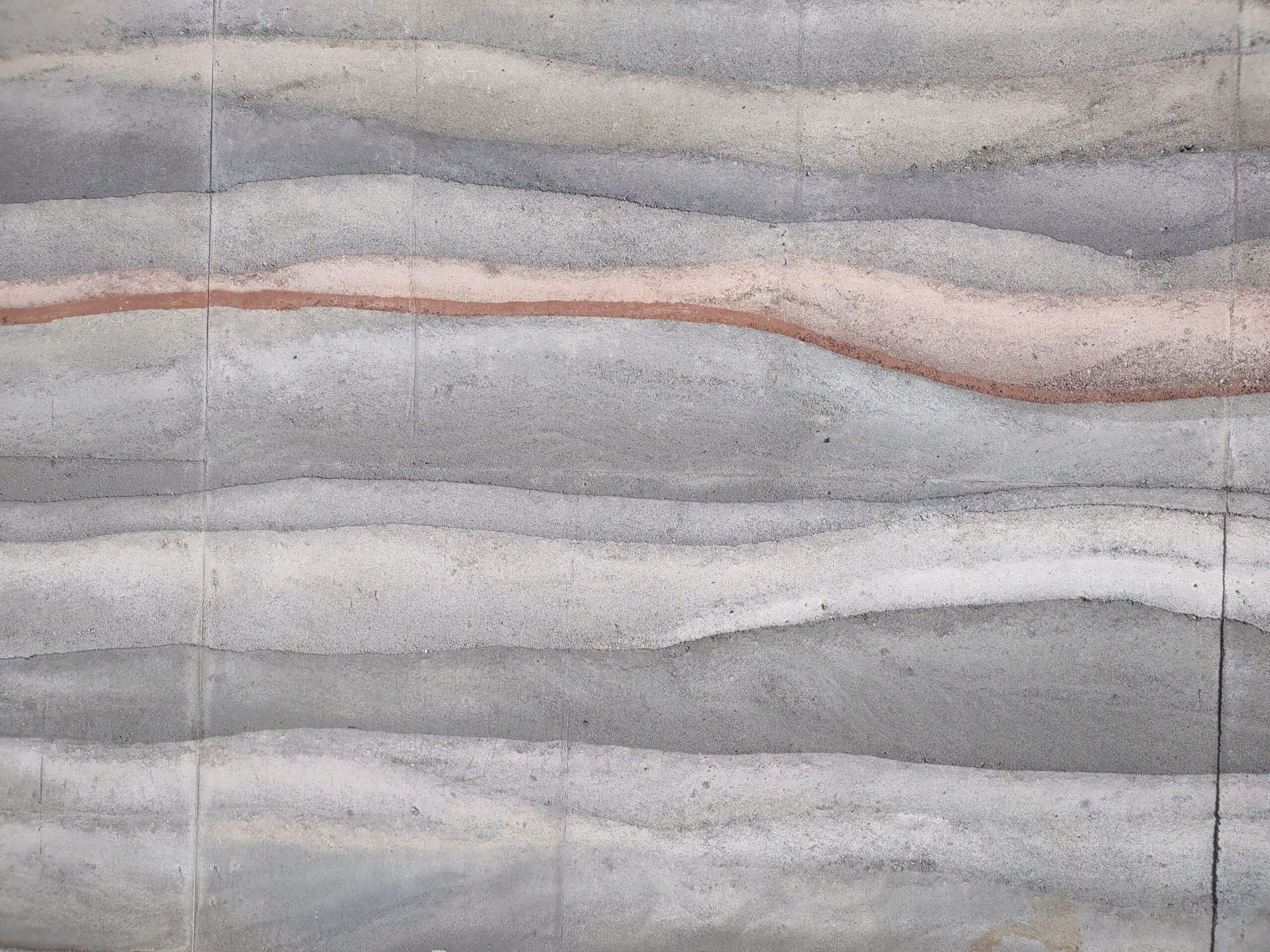
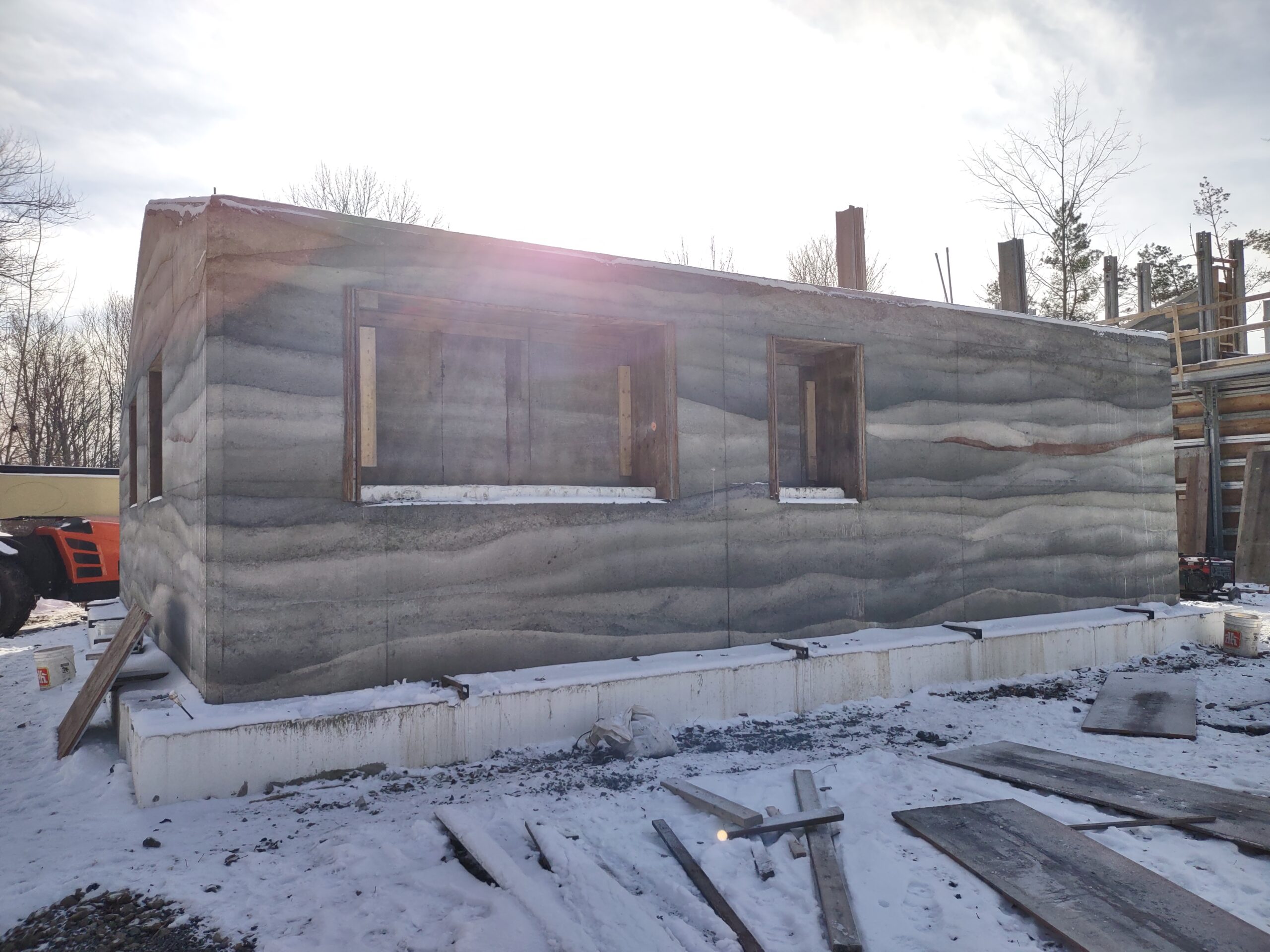
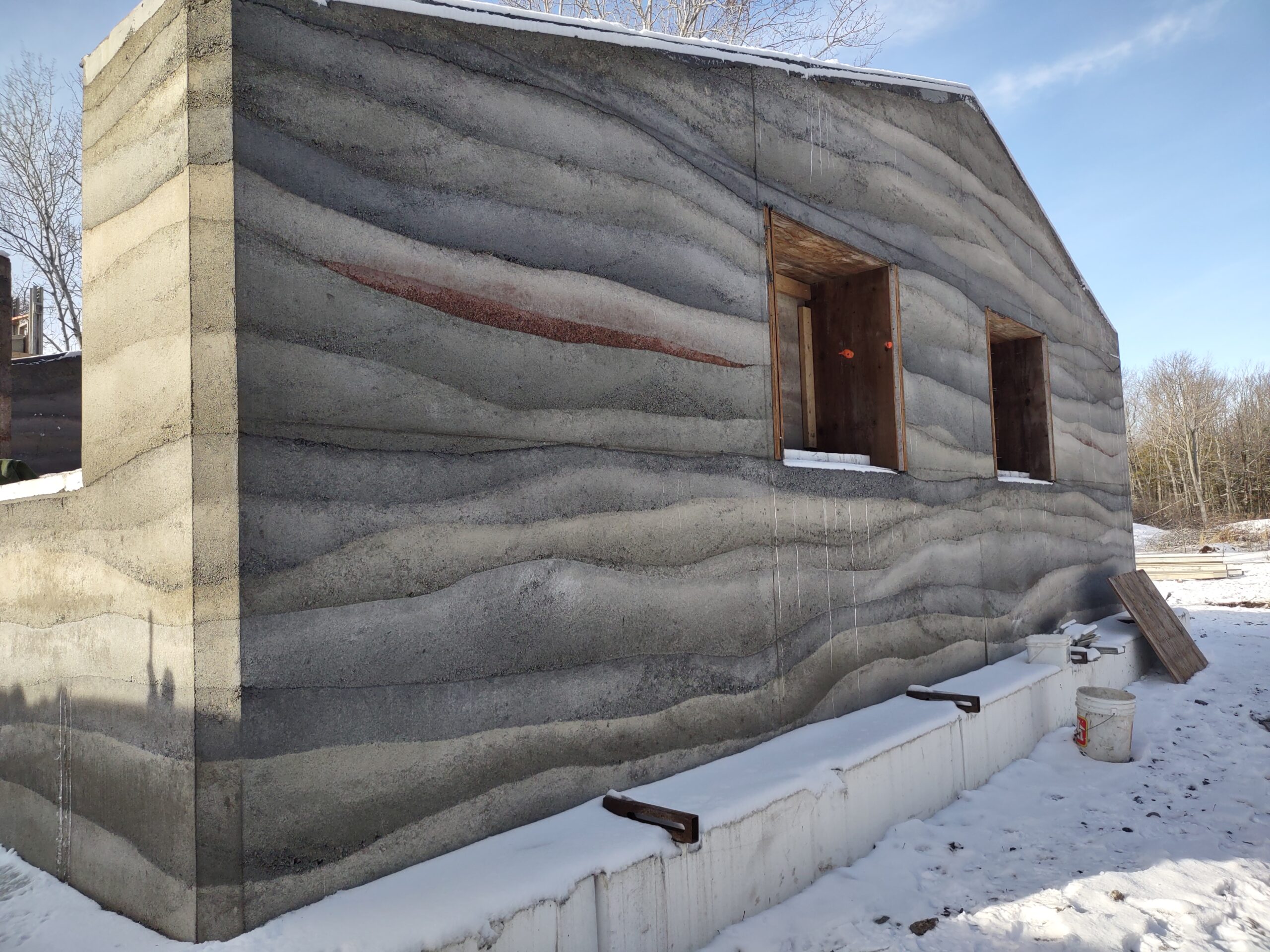
A close-up view of the stabilized rammed earth (sRE) wall of the guesthouse. The clients wants a simple colour palette for the walls, with only hints of colour, burnt umber and salmon, interspersed with light earthy-tones. We will keep a simple, clean, modern palette in the interiors as well, with poplar plywood and light coloured woods.

One of the major advantages of rammed earth is that the builder, in this case Aerecura, uses simple elements of sand, earth, cement, water, insulation, and a bit of rebar, to built the footings and walls. In our era of supply chain issues and cost escalations, the fact that the builder can use such simple, readily available materials to complete the structure, thermal envelope, and interior/exterior finishes means that projects can more easily stay on budget and schedule.

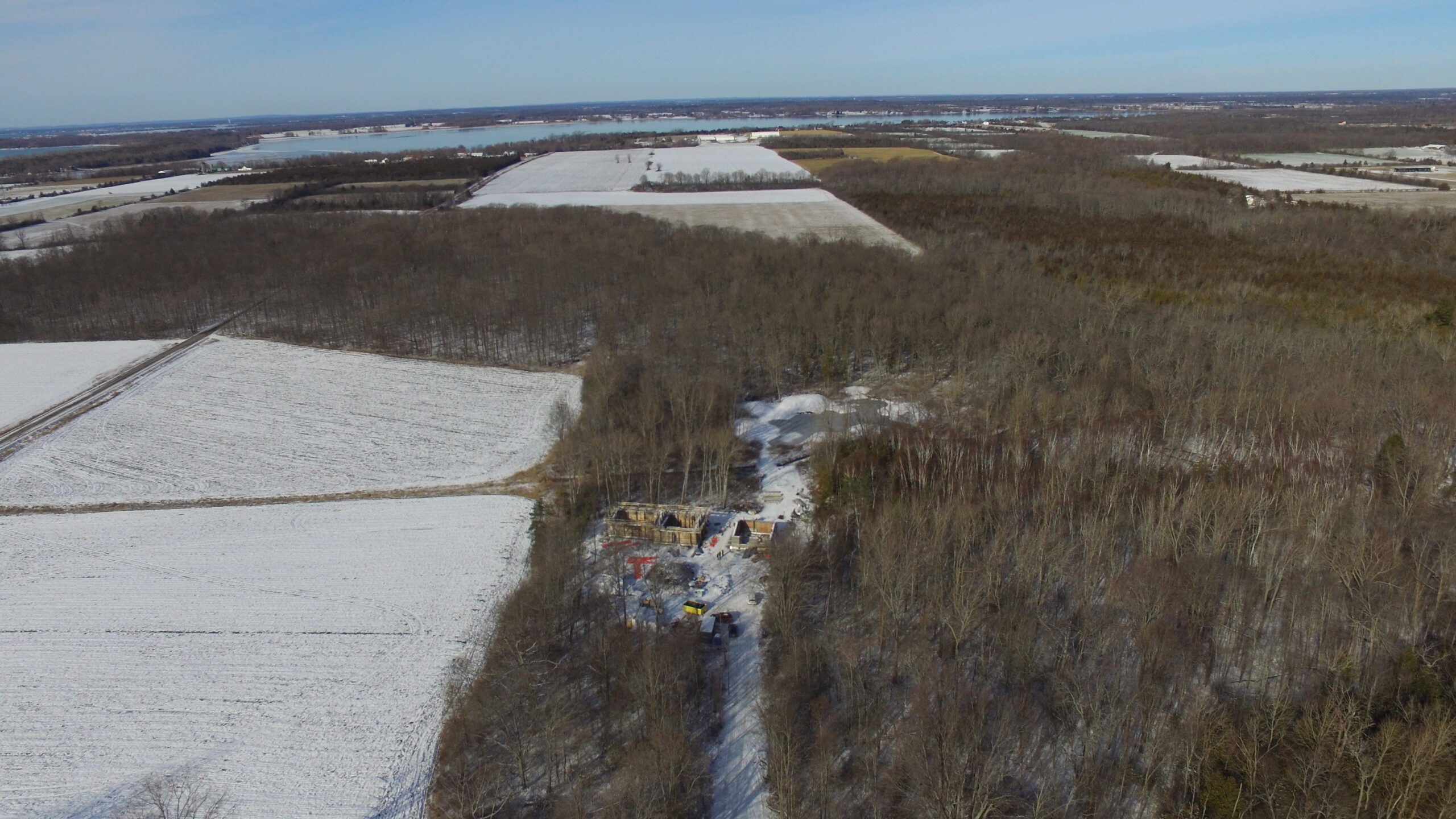
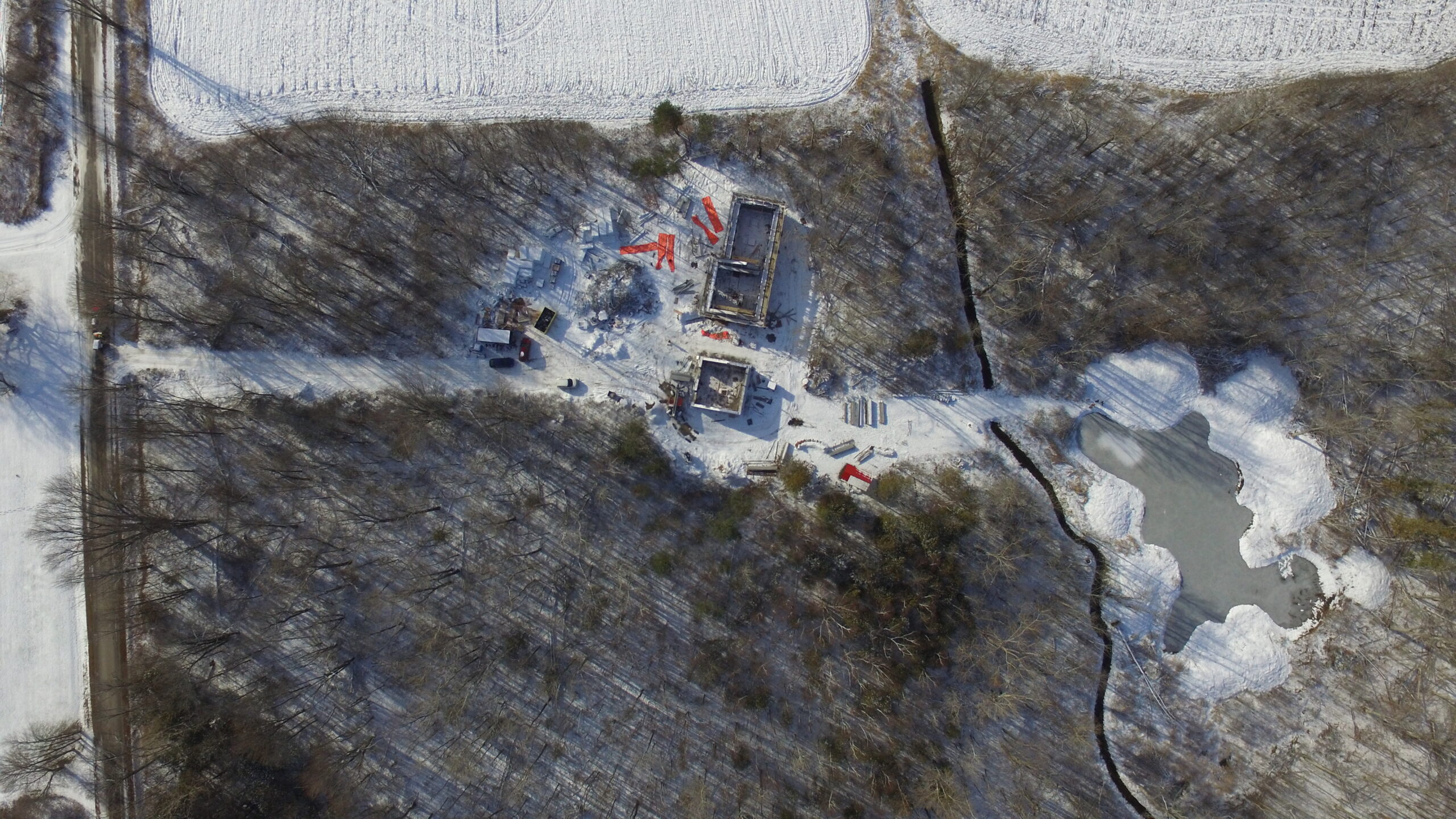
The aerial photo above looking to the north shows the site of the home, with the newly dug pond, helped in part by Ducks unlimited, and further beyond that East Lake and the baymouth sandbar to the left of the photos which separate East Lake from Lake Ontario.

The guesthouse formwork has been removed showing the patterning of the rammed earth walls. The large south facing windows are visible on the guesthouse, however these are offset by adequate overhangs to minimize solar heat gain in the summer, while letting the sunlight stream in during the winter. The main house walls are still covered by the formwork, but you can get a hint of the large central hall (living , dining, and kitchen), and the more private studies and bedrooms to the left-side of the photo.

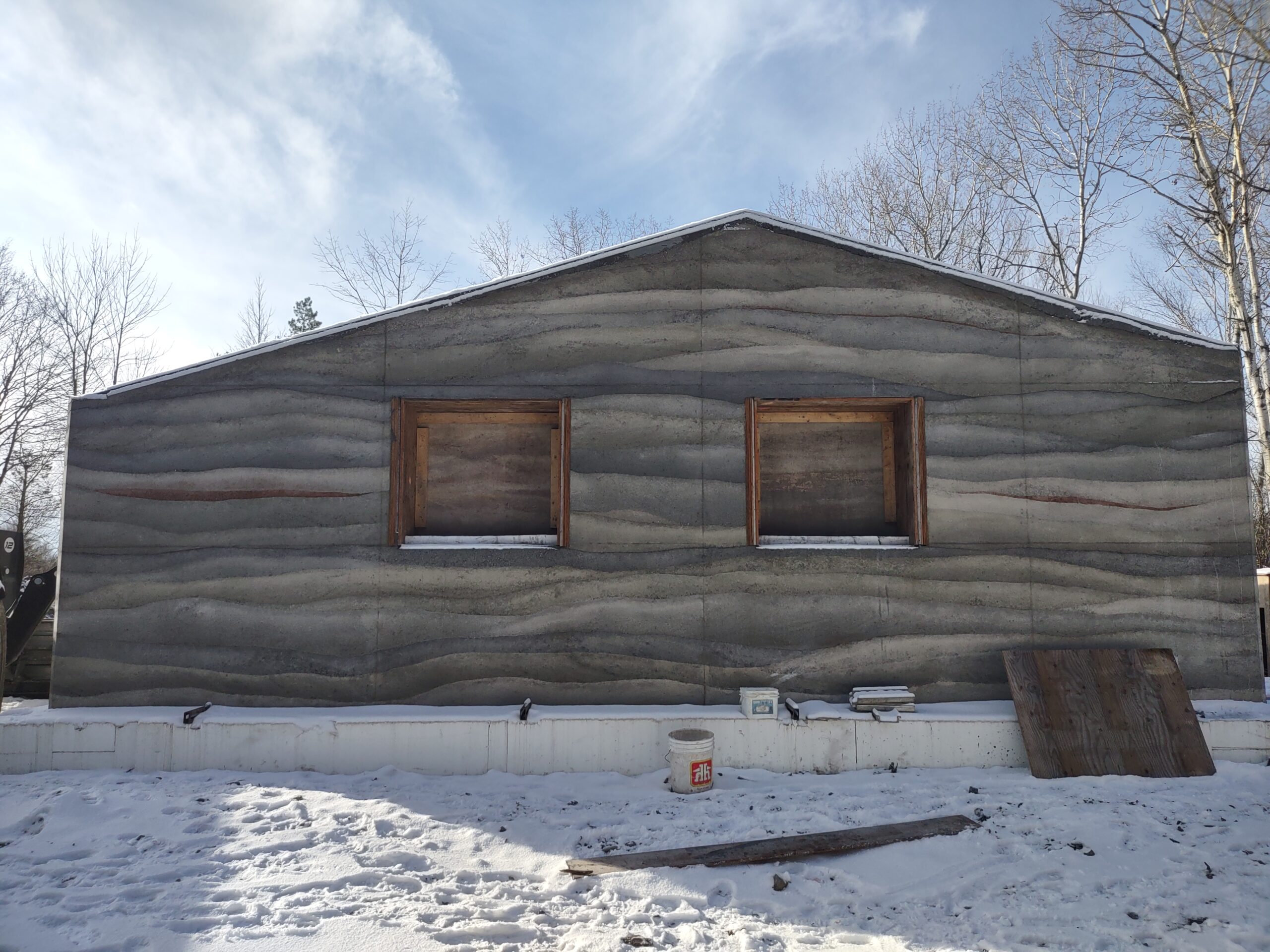
Above is a view of the north-facade of the guesthouse. You can see the insulation around the footings at the bottom of the photo. This will be covered up with fill and include weeping tile to ensure adequate drainage. What isn’t visible here is the sub-footing insulation: we sough to minimize thermal bridges as much as possible and this included using structurally-rated insulation below the footings.

We used PHPP to model the building and optimize the design. While the thickness of the walls is relatively fixed, due to the formwork and requirements of the construction process, we were able to use a high insulated pre-fabricated roof system from Simple Life Homes, and 10″ of insulation under the concrete-free floor slab (we are using a plywood-raft slab approach to minimized embodied carbon).

Another view of the guesthouse and the exposed footing wrapped in insulation. You can see the chamfered reveal detail at the left of the photo. The two window openings to the right still have their void-forms (which are placed within the formwork while the rammed earth walls are being constructed). All the windows included reveals and chamfers to create subtle shadows and gradients. The window sills will be pre-cast rammed earth to match the walls. At the very top of the walls you can see the reveal detail that will fit snugly with the plywood fascia covering the pre-fabricated roof panels.

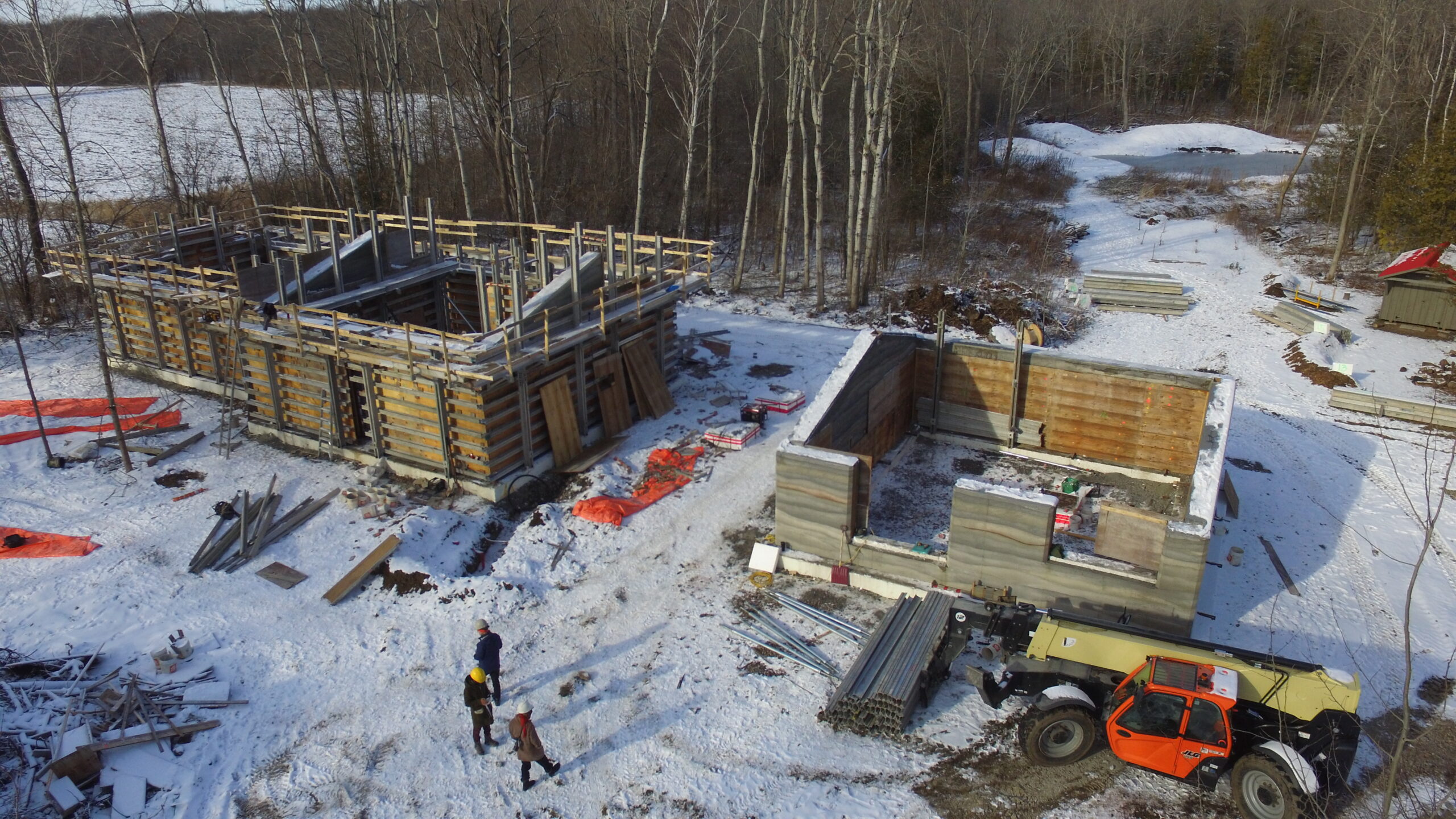
An aerial view showing the guesthouse in the bottom of the photos, and the main house to the top. You can see the newly created duck pond to the right. Access to the site is from the left-side through the mixed deciduous forest.

A view of the western façade of the guesthouse showing the pattern of the rammed earth. Because Aerecura uses a continuous formwork, this means the patterns in the rammed earth can be carried along the entire walls, and even wrapped around the corners.

We will post updated pictures of the construction when the roof is installed!

Sammon Passive House Featured in Canadian Architect

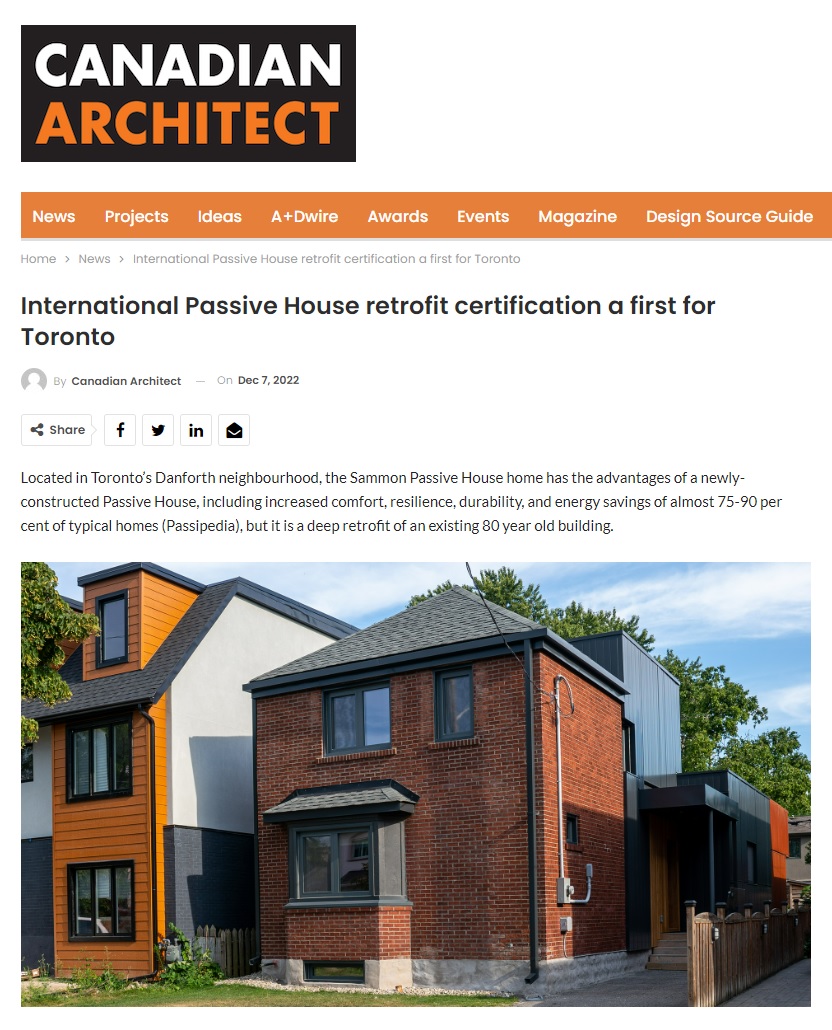
The Sammon Passive House deep energy EnerPHit renovation was featured yesterday on Canadian Architect. The article highlights the strategies we used to achieve Passive House certification, as well as makes the case for why deep energy retrofits can play such an important part in helping Toronto achieve it’s climate change and Net Zero Existing Buildings Strategy.

Head over to Canadian Architects site to learn more or take a look at our past blog post on the project about being given EnerPHit Passive House certification.

55-unit Non-Profit Seniors Housing in Coniston nearing Completion: Photo Update

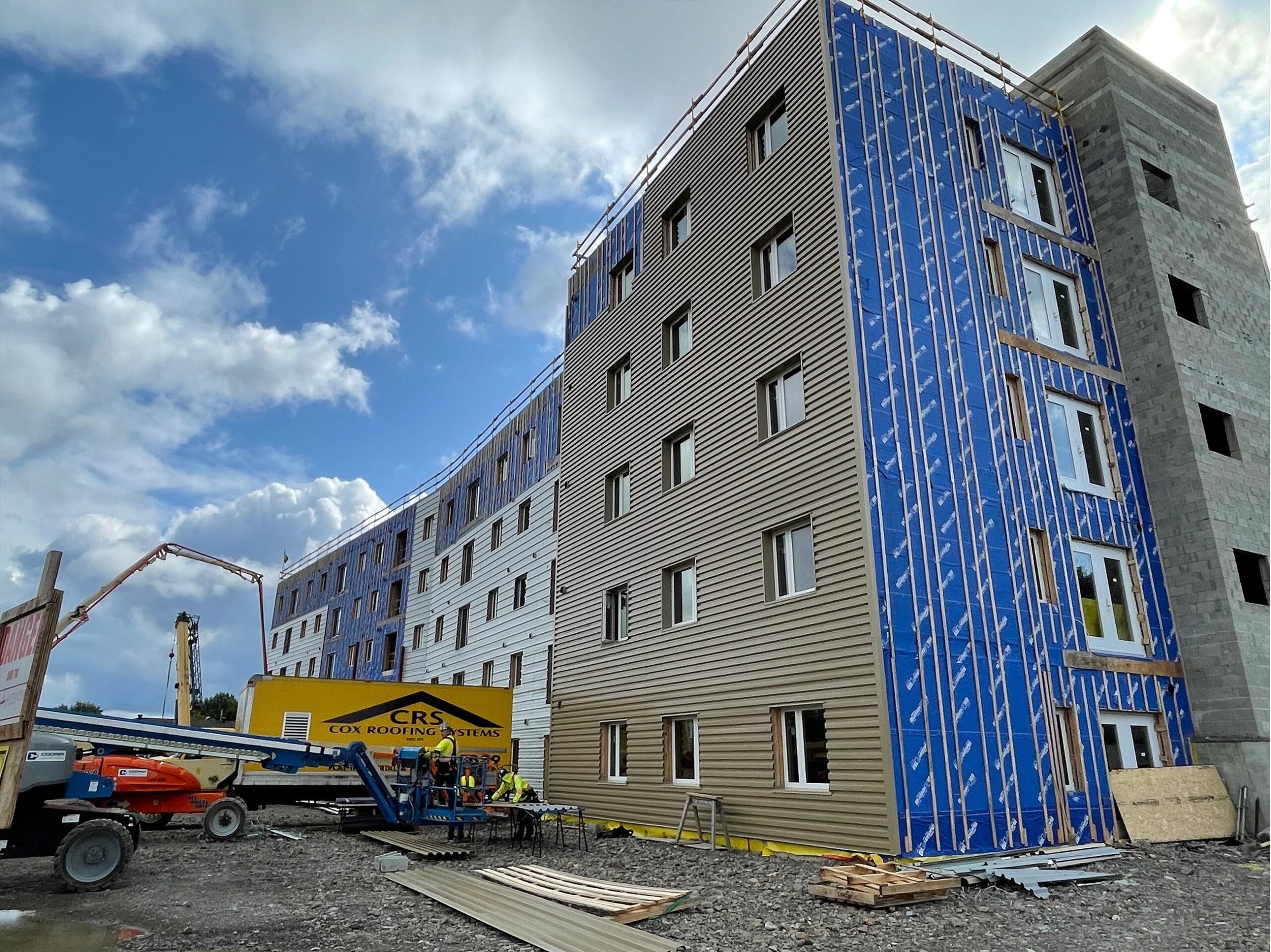
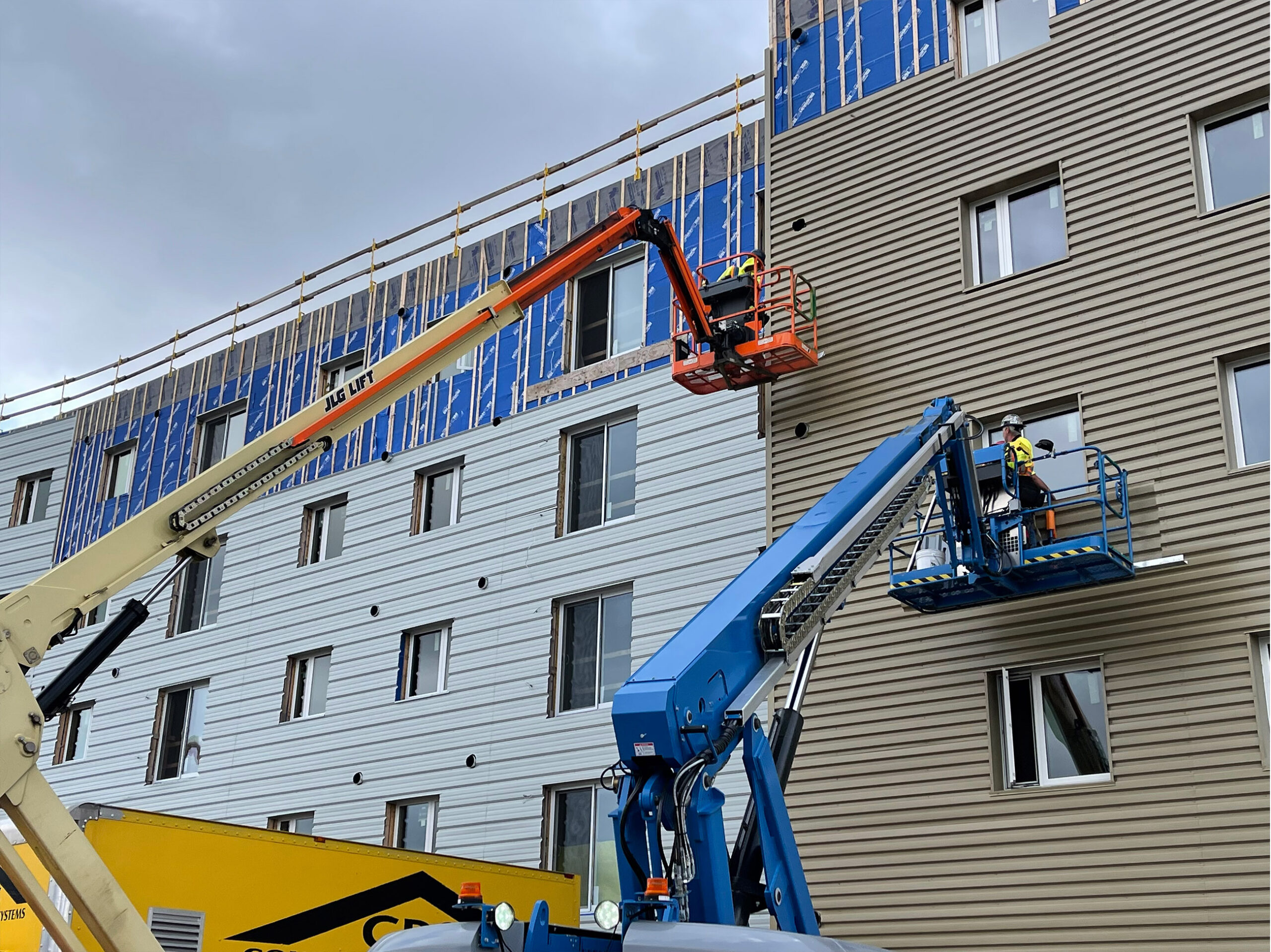
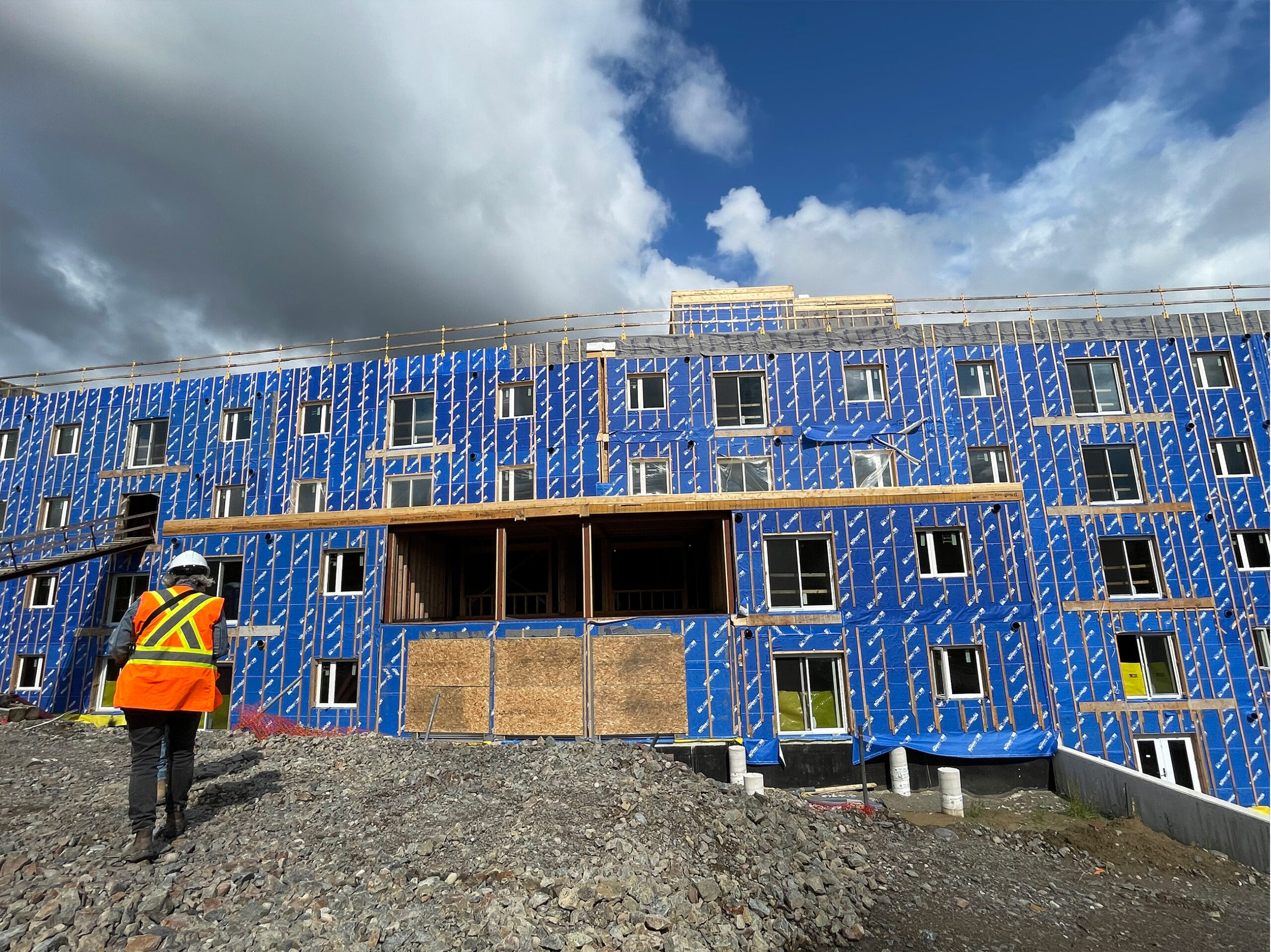
What a change from a year ago, when the site work was just starting for the Coniston Seniors Housing project (see our previous blog post on Coniston here). Below is a brief description of the project and a selection of in-progress construction photos showing the 5-storey building nearing completion.

This building is a low-carbon, high performance, all-electric 55-unit MURB for the Coniston Non-Profit Seniors Housing Corporation in Coniston, just outside of Sudbury, Ontario. The project uses almost 40% less energy, has a 39% reduction in Greenhouse Gas Emissions, and a 33% reduction in Peak Demand, when compared to the OBC SB-10 Reference building.

The project which will be completed in the next few months, is Net-Zero Energy Ready, which means it is designed to accommodate the future installation of solar panels on the roof.  To give you a sense of the energy performance of this building, if this project was located in Toronto, we would achieve the TGS V4 Tier 3 energy performance standards with 69 kWh/m2/yr.

Coolearth was involved from the beginning on this project although there are many stakeholders, including the CMHC who provided $18 million in loan funding to realize the project as part of their Rental Construction Financing initiative and National Housing Strategy, as well as the Coniston Seniors Non-Profit Housing Co-operative who had the vision and dedication to realize this project.  

The project’s high-performance envelope, combined with high efficiency heating through air-source heat pumps and heat recovery ventilation results in low space heating energy consumption. The high efficiency air-source heat pumps also reduce the space cooling energy consumption. There is also a significant reduction in ventilation fan energy attributed to the variable speed and low power ventilation fans of the building. Domestic Hot Water savings are made possible by the low flow plumbing fixtures as well as a heat pump service hot water heating and drain water heat recovery. The low wattage lighting power design also reduces the interior lights energy consumption.

As Construction on the building wraps up we will continue to share photo updates! Stay tuned.